Kelsi KlembaraHost
What do you think, I guess, what about Augustine and specifically his work, Confessions, do you think lends itself to this devotional type approach? And maybe you can explain too, kind of, it's a 365 day devotional.

How did you think about breaking it up as you were researching and then eventually writing?
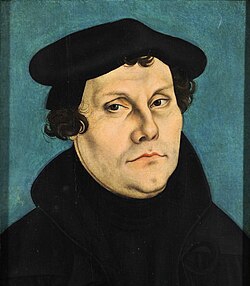
And I think the springboard back to Augustine was that Martin Luther initially had a lot of connection with Augustine's writings that seemed to be the stepping stone for Luther to eventually go back to scripture itself.
And so just in my own curiosity, looking already in college and then kind of throughout my life since, yeah, what was it that drew Luther to Augustine? And the more I read, the more I saw it, that Augustine really had a pastoral heart too.
It seemed like he was certainly an intellectual, maybe one of the most intelligent people in Western civilization in the history of that.
It seemed like and this comes out in his confessions, he really cares about people's souls and where they're headed.
And you see that in, we have so many letters that he wrote and sermons that he wrote that have been copied down and passed on down to us.
And I think that specifically with his work, These confessions that I access and draw on for these devotions, you see it's really a special writing.
Really, I don't think or I haven't found a writing that really was like it before he came along.
And there's a lot of questions as to, well, is it autobiographical and so on? And I think it's, the way I like to put it is Augustine's Confessions, they're a Christian autobiography where it shows not just his life and what he did and what he accomplished, but what God did in his life and how God used even the bad and the blessings to to get him where he was at the point of, of him writing it.
And, and as he does, it's almost like he invites the reader to think on their own life then, and to look back and to see, look at your own life and see how God got you to where you are, how he worked through things you didn't even realize in the moment.
He's sharing personal accounts in his own life, different struggles that he had.
But then throughout the entire writing then, certainly in books one through nine of his confessions, he shows how God worked through them.
And sometimes he even just sort of bursts out into a hymn of praise that's almost written in poetry and in the Latin.
In those moments when he does that, I kind of tried to just share that almost in like a prayer or hymn type of way.

What do you think, I guess, what about Augustine and specifically his work, Confessions, do you think lends itself to this devotional type approach? And maybe you can explain too, kind of, it's a 365 day devotional.

How did you think about breaking it up as you were researching and then eventually writing?
And I think the springboard back to Augustine was that Martin Luther initially had a lot of connection with Augustine's writings that seemed to be the stepping stone for Luther to eventually go back to scripture itself.
And so just in my own curiosity, looking already in college and then kind of throughout my life since, yeah, what was it that drew Luther to Augustine? And the more I read, the more I saw it, that Augustine really had a pastoral heart too.
It seemed like he was certainly an intellectual, maybe one of the most intelligent people in Western civilization in the history of that.
It seemed like and this comes out in his confessions, he really cares about people's souls and where they're headed.
And you see that in, we have so many letters that he wrote and sermons that he wrote that have been copied down and passed on down to us.
And I think that specifically with his work, These confessions that I access and draw on for these devotions, you see it's really a special writing.
Really, I don't think or I haven't found a writing that really was like it before he came along.
And there's a lot of questions as to, well, is it autobiographical and so on? And I think it's, the way I like to put it is Augustine's Confessions, they're a Christian autobiography where it shows not just his life and what he did and what he accomplished, but what God did in his life and how God used even the bad and the blessings to to get him where he was at the point of, of him writing it.
And, and as he does, it's almost like he invites the reader to think on their own life then, and to look back and to see, look at your own life and see how God got you to where you are, how he worked through things you didn't even realize in the moment.
He's sharing personal accounts in his own life, different struggles that he had.
But then throughout the entire writing then, certainly in books one through nine of his confessions, he shows how God worked through them.
And sometimes he even just sort of bursts out into a hymn of praise that's almost written in poetry and in the Latin.
In those moments when he does that, I kind of tried to just share that almost in like a prayer or hymn type of way.
The rest of this transcript — segmented and speaker-labeled, so you land on the exact moment something was said
Search every transcript — by keyword, by phrase, or by meaning, across every show Radar indexes
Trends — what is surging across podcasts, measured against its own baseline
Alerts — when a name you follow appears in a newly indexed episode
No account is needed to search Radar.