Professor Mark Wahlqvist: Ecological and Quantum Nutrition and the Evolution of Nutrition Science
Jun 25, 2026 · 1 hr 27 min · 10 segments
Sometimes we are privileged enough to engage in conversations with sages that, through experience and time, have arrived at profound and novel realisations that challenge our world view. This is one…
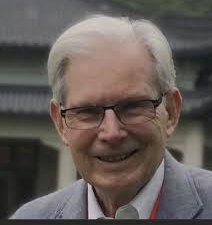
Sometimes we are privileged enough to engage in conversations with sages that, through experience and time, have arrived at profound and novel realisations that challenge our world view. This is one of those conversations. Professor Mark L Wahlqvist has been involved in paradigm sifts in nutrition and medicine, including but not limited to the discovery of foods phytoestrogenic effects, the inflammatory basis of macrovascular disease, and the relationship between food patterns, dietary diversity and health outcomes. We explore his pioneering work and the larger themes of the interconnected relationship between human health, diet, regional ecosystems (eco nutrition) and cosmology (quantum nutrition). **About our guest:** Professor Wahlqvist was educated at Adelaide and Uppsala Universities. He is a Consultant Physician and has held chairs in Human Nutrition, Medicine, Epidemiology and Preventive Medicine at Melbourne's Deakin and Monash Universities. He has been Chair of Internal Medicine at Prince Henry's Hospital, then of the Monash Medical Centre in Melbourne, as well as Director of the APHNC (Asia Pacific Health & Nutrition Centre) at the MAI (Monash Asia Institute) and of the FAO Centre of Excellence in Food Safety at Monash University. He has also held appointments at the Karolinska Institute in Sweden, the University of Indonesia and Zhejiang University in China. He was President of the International Union of Nutritional Sciences (IUNS), Chair of the Australian Nutrition Foundation (Nutrition Australia), Foundation Chair of the WMCACA (Weight Management Code Administration Council of Australia), a Board member of ANZFA, the Australian and New Zealand Food Authority (now FSANZ), Foundation Chair of the Food Safety Council of Victoria, Chair of the Australian Academy of Science National Nutrition Committee, and Foundation Editor-in-Chief of the Asia Pacific Journal of Clinical Nutrition. His advisory board memberships have included the Harvest Plus program (International Food Policy Research Institute in Washington DC), the Riddet Food Research Institute at Massey University, New Zealand and the WHO Nutrition Advisory panel. He has been recognised with awards by the nutrition societies in Australia, Britain, the USA, Taiwan, Indonesia and China. He was awarded the Charlotta Medal by the Swedish Emigrants Research Institute and made an honorary Bataknese. **Guest websites and links:** - https://www.researchgate.net/profile/Mark-Wahlqvist-3 **Selection of our guest's publications:** - Gallegos D, Wattanapenpaiboon N, Wahlqvist ML. Food and Nutrition Sustainable Food and Health Systems (5th Edition). 2026, Routledge. - Wahlqvist ML, Wattanapenpaiboon N, Shuai M, Liu HY, Zhong L, Zheng JS. Quantum food and nutrition: Subatomic approaches to nourishment for health and well-being. Asia Pac J Clin Nutr. 2025 Feb;34(1):1-9. - Wahlqvist ML. Imagining a habitable planet through food and health. Eur J Clin Nutr. 2021 Feb;75(2):219-229. - Wahlqvist ML. Future food. Asia Pac J Clin Nutr. 2016 Dec;25(4):706-715. - Wahlqvist ML. Ecosystem Health Disorders - changing perspectives in clinical medicine and nutrition. Asia Pac J Clin Nutr. 2014;23(1):1-15. - Wahlqvist ML, Specht RL. Food variety and biodiversity: Econutrition. Asia Pac J Clin Nutr. 1998 Dec;7(3/4):314-9.
Sometimes we are privileged enough to engage in conversations with sages that, through experience and time, have arrived at profound and novel realisations that challenge our world view. This is one…
- Show signals
- Audience≈448 followers