Authors Meet Critics: "Normalizing Inequality: How Californians Make Sense of the Growing Divide"
Sep 22, 2026 · 1 hr 8 min · 14 segments
Recorded on September 9, 2026 at the University of California, Berkeley, this Authors Meet Critics panel centered on the book…
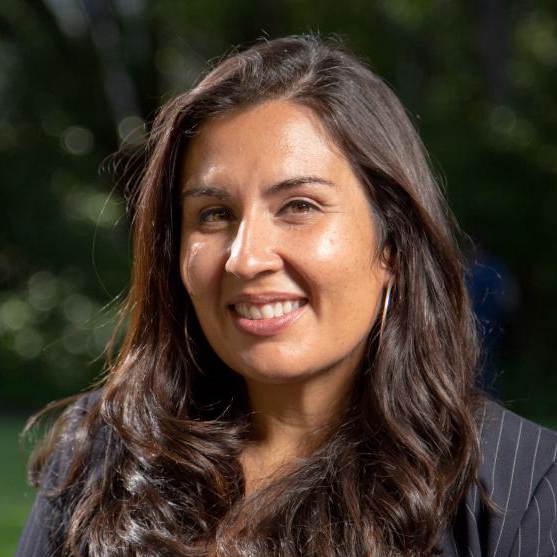
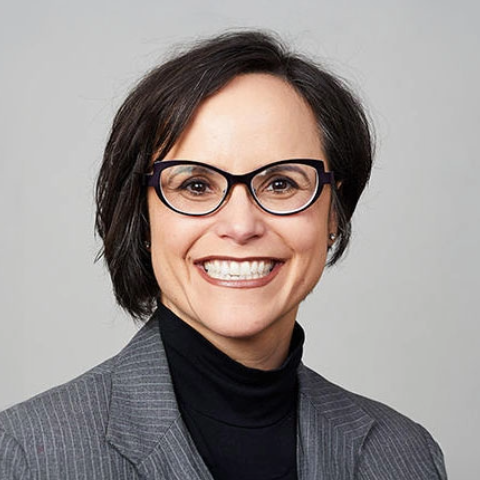
Recorded on September 9, 2026 at the University of California, Berkeley, this Authors Meet Critics panel centered on the book Normalizing Inequality: How Californians Make Sense of the Growing Divide, by G. Cristina Mora, Professor of Sociology, and Tianna Paschel, Associate Professor of African American Studies. Professors Mora and Paschel were joined in conversation by UC Berkeley scholars Lisa García Bedolla, Vice Provost for Graduate Studies and Hitchcock Dean of the Graduate Division and Chancellor's Professor of Education, and Desmond Jagmohan, Assistant Professor of Political Science. Nicholas Vargas, Associate Professor of Ethnic Studies at UC Berkeley, moderated. The panel was co-sponsored by the UC Berkeley Institute of Governmental Studies, the School of Education, the Othering and Belonging Institute, and the Departments of Political Science and African American Studies. The Social Science Matrix Authors Meet Critics book series features lively discussions about recently published books authored by social scientists at UC Berkeley. For each event, the author discusses the key arguments of their book with fellow scholars. **About the Book** California has long been mythologized as the quintessential land of opportunity and reinvention — a place where anyone, regardless of origin, can forge a new life and realize their aspirations. Yet beneath this gilded narrative lies a starker reality: California ranks among the most unequal states in one of the world's most unequal countries, where the middle class finds itself increasingly squeezed. Economic inequality is not an anomaly but part of a broader global phenomenon, as disparities deepen across the world. While we know a lot about its contours, its evolution over time and its intersections with race and immigration, we understand far less about how ordinary people interpret and internalize it. In *Normalizing Inequality*, sociologists G. Cristina Mora and Tianna S. Paschel illuminate how middle-class Californians perceive and come to accept the inequalities that surround them. Drawing on extensive interviews and surveys, Mora and Paschel uncover a profound paradox at the heart of middle-class consciousness. They find that Californians are keenly aware of the systemic causes of inequality—they recognize policies engineered to benefit the wealthy, they acknowledge how structural racism makes it hard for some groups to get ahead—yet they consistently minimize these forces. Instead, they gravitate toward explanations rooted in individualism, moral character, and the idea that things are worse in other places. Racism and racial inequality in California become palatable when framed as "not as bad as the South." Immigrant exploitation, however severe, transforms into evidence of the American Dream fulfilled simply upon arrival. Economic pressures that displace others become surmountable through personal industriousness and forbearance. These beliefs about inequality grow more troubling still. Middle-class Californians sometimes blame disempowered people for their circumstances—acknowledging structural barriers facing homeless and undocumented populations while simultaneously faulting them for insufficient drive or criminal behavior that compounds their difficulties. When contemplating California's future, interviewees envision economic prosperity propelled by technological innovation, yet remain curiously unconcerned with how present inequalities might shape that tomorrow. Their imagined future is one where White and Asian American populations thrive, while Black, Latino, and economically marginalized Californians either vanish through displacement or fade into irrelevance. As respondents use these interpretive frameworks to make sense of inequality, they lean heavily on California's foundational narratives of opportunity, sanctuary and multiracial promise. Normalizing Inequality offers an incisive examination of how ordinary citizens make sense of inequality and, through that very process of sense-making, how they tolerate and passively reproduce the conditions they often claim to deplore. A transcript of this podcast is available at https://matrix.berkeley.edu/research-article/normalizing-inequality.
Recorded on September 9, 2026 at the University of California, Berkeley, this Authors Meet Critics panel centered on the book…