Intelligent Investment Today - The Warren Buffett Way
Jun 23, 2026 · 17 min · 9 segments
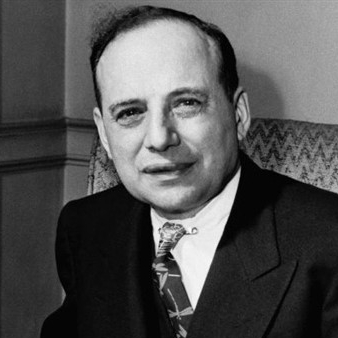
Benjamin Graham believed that intelligent investing begins with understanding the real economics of a business. In this episode, we explore the income statement and the critical role it plays in…
David CoombsHost
[gentle music] As ever with these things, it's always good to start with the very basics.

The profit and loss account or income statement shows a company's revenues, expenses, and profits over a specific period.

In simple terms, it answers the question: Did the business generate more money than it spent? Now, on the surface, this may seem straightforward.

But as Graham understood very well, the reality can be far more complicated because not all profits are created equally.

He strongly preferred businesses with stable, dependable earning records over long periods of time.

A company that generates reliable profits year after year is generally easier to value than one whose earnings swing wildly between boom and bust.

Now, this does not mean Graham avoided all cyclical businesses, but he did recognize that volatile earnings makes valuation far more difficult.

If profits fluctuate dramatically, investors may accidentally overestimate sustainable earning power during good times or indeed underestimate it during recessions.

This is why Graham often examined average earnings over many years rather than focusing heavily on a single period.

He wanted to understand the underlying earning capacity of the business across a full economic cycle, and this remains one of the most important lessons in financial analysis today.

[gentle music] As ever with these things, it's always good to start with the very basics.

The profit and loss account or income statement shows a company's revenues, expenses, and profits over a specific period.

In simple terms, it answers the question: Did the business generate more money than it spent? Now, on the surface, this may seem straightforward.

But as Graham understood very well, the reality can be far more complicated because not all profits are created equally.

He strongly preferred businesses with stable, dependable earning records over long periods of time.

A company that generates reliable profits year after year is generally easier to value than one whose earnings swing wildly between boom and bust.

Now, this does not mean Graham avoided all cyclical businesses, but he did recognize that volatile earnings makes valuation far more difficult.

If profits fluctuate dramatically, investors may accidentally overestimate sustainable earning power during good times or indeed underestimate it during recessions.

This is why Graham often examined average earnings over many years rather than focusing heavily on a single period.

He wanted to understand the underlying earning capacity of the business across a full economic cycle, and this remains one of the most important lessons in financial analysis today.
The rest of this transcript — segmented and speaker-labeled, so you land on the exact moment something was said
Search every transcript — by keyword, by phrase, or by meaning, across every show Radar indexes
Trends — what is surging across podcasts, measured against its own baseline
Alerts — when a name you follow appears in a newly indexed episode
No account is needed to search Radar.