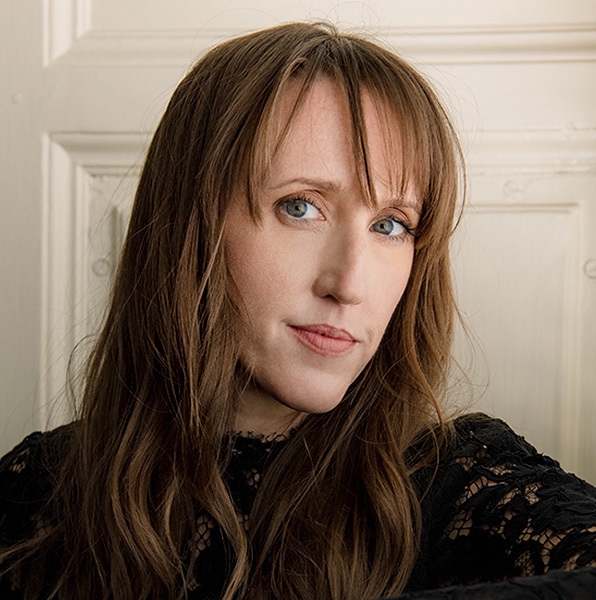
Elizabeth Currid-HalkettGuest
Sandro GaleaHost[chuckles] Um, the-- what I really think they get wrong is that rural Americans are really angry, that rural Americans are not socially progressive, that they are all in poverty, that they don't have jobs.
I mean, it was interesting that you quoted Barbara Kingsolver because I do think she has a really good eye on a part of rural America that is really struggling.
Rural America is actually really thriving if you look at a lot of different data on homeownership and employment, um, median income.
And my experience in terms of interviewing folks, not just from where I grew up, but across the country, rural Americans are tolerant, they're open-minded.
In fact, I would argue at times far more so than their coastal counterparts.
And so I think this story of rural America being an angry place that resents the country is just wrong.

Tell us a little bit about how we flatten rural communities by saying rural as though all rural communities were the same.

How do differences within rural communities complicate this idea that there's a single rural working class?
So I think that's a great question because we actually do this disservice to urban America, too.
And I think the same is true of rural America, that you have all sorts of different socioeconomic, demographic, industry variables that create very different places.
So for example, like, if you, you know, grow up in small-town Idaho or Iowa, your life looks really different than if you grew up in Barbara Kingsolver's Appalachia.
And if you grew up in my small town in Pennsylvania, it looks a lot different than if you grew up in rural Arkansas.
And there's really obvious kind of, in the same way that social scientists and demographers look at any question, there's, there's a lot of socioeconomic, demographic variables that are upholding that.
So if you have a primarily educated rural population, cause or effect? Are they educated? Do they move into the, into this town because there was a big industry, like a hospital like my mom did? Or are you seeing industries move into small towns because there's already an educated population? Well, education changes everything because people tend to have higher income levels if they're educated.
I mean, there's certain parts of rural America in Vermont, in Colorado, and New York where it's really beautiful and there's lots of different restaurants and amenities and all sorts of things that make it really a different experience than when you are in maybe a very impoverished or lower educated population.
[chuckles] Um, the-- what I really think they get wrong is that rural Americans are really angry, that rural Americans are not socially progressive, that they are all in poverty, that they don't have jobs.
I mean, it was interesting that you quoted Barbara Kingsolver because I do think she has a really good eye on a part of rural America that is really struggling.
Rural America is actually really thriving if you look at a lot of different data on homeownership and employment, um, median income.
And my experience in terms of interviewing folks, not just from where I grew up, but across the country, rural Americans are tolerant, they're open-minded.
In fact, I would argue at times far more so than their coastal counterparts.
And so I think this story of rural America being an angry place that resents the country is just wrong.

Tell us a little bit about how we flatten rural communities by saying rural as though all rural communities were the same.

How do differences within rural communities complicate this idea that there's a single rural working class?
So I think that's a great question because we actually do this disservice to urban America, too.
And I think the same is true of rural America, that you have all sorts of different socioeconomic, demographic, industry variables that create very different places.
So for example, like, if you, you know, grow up in small-town Idaho or Iowa, your life looks really different than if you grew up in Barbara Kingsolver's Appalachia.
And if you grew up in my small town in Pennsylvania, it looks a lot different than if you grew up in rural Arkansas.
And there's really obvious kind of, in the same way that social scientists and demographers look at any question, there's, there's a lot of socioeconomic, demographic variables that are upholding that.
So if you have a primarily educated rural population, cause or effect? Are they educated? Do they move into the, into this town because there was a big industry, like a hospital like my mom did? Or are you seeing industries move into small towns because there's already an educated population? Well, education changes everything because people tend to have higher income levels if they're educated.
I mean, there's certain parts of rural America in Vermont, in Colorado, and New York where it's really beautiful and there's lots of different restaurants and amenities and all sorts of things that make it really a different experience than when you are in maybe a very impoverished or lower educated population.
The rest of this transcript — segmented and speaker-labeled, so you land on the exact moment something was said
Search every transcript — by keyword, by phrase, or by meaning, across every show Radar indexes
Trends — what is surging across podcasts, measured against its own baseline
Alerts — when a name you follow appears in a newly indexed episode
No account is needed to search Radar.