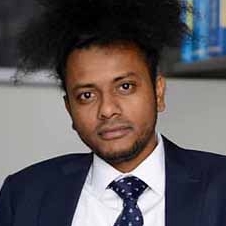
Suraj YengdeGuest
Sandro GaleaHost
How do you define, I think most people listening to this understand caste in the Indian context, but I know you think of it more broadly.

See, I mean, this is again a theory that really needs to be refined and understood.

Unfortunately, caste, the way it has been presented, is often within the canon of a religion.

Like, how do you appreciate the caste existing among Muslims or Sikhs? So in this book in particular, the focus was on immigrants or heritage, people with the heritage of South Asian descent.

So the kind of thing was to say, it's a global story, which it is, which is to look at the kind of major part of the world, Anglophone, Francophone kind of diaspora.

But the global story also I am kind of thinking about is a parallel project, which is called GlobalCast.

which is itself understanding caste as a secular term that organizes a society based on birth-based hierarchies.

The vocation you do, the relations and marriage, commerciality, determines based on the caste you come from.

We may not see it as caste, but there exist hierarchies, and there are certain regulated forms of this kind of animated hierarchy thinking.

And that's the kind of framework, which will be not the next book, but the book after, which condenses the world to look through this lens.

Because my intention is, why do I left out a person, a group of groups who are marginalized in their own societies, but they are not recognized as such? Because what do we do? We call them ethnic groups because for the lack of term, we call them something else or tribal and stuff like that.

In fact, American society was appreciated as a caste-based society because, as you would know, the earlier people who were brought to America to tend on the plantations were not slaves.

How do you define, I think most people listening to this understand caste in the Indian context, but I know you think of it more broadly.

See, I mean, this is again a theory that really needs to be refined and understood.

Unfortunately, caste, the way it has been presented, is often within the canon of a religion.

Like, how do you appreciate the caste existing among Muslims or Sikhs? So in this book in particular, the focus was on immigrants or heritage, people with the heritage of South Asian descent.

So the kind of thing was to say, it's a global story, which it is, which is to look at the kind of major part of the world, Anglophone, Francophone kind of diaspora.

But the global story also I am kind of thinking about is a parallel project, which is called GlobalCast.

which is itself understanding caste as a secular term that organizes a society based on birth-based hierarchies.

The vocation you do, the relations and marriage, commerciality, determines based on the caste you come from.

We may not see it as caste, but there exist hierarchies, and there are certain regulated forms of this kind of animated hierarchy thinking.

And that's the kind of framework, which will be not the next book, but the book after, which condenses the world to look through this lens.

Because my intention is, why do I left out a person, a group of groups who are marginalized in their own societies, but they are not recognized as such? Because what do we do? We call them ethnic groups because for the lack of term, we call them something else or tribal and stuff like that.

In fact, American society was appreciated as a caste-based society because, as you would know, the earlier people who were brought to America to tend on the plantations were not slaves.
The rest of this transcript — segmented and speaker-labeled, so you land on the exact moment something was said
Search every transcript — by keyword, by phrase, or by meaning, across every show Radar indexes
Trends — what is surging across podcasts, measured against its own baseline
Alerts — when a name you follow appears in a newly indexed episode
No account is needed to search Radar.