
EA Forum Podcast (Curated & popular)
“We judge activism by the wrong measures: four ways we mismeasure whether protest works” by Laura Thomas-Walters
Oct 9, 2026 · 15 min · 10 segments
Epistemic status: I've been an academic, climate activist and research lead in Extinction Rebellion UK's Data Analysis and Insights Circle. I co-authored most of the studies below. I am writing in a…
Epistemic status: I've been an academic, climate activist and research lead in Extinction Rebellion UK's Data Analysis and Insights Circle. I co-authored most of the studies below. I am writing in a personal capacity, drawing on extensive research into climate activism. Summary - People often decide whether a protest worked from a next-day poll or a hostile headline. I believe this is the wrong evidence. - I see four common mistakes: polling the public when the targets are elites, measuring too soon, trusting what people say over what they do, and generalising from one audience to another. - I end with five suggestions for funders and evaluators. Most apply to any movement that protests, including animal advocacy. Most people in the UK accept that climate change is real, and most are worried about it. The majority (66%) even support nonviolent direct action to protect the UK's nature (Guardian). Yet very few take part in collective action. In 2023, five years after it was founded, only about 0.25% of the UK population (roughly 170,000 people) had joined Extinction Rebellion, a major climate activism group. That gap between sympathy and participation is where a lot of arguments about whether protest "works" go wrong. \[...] \--- **Outline:** (02:18) What the evidence can and can't tell us (04:15) Measure 1: polling the wrong audience (06:30) Measure 2: measuring at the wrong time (08:16) Measure 3: trusting the wrong kind of data (10:40) Measure 4: generalising from the wrong people (13:34) What this means for funders and evaluators (14:54) References \--- **First published:** October 5th, 2026 **Source:** https://forum.effectivealtruism.org/posts/P4wReSgW6MSKpQGvz/we-judge-activism-by-the-wrong-measures-four-ways-we \--- Narrated by TYPE III AUDIO. \--- **Images from the article:** 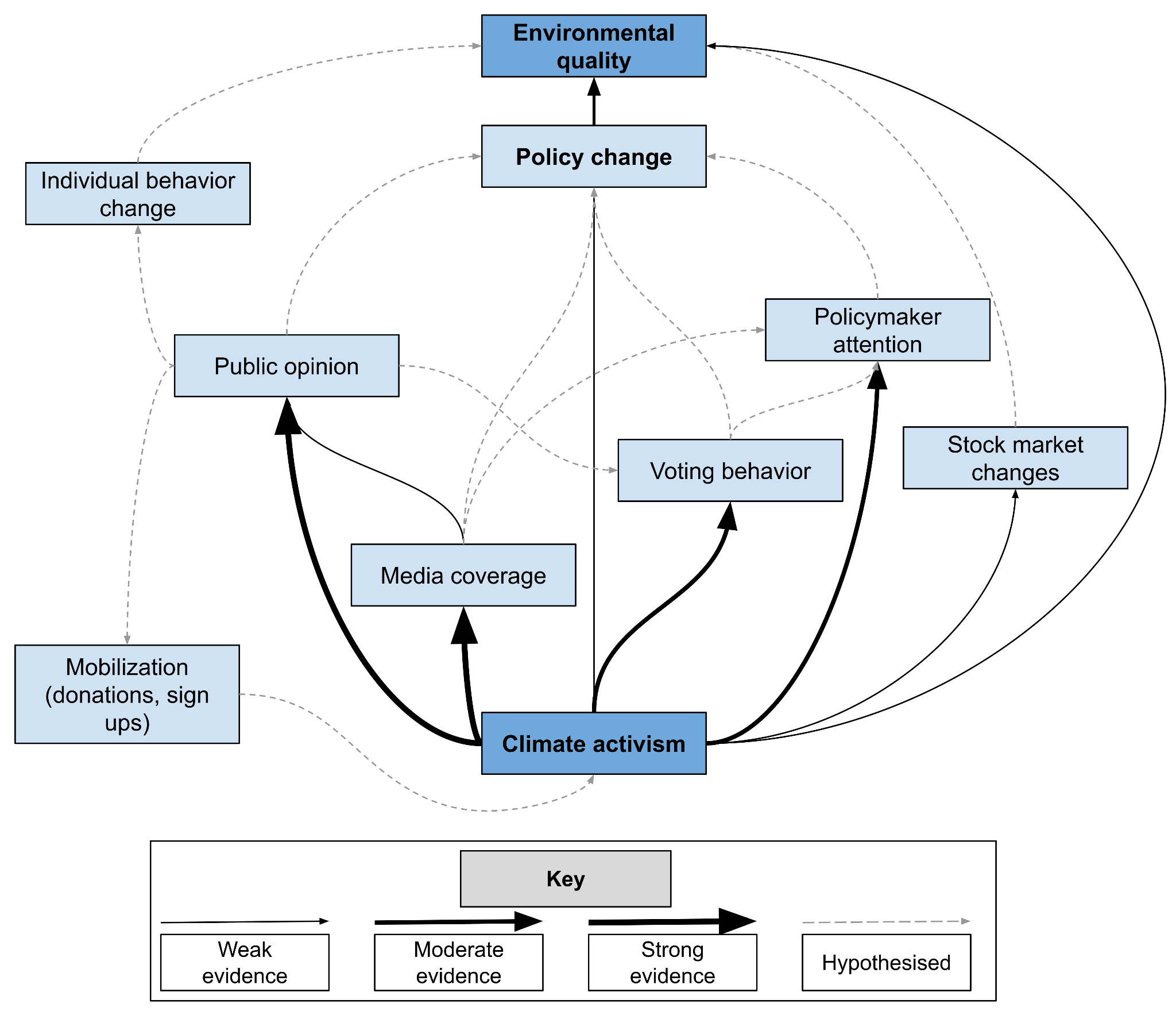 *Apple Podcasts and Spotify do not show images in the episode description. Try Pocket Casts, or another podcast app.*
Epistemic status: I've been an academic, climate activist and research lead in Extinction Rebellion UK's Data Analysis and Insights Circle. I co-authored most of the studies below. I am writing in a…