
EA Forum Podcast (Curated & popular)
“CCF: As more money arrives, the best place to give keeps moving” by Rethink Priorities
Oct 22, 2026 · 14 min · 7 segments
This post is part of the Cross-Cause Fund (CCF) series by Rethink Priorities — a sequence of articles dedicated to effective giving across philanthropic areas. TL;DR: A lot of new money is about to…
This post is part of the Cross-Cause Fund (CCF) series by Rethink Priorities — a sequence of articles dedicated to effective giving across philanthropic areas. TL;DR: A lot of new money is about to enter effective giving. When that happens, the question "Where does a dollar do the most good?" gets harder to answer, not easier. It depends on how much money each area already has, and that amount keeps changing as the money arrives. This is why the model behind the Rethink Priorities Cross-Cause Fund doesn't just rank funds once and stop. It tracks how each fund's cost-effectiveness changes as it receives more funding, and re-ranks as it goes. Below, we explain why anyone giving at scale should use similar reasoning. If you’re a small or mid-sized donor who makes giving decisions independently, it's relatively easy to figure out what your money is doing. For example, when you give your first $1000 to a charity that runs corporate cage-free egg campaigns, your donation will go on to fund corporate cage-free egg campaigns. When you give your second $1000 to the same charity, it will fund…corporate cage-free egg campaigns. And you will never guess what your tenth $1000 goes \[...] \--- **Outline:** (02:37) Modeling diminishing marginal returns (07:05) Acting as part of a group (08:48) How the Cross-Cause Fund works (10:42) Why you can't just follow the highest marginal number (13:03) Acknowledgements \--- **First published:** October 21st, 2026 **Source:** https://forum.effectivealtruism.org/posts/FZkwut9d5fD2vzC5i/ccf-as-more-money-arrives-the-best-place-to-give-keeps \--- Narrated by TYPE III AUDIO. \--- **Images from the article:**  * * * 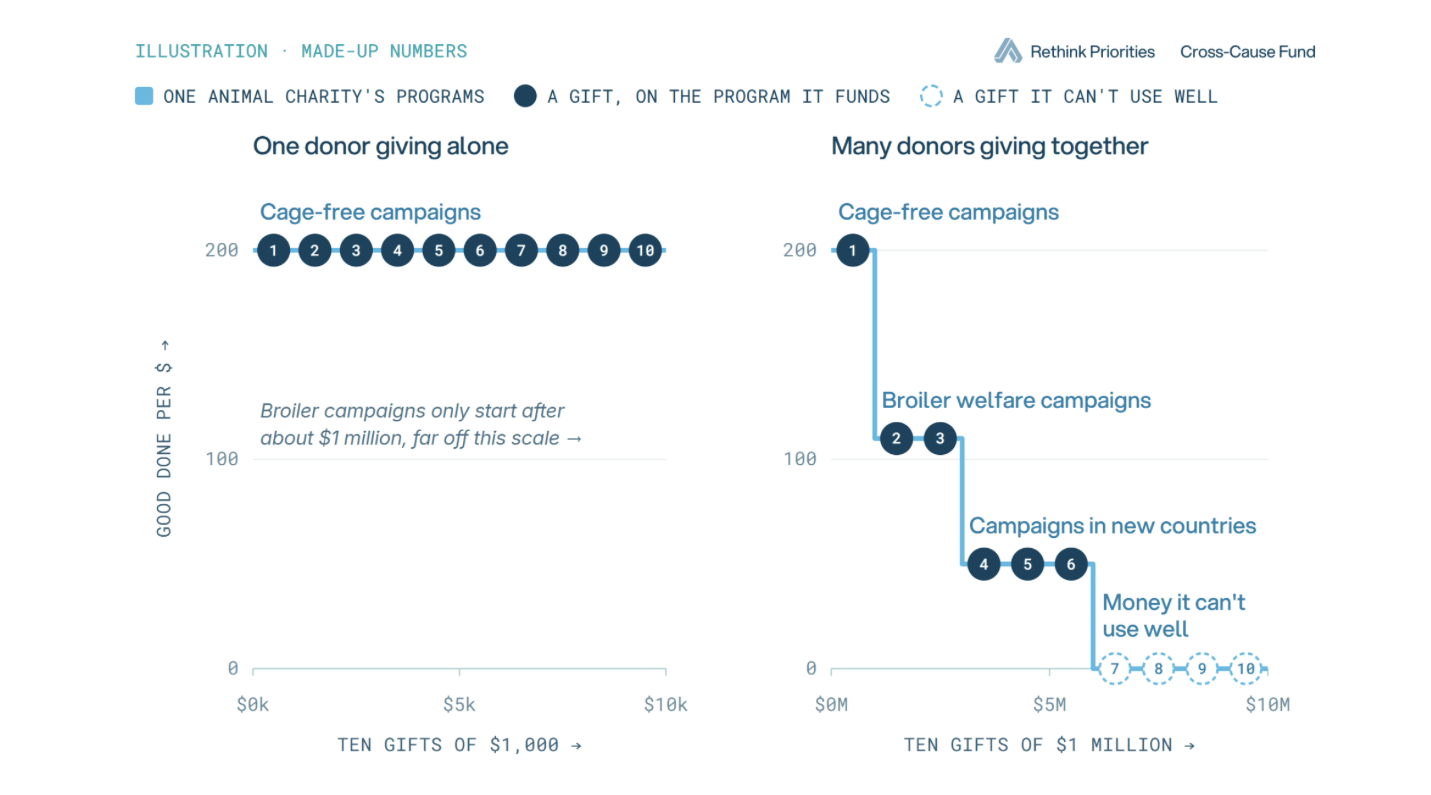 * * * 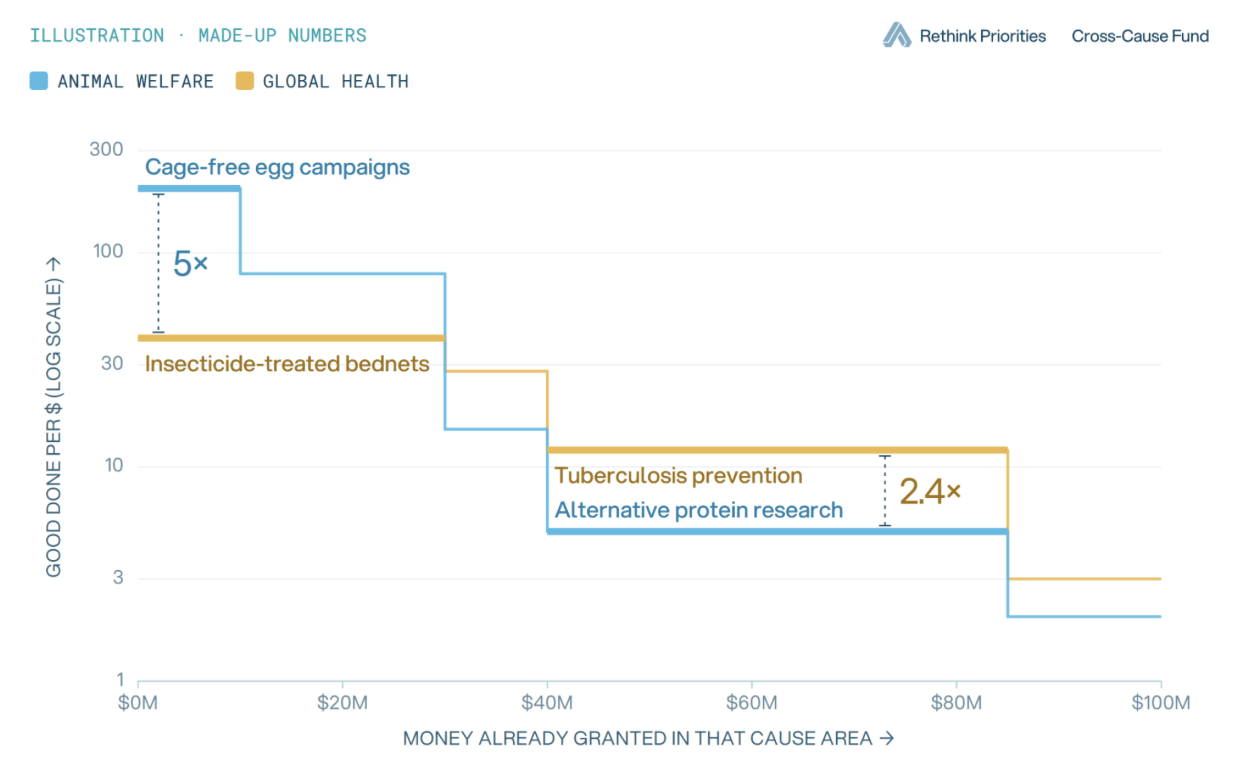 * * * 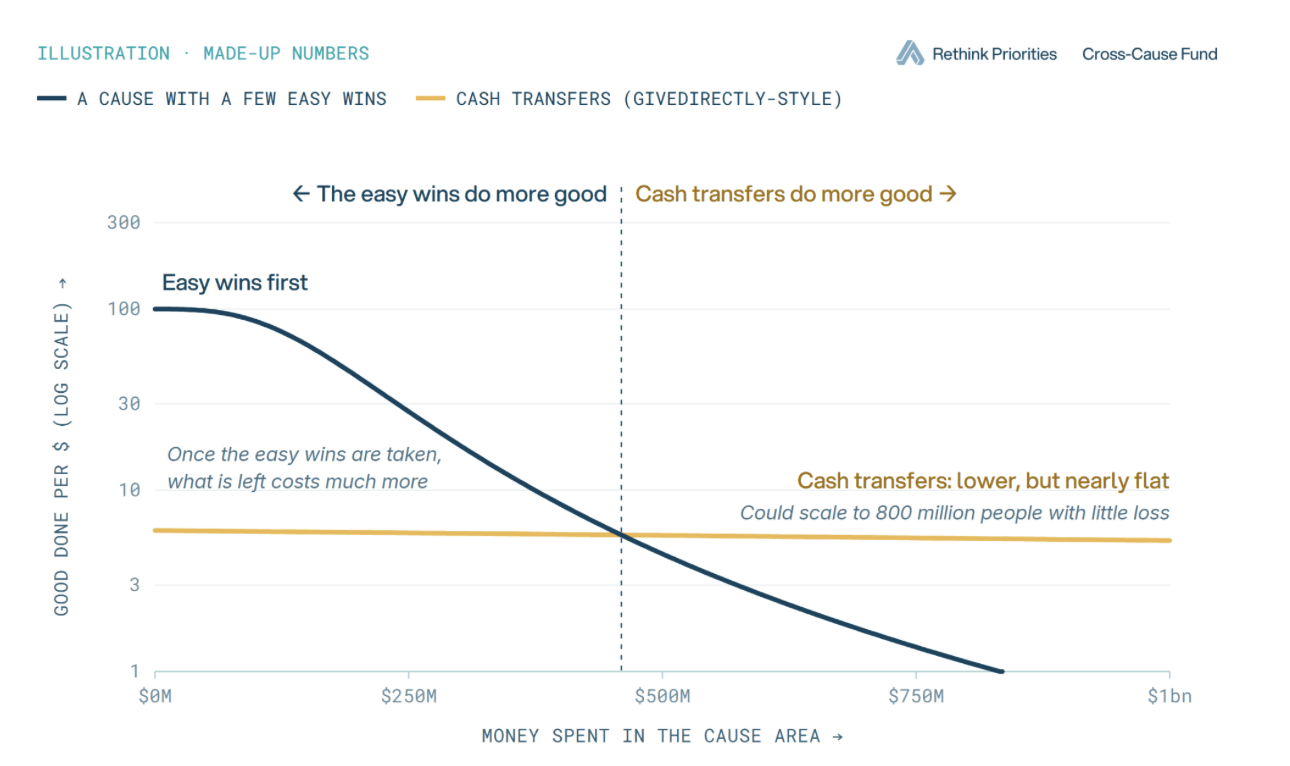 *Apple Podcasts and Spotify do not show images in the episode description. Try Pocket Casts, or another podcast app.*
This post is part of the Cross-Cause Fund (CCF) series by Rethink Priorities — a sequence of articles dedicated to effective giving across philanthropic areas. TL;DR: A lot of new money is about to…