Aug 6, 2026 · 1 hr 26 min · 12 segments
Iran’s nuclear program is now more than seven decades old, stretching from the Shah’s ambitious Atoms for Peace-era plans to the Islamic Republic’s pursuit of enrichment, missile capability and…
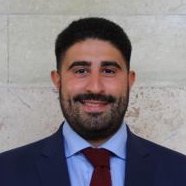
Farzan SabetGuestChris KeeferHostSo listen, I think like many people around the world, I'm trying to make sense of and get my head around the current conflict in Iran right now.
I have a deep abiding interest in nuclear technology, and that's been the focus of much of this podcast.
And when I started to look a little bit at the Iran situation through that nuclear lens, I was really surprised at some of the things that I uncovered.
You know, this almost 70 year history in terms of a nuclear program in Iran dating back to the atmosphere peace era, the time of the Shah, which I understand your doctoral thesis was quite a deep dive of.
And moving right on through, you know, Iran's first nuclear reactor, which was provided by the U.S. with highly enriched uranium fuel load.
You know, interesting turns and twists with, you know, the Kraftwerk Union of Germany beginning construction on a nuclear reactor.
ultimately finished by the Russians, in this case, a power reactor and obviously the fuel cycle investments, maybe to put it euphemistically, that Iran has made over the years.
And there's been really an enormous investment of capital, of material resources, of human resources over these last seven decades by Iran.
And in looking at your resume and trying to find the best guest to talk about this subject, I I've been really intrigued and trying to get my head inside of contemporary Iranian decision makers, and I guess past Iranian decision makers, to get a sense, again, of why Iran has made such enormous sacrifices with, in some ways, so little to show for it in terms of actual commercial nuclear power being generated or medical isotopes being generated.
And in some ways, this sort of autarky in terms of developing these capabilities is quite impressive.
So again, thanks again for setting aside a few hours of your very busy schedule.

So happy to talk about it both in a historical context as well as a contemporary one.
Well, let's dive into a little bit of that historical context and talk a little bit about the origins of the Iranian nuclear program.
Interested in just getting a sense, I guess, of the atmosphere in which the Shah, Mohammad Reza Pahlavi, started to pursue this advanced technology in the 60s and 70s.
So listen, I think like many people around the world, I'm trying to make sense of and get my head around the current conflict in Iran right now.
I have a deep abiding interest in nuclear technology, and that's been the focus of much of this podcast.
And when I started to look a little bit at the Iran situation through that nuclear lens, I was really surprised at some of the things that I uncovered.
You know, this almost 70 year history in terms of a nuclear program in Iran dating back to the atmosphere peace era, the time of the Shah, which I understand your doctoral thesis was quite a deep dive of.
And moving right on through, you know, Iran's first nuclear reactor, which was provided by the U.S. with highly enriched uranium fuel load.
You know, interesting turns and twists with, you know, the Kraftwerk Union of Germany beginning construction on a nuclear reactor.
ultimately finished by the Russians, in this case, a power reactor and obviously the fuel cycle investments, maybe to put it euphemistically, that Iran has made over the years.
And there's been really an enormous investment of capital, of material resources, of human resources over these last seven decades by Iran.
And in looking at your resume and trying to find the best guest to talk about this subject, I I've been really intrigued and trying to get my head inside of contemporary Iranian decision makers, and I guess past Iranian decision makers, to get a sense, again, of why Iran has made such enormous sacrifices with, in some ways, so little to show for it in terms of actual commercial nuclear power being generated or medical isotopes being generated.
And in some ways, this sort of autarky in terms of developing these capabilities is quite impressive.
So again, thanks again for setting aside a few hours of your very busy schedule.

So happy to talk about it both in a historical context as well as a contemporary one.
Well, let's dive into a little bit of that historical context and talk a little bit about the origins of the Iranian nuclear program.
Interested in just getting a sense, I guess, of the atmosphere in which the Shah, Mohammad Reza Pahlavi, started to pursue this advanced technology in the 60s and 70s.
The rest of this transcript — segmented and speaker-labeled, so you land on the exact moment something was said
Search every transcript — by keyword, by phrase, or by meaning, across every show Radar indexes
Trends — what is surging across podcasts, measured against its own baseline
Alerts — when a name you follow appears in a newly indexed episode
No account is needed to search Radar.