Jul 7, 2026 · 36 min · 8 segments
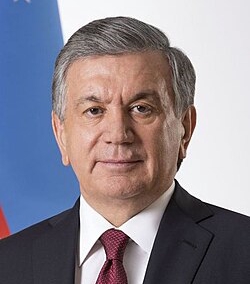
Uzbekistan’s strategic outlook continues to evolve. This week we examine President Shavkat Mirziyoyev’s landmark state visit to Georgia, the first by an Uzbek president in more than two decades…
Paolo SorbelloGuestDlegend KoandikovHostAnd he wrote a few weeks ago published a really interesting article on the development of surveillance technology the surveillance infrastructure in kazakhstan it's a really long article but really worth visiting and i i thought i really found it so interesting that i thought it would be good to have paula on the podcast to talk a little bit more about his article but i would obviously suggest that readers actually go and check out the article itself and i'll leave a link to that in the show notes Okay, Tlegan, let's start with this visit by Uzbek President Shavkat Mirziyoyev to Tbilisi.
And Uzbekistan, as far as I know, operates its interests in Georgia through its embassy in Baku.
So this visit by Shavkat Mirziyev, who presented it, a very interesting and important case because there was a lot of on the business side, but also a big focus was on the development of the middle corridor and the infrastructure, which kind of reminds us that Georgia, just as Central Asia, is essential region to this project.
And maybe you can drive us a little bit more into details of what actually has been signed and what was discussed and what they agreed to do together.
So the culmination, as often is the case with these state visits, was the signing of a declaration of strategic partnership, which is pretty much one of the highest levels of bilateral relation you can have.
in itself, I think, is suggestive for those people who are looking for clues of symbolism and diplomacy of the fact that Uzbekistan sees its fate now increasingly bonded not just with its traditional allies, and this means, of course, countries like Russia and maybe countries in the West or its nearby neighborhood.
So as we know, President Mirzoev has really promoted the cause of regional integration.
But now it's evident that Tashkent sees the need to project these strong relations a little bit further, specifically in the interests of the middle corridor, as you said.
But then the things that seem to be far more compelling to me was the actual business and all of the projections that both sides are making when it comes to actually making Middle Corridor a reality.
So, for instance, there were conversations about linking two railways, right? So there's this one railway is the Baku-Tbilisi-Kars railway, which crosses the Caucasus, west to east, east to west.
And the idea was that that would one day be linked to the China-Kyrgyzstan-Azbekistan railway.
So really what you see is this idea of actually creating a conversation around these two big infrastructure projects and bringing them together.
What is important to understand in the idea to link the two railways is it doesn't really move for now at least the project forward.
And he wrote a few weeks ago published a really interesting article on the development of surveillance technology the surveillance infrastructure in kazakhstan it's a really long article but really worth visiting and i i thought i really found it so interesting that i thought it would be good to have paula on the podcast to talk a little bit more about his article but i would obviously suggest that readers actually go and check out the article itself and i'll leave a link to that in the show notes Okay, Tlegan, let's start with this visit by Uzbek President Shavkat Mirziyoyev to Tbilisi.
And Uzbekistan, as far as I know, operates its interests in Georgia through its embassy in Baku.
So this visit by Shavkat Mirziyev, who presented it, a very interesting and important case because there was a lot of on the business side, but also a big focus was on the development of the middle corridor and the infrastructure, which kind of reminds us that Georgia, just as Central Asia, is essential region to this project.
And maybe you can drive us a little bit more into details of what actually has been signed and what was discussed and what they agreed to do together.
So the culmination, as often is the case with these state visits, was the signing of a declaration of strategic partnership, which is pretty much one of the highest levels of bilateral relation you can have.
in itself, I think, is suggestive for those people who are looking for clues of symbolism and diplomacy of the fact that Uzbekistan sees its fate now increasingly bonded not just with its traditional allies, and this means, of course, countries like Russia and maybe countries in the West or its nearby neighborhood.
So as we know, President Mirzoev has really promoted the cause of regional integration.
But now it's evident that Tashkent sees the need to project these strong relations a little bit further, specifically in the interests of the middle corridor, as you said.
But then the things that seem to be far more compelling to me was the actual business and all of the projections that both sides are making when it comes to actually making Middle Corridor a reality.
So, for instance, there were conversations about linking two railways, right? So there's this one railway is the Baku-Tbilisi-Kars railway, which crosses the Caucasus, west to east, east to west.
And the idea was that that would one day be linked to the China-Kyrgyzstan-Azbekistan railway.
So really what you see is this idea of actually creating a conversation around these two big infrastructure projects and bringing them together.
What is important to understand in the idea to link the two railways is it doesn't really move for now at least the project forward.
The rest of this transcript — segmented and speaker-labeled, so you land on the exact moment something was said
Search every transcript — by keyword, by phrase, or by meaning, across every show Radar indexes
Trends — what is surging across podcasts, measured against its own baseline
Alerts — when a name you follow appears in a newly indexed episode
No account is needed to search Radar.