
608 - Sneaky Bubbles - Sam and Mawera
Sep 9, 2026 · 49 min · 10 segments
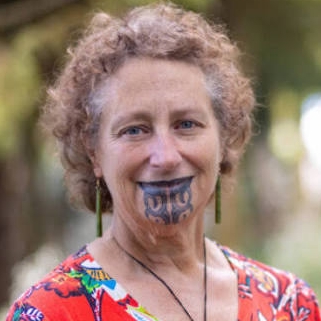
608 - Sneaky Bubbles - Samuel Mann catches Mawera Karetai after she snuck through town. This show was broadcast on OAR 105.4FM Dunedin - oar.org.nz
Sep 9, 2026 · 49 min · 10 segments
608 - Sneaky Bubbles - Samuel Mann catches Mawera Karetai after she snuck through town. This show was broadcast on OAR 105.4FM Dunedin - oar.org.nz

Well, the whole region has definitely got a bunch of issues around sea level rise, these big inundation events that we keep having with the weather patterns changing, with vertical land movements and unstable soil around our coastal areas.
So kind of quite similar to what's happening in South Dunedin in terms of that, you know, from from like those low lying areas, through to the coast, same kind of issues.

No, and I get that because it's such a, there's a couple of different problems that happen.
One of them is that the aging infrastructure is going to take a generation to replace.
That is the biggest problem and everybody wants it replaced now, but they don't want their house removed so that the new pipes can be put down.
They've got So issues around the same thing that's happening all around Aotearoa, which is an aging infrastructure that has been built over, that is just going to be such a drama to replace.
They've got to figure out where and how to contain the water, because like the Bay of Plenty, it's from inundation events that the big problem occurs, where there's just the volume, the sheer volume of rain comes in, floods, and then goes out again.
But it's how to keep it contained while the getting out again part can be resolved.
And what I really appreciated about them is the level of community engagement.
But what I saw from the DCC is really really good community engagement but of course everyone's always going to be unhappy no one's ever happy like people are always very quick to blame blame the council but of course these people have inherited a problem not by their own design if they were given the opportunity to design it themselves it would be very different from the design that we're currently living with and the same can be said here in the eastern bay
I don't know if you saw the front page of the ODT yesterday that had you on it, but the story beneath your story,
did
I did, and I laughed out loud at that, not because of, like, they were trying to make it seem like it was a ridiculous thing that had to happen in Gore, but I think sometimes newspapers have, especially in this day and age, they report stories for clickbait, not necessarily for informing.
it's small little pockets of places that are so low-lying that they have to be not only lifted to bring them up to whatever the normal is now, but also future-proofed.
we should say, it was a picture of some people in Gore, some builders or someone in Gore, standing beside some poles that marked out where the floor level had to be, and they were sort of saying, we're going to have to climb up a mountain to get into our house, this sort of stuff, and...



Well, the whole region has definitely got a bunch of issues around sea level rise, these big inundation events that we keep having with the weather patterns changing, with vertical land movements and unstable soil around our coastal areas.
So kind of quite similar to what's happening in South Dunedin in terms of that, you know, from from like those low lying areas, through to the coast, same kind of issues.
No, and I get that because it's such a, there's a couple of different problems that happen.
One of them is that the aging infrastructure is going to take a generation to replace.
That is the biggest problem and everybody wants it replaced now, but they don't want their house removed so that the new pipes can be put down.
They've got So issues around the same thing that's happening all around Aotearoa, which is an aging infrastructure that has been built over, that is just going to be such a drama to replace.
They've got to figure out where and how to contain the water, because like the Bay of Plenty, it's from inundation events that the big problem occurs, where there's just the volume, the sheer volume of rain comes in, floods, and then goes out again.
But it's how to keep it contained while the getting out again part can be resolved.
And what I really appreciated about them is the level of community engagement.
But what I saw from the DCC is really really good community engagement but of course everyone's always going to be unhappy no one's ever happy like people are always very quick to blame blame the council but of course these people have inherited a problem not by their own design if they were given the opportunity to design it themselves it would be very different from the design that we're currently living with and the same can be said here in the eastern bay
I don't know if you saw the front page of the ODT yesterday that had you on it, but the story beneath your story,
did
I did, and I laughed out loud at that, not because of, like, they were trying to make it seem like it was a ridiculous thing that had to happen in Gore, but I think sometimes newspapers have, especially in this day and age, they report stories for clickbait, not necessarily for informing.
it's small little pockets of places that are so low-lying that they have to be not only lifted to bring them up to whatever the normal is now, but also future-proofed.
we should say, it was a picture of some people in Gore, some builders or someone in Gore, standing beside some poles that marked out where the floor level had to be, and they were sort of saying, we're going to have to climb up a mountain to get into our house, this sort of stuff, and...
The rest of this transcript — segmented and speaker-labeled, so you land on the exact moment something was said
Search every transcript — by keyword, by phrase, or by meaning, across every show Radar indexes
Trends — what is surging across podcasts, measured against its own baseline
Alerts — when a name you follow appears in a newly indexed episode
No account is needed to search Radar.

