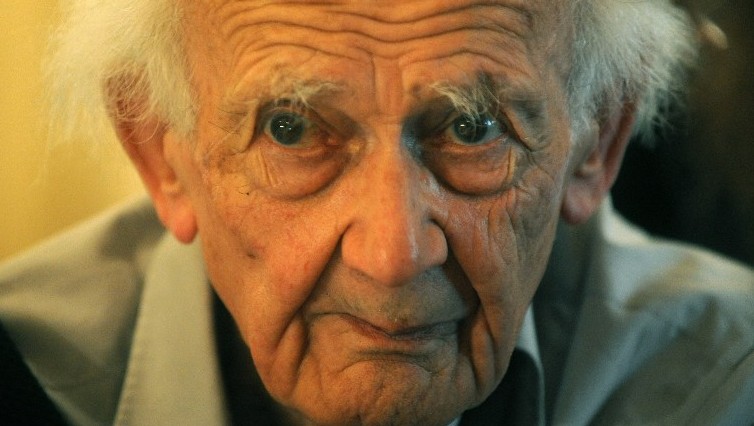
Zygmunt Bauman
Polish-British sociologist and philosopherWikipedia
13
MENTIONS
8
EPISODES
8
PODCASTS
Search complete. 13 mentions across 8 episodes found for "Zygmunt Bauman".
Oct 7, 2026

speaker_0NARRATOR
They restructure the political economy, ethical foundations, and epistemological status of the language professions themselves.
speaker_0NARRATOR
Bauman, 2000.
speaker_0NARRATOR
Translation is no longer a matter of lexical equivalence or stylistic fidelity alone.
speaker_0NARRATOR
It has become a central mechanism through which social reality, institutional authority, and vulnerability are mediated.
speaker_0NARRATOR
Translation, in this sense, is simultaneously epistemic labor and ethical labor, inseparable from the governance of meaning itself.
speaker_0NARRATOR
From institutional stability to liquid professional conditions.
speaker_0NARRATOR
Zygmunt Bauman's concept of liquid modernity offers a productive framework for understanding the contemporary condition of translation and interpreting.
speaker_0NARRATOR
Liquid modernity describes social arrangements characterized by volatility, acceleration, and continuous reconfiguration, in contrast to earlier periods marked by institutional continuity and relatively durable professional identities.

Rusty RenoGUEST
[laughs] It's not a, a, you know, a really serious, you know, scholar could sit down and write a big book about the disintegration of...
Rusty RenoGUEST
I mean, Zygmunt Bauman coined the term liquid modernity.
Rusty RenoGUEST
So a lot of sociologists and social theorists have seen and tried to talk about this phenomenon.
Rusty RenoGUEST
Uh, I wanted to draw it in more into the vocabulary we use in our, in the political realm.
21 MINS LATER
Rusty RenoGUEST
But do we just presume that that would be the course of our life? And so that paradoxically, that gave us more freedom because we were able to take certain things for granted and then have adventures of our own with our own lives, not feeling like everything was always at stake.
Rusty RenoGUEST
So the cultural element, the political element, the technological element.
Rusty RenoGUEST
There was a, I think it was, uh, Zygmunt Bauman, uh, said about wh- where the problem is not people in Budapest marching in the streets seeking a final solution.
Rusty RenoGUEST
They're in the streets looking for the final sale.

Will DaviesGUEST
So to come back to your actual question, the reason why perhaps we don't live in an age of intellectuals of the kind that Weber and others might have envisaged or that Sartre embodied is partly by design, that actually there has been a wholesale critique and deconstruction of the figure of the intellectual.
Will DaviesGUEST
I suppose one of the analyses that captures this best is is Zygmunt Bauman, the sociologist's analysis of the transition from intellectuals as legislators to intellectuals as translators.
Will DaviesGUEST
And this is a symptom of the rise of what sociologists have called post-modernity, perhaps expressed most clearly in the work of Jean-Francois Lyotard in The Postmodern Condition, published in 1979, which basically says that...
Will DaviesGUEST
We live in an age where knowledge is no longer sitting outside of society on the economy, offering a kind of a sort of picture of how society works.

Aljoša BagolaGUEST
And only then can we genuinely choose the life we want instead of semi-automatically or fully automatically leave one we were assigned.
Aljoša BagolaGUEST
I recently came across an interview with the fantastic novelist Elif Shafak, and she spoke about Zygmunt Bauman's idea of inner democracy.
Aljoša BagolaGUEST
Zygmunt Bauman suggested that while we understand political democracy, Many of us still live under what he calls an inner dictatorship, right? We tend to silence the parts of ourselves because they don't fit the identity that we've constructed for ourselves or that others have constructed for ourselves.
Aljoša BagolaGUEST
And this, again, resonated with me because during my recovery, Jung's idea of shadow work made me realize that healing wasn't about becoming someone new, right? But it was about allowing more parts of myself to have a voice.
Aljoša BagolaGUEST
And so I think that the job to be done is to establish this inner democracy.

Aljoša BagolaGUEST
And only then can we genuinely choose the life we want instead of semi-automatically or fully automatically leave one we were assigned.
Aljoša BagolaGUEST
I recently came across an interview with the fantastic novelist Elif Shafak, and she spoke about Zygmunt Bauman's idea of inner democracy.
Aljoša BagolaGUEST
Zygmunt Bauman suggested that while we understand political democracy, Many of us still live under what he calls an inner dictatorship, right? We tend to silence the parts of ourselves because they don't fit the identity that we've constructed for ourselves or that others have constructed for ourselves.
Aljoša BagolaGUEST
And this, again, resonated with me because during my recovery, Jung's idea of shadow work made me realize that healing wasn't about becoming someone new, right? But it was about allowing more parts of myself to have a voice.
Aljoša BagolaGUEST
And so I think that the job to be done is to establish this inner democracy.

Maureen CallahanHOST
Every form of social order produces waste.
Maureen CallahanHOST
You cite a sociologist named Zygmunt Bauman.
Maureen CallahanHOST
There's always a boundary between clean and dirty, pure and impure.
Maureen CallahanHOST
But in a world like ours, shaped by an obsession with progress, we have one particular feature.

Claudia RankineGUEST
Is it our job to police the actions of others rather than to do what each of us can do to the point that we can do it?
Alexis MadrigalHOST
The phrase that kept occurring to me, there's, you know, regular listeners of this program will wonder why I've brought up many times, Zygmunt Bauman, a Polish philosopher, who has this amazing line about our times, you know, that anything can happen, but nothing can be done.
Alexis MadrigalHOST
And that's sort of the state of power in the world, what he calls liquid modernity.
Alexis MadrigalHOST
And that really, that line resonated throughout this book for me, the sense of that.

DrewHOST
The last kind of big cultural force is very tied in with this one as well.
DrewHOST
There was this guy, Zygmunt Bauman.
DrewHOST
He wrote this book called Liquid Modernity back in like early 2000s.
DrewHOST
And he explained some of that economic and cultural scaffolding.