Zettelkasten
12
MENTIONS
9
EPISODES
8
PODCASTS
Search complete. 12 mentions across 9 episodes found for "Zettelkasten".
Nov 20, 2026

JayHOST
I got really into that during the pandemic.
JayHOST
And I was... taking like yes buddy a tutorial with Bob Dotto who does like Zettelkasten stuff especially for like if you are a writer and he in his like setup he was talking about how like so much of this space is about like reducing the amount of friction between steps between recording info and between retrieving info and between putting it all together and When it's actually good for this if you actually introduce friction back into it because you have to be able to actually consciously think about something and actually actively...
JayHOST
You don't want to take all of your agency and all of the out of the process of... recording information and bring it back in and synthesizing it like there is an element where you need to be slowed down and to think about things even if there are other things that can make it easier especially to like collect it somehow
Thomas Gagnon-Van LeeuwenGUEST
Yeah, 100%.

Mary A. StosichGUEST
It's just my thing.
Mary A. StosichGUEST
In fact, I did a Zettelkasten on this book.
Mary A. StosichGUEST
Do you know what a Zettelkasten is? I don't.
Mary A. StosichGUEST
So it's this complicated that's supposed to be simple, but it's just a wooden file box and you make note cards.
Mary A. StosichGUEST
This is my husband's book.

Jeff GibbardGUEST
So what the Superbrain OS is, is that originally, prior to even the explosion of ChatGPT and every other AI tool that followed it, I was building a personal knowledge management system.
Jeff GibbardGUEST
I was looking into the Zettelkasten method and, you know, Tiago Forte's building a second brain and ultimately looking into how do we manage vast sums of information, both as individuals but also as organizations.
Jeff GibbardGUEST
And so I began building this system that had a series of different nodes in a database structure using Notion.
Jeff GibbardGUEST
And the idea was to create a system where everything had a home so that nothing ever got lost and there was always a way to know where to find something through different channels and relations.

Duncan DavidsonGUEST
They need to be portable and they also need to be separately scoped.
Duncan DavidsonGUEST
So that's one of the things I've definitely run into in my own experiments is I have a pile of stuff that is general knowledge stuff that I work on, Zettelkasten kind of second brain stuff, right? But then there's the stuff that's very much about my family.
Duncan DavidsonGUEST
And then there's stuff that's very much about my finances, for example.
Duncan DavidsonGUEST
And whatever we do and whatever tools we have really need to figure out, they need to have a mechanism for scoping these things so that I can say give Claude access to these scopes of my knowledge, but not everything.

Scotty ShepardHOST
I've been looking forward to this project for a couple months now.
Scotty ShepardHOST
Without boring you with the details, I'm using an analog Zettelkasten, or Antinet, in my reading and research.
Scotty ShepardHOST
This will be a test of my use of note boxes, my ability to process and produce information, and Scotty Shepard's Antinet ideas.
Scotty ShepardHOST
Of Scotty's description of the system, I have the first two going pretty well.

DrewHOST
I think it's more of a methodology than anything else, or it's a framework, if you will.
DrewHOST
I know that there are other kind of like ideas or ideologies like the Zettelkasten method, for example.
DrewHOST
I wish I could speak more to that.
DrewHOST
I will say that I have done two videos on Zettler because I really liked their note-taking kind of like methodology, I don't use it.
46 MINS LATER
MattHOST
Drew, your Nuggie of the
DrewHOST
Week.
DrewHOST
All right, we didn't talk about Zettelkasten at all, and that's cool, that's fine.
DrewHOST
This thing that I looked at this week, though, knowing about this topic, is a tool called ZK.

Stu LennonHOST
yeah.
Stu LennonHOST
It's sort of, yeah, a sort of Zettelkasten Ryan Holiday hybrid thing.
Stu LennonHOST
And then the last one is my sort of fallback capture system is my phone.
Stu LennonHOST
It's the Samsung Ultra.
DrewHOST
And in about 20 lines of config... and a little bit of javascript now there is one and so in order for me to kind of like use it uh to a diff a varying degree now you can do a lot more than i thought you could ever do by helping yourself using um some type of tool like claude or what have you say i want to do this and it's like i want to use genie to do it and it can do some amazing things i i'm We even talked about this about a week ago, man.
DrewHOST
I was like, I have a one, I just say super N and it pops up genie in a quick note or super shift N and it pops up genie in a more Zettelkasten type note in a long form.
DrewHOST
It just provides that type of template for me.
DrewHOST
It's an amazing piece of software that's 20 years old that needs a little bit more respect.

Charlie FengGUEST
think you might see this on a tool that's getting pretty popular these days is Obsidian because it's a kind of a note-taking tool that was popularized before by the Rome research, kind of like a lot of academic folks would use it.
Charlie FengGUEST
And the core concept of second brain or whether you use Obsidian or Rome research or one of these tools before it was the idea of a I forgot who invented it, but the name of the term, I think it was a German academia person, Zettelkasten.
Charlie FengGUEST
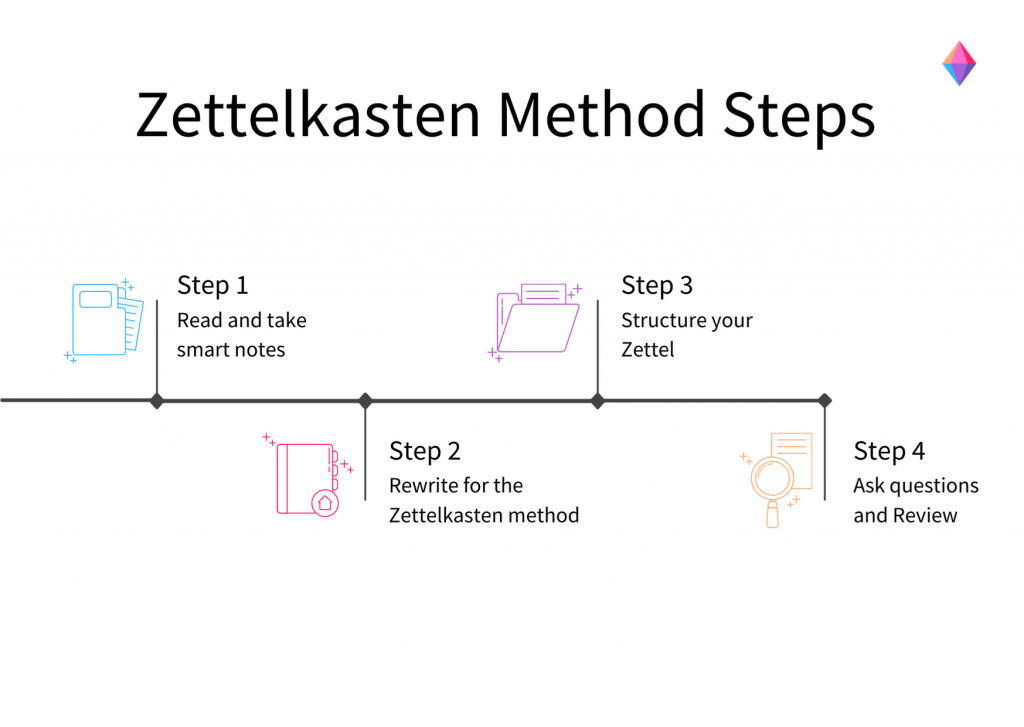
And it's basically a method where it's really just the idea of whenever you write a piece of note, try to be very deliberate in joining pieces of that note to previous notes you've written.
Charlie FengGUEST
So let's say we're talking about this podcast about AI.