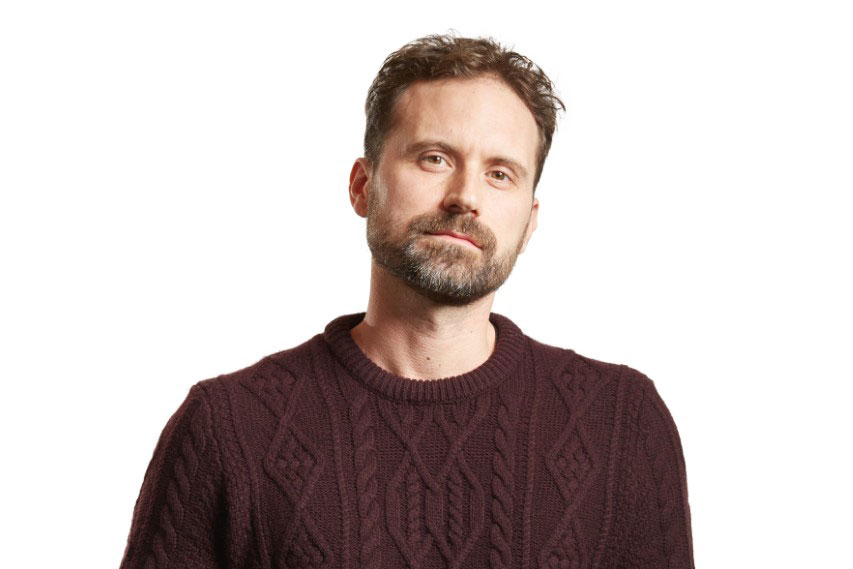
Zayd Ayers Dohrn
Playwright ‧ Bernardine Dohrn's son
5
APPEARANCES
4
PODCASTS
Oct 1, 2026


Zayd Ayers DohrnGUEST
Yeah, well, as you say, it's quite an astonishing journey because she grew up, you know, a middle class white kid in suburban Wisconsin in Whitefish Bay, just outside of Milwaukee.
Zayd Ayers DohrnGUEST
You know, her dad voted for Joe McCarthy and he was a second generation Jewish immigrant who was very patriotic, very conservative.
Zayd Ayers DohrnGUEST
you know, in the 1950s, believing in the American dream and really being raised to try to, you know, better her family's future.
21 MINS LATER

Phil ProctorHOST
Zaid, do you think there is potential for violent resistance to what's happening in this country, or do you think it's something in the past?


Peter SlenHOST
And what made them go underground in the first place? Because during the 60s, your parents were above ground.
Zayd Ayers DohrnGUEST
Yeah, my parents were peaceful anti-war activists and anti-racist activists for quite a long time, for most of the 1960s.
Zayd Ayers DohrnGUEST
Like I mentioned, my mom was one of the national leaders of SDS, Students for a Democratic Society.
Zayd Ayers DohrnGUEST
So she and her friends spent much of their adult lives protesting nonviolently, you know, trying to help with voter registration drives, trying to help elect somebody other than richard nixon to the presidency trying to end the vietnam war um by 1970 they and their friends felt like nothing was working like the the violence and carnage in vietnam was accelerating the violence against black civil rights groups here at home was accelerating the fbi was breaking its own laws to try to disrupt the black freedom movement so they started to feel that that more was needed that they had to do more and and one thing that really was a a signal kind of turning point in their history was the murder of Black Panther leader Fred Hampton.
Zayd Ayers DohrnGUEST
When the Chicago police killed Fred Hampton, you know, in his bed, asleep, they basically murdered him in cold blood with the help of the FBI.
Zayd Ayers DohrnGUEST
I think my parents and some of their friends felt, well, we are now living in an authoritarian fascist state and we have to do more.
Zayd Ayers DohrnGUEST
If we keep organizing politically, the government is just going to go around killing people until the movement is extinguished.
12 MINS LATER

Peter SlinnHOST
And what made them go underground in the first place? Because during the 60s, your parents were above ground.
Zayd Ayers DohrnGUEST
Yeah, my parents were peaceful anti-war activists and anti-racist activists for quite a long time, for most of the 1960s.
Zayd Ayers DohrnGUEST
Like I mentioned, my mom was one of the national leaders of SDS, Students for a Democratic Society.
Zayd Ayers DohrnGUEST
So she and her friends spent much of their adult lives protesting nonviolently, trying to help with voter registration drives, trying to help elect somebody other than richard nixon to the presidency trying to end the vietnam war um by 1970 they and their friends felt like nothing was working like the the violence and carnage in vietnam was accelerating the violence against black civil rights groups here at home was accelerating the fbi was breaking its own laws to try to disrupt the black freedom movement so they started to feel that that more was needed that they had to do more and and one thing that really was a a signal kind of turning point in their history was the murder of Black Panther leader Fred Hampton.
Zayd Ayers DohrnGUEST
When the Chicago police killed Fred Hampton, you know, in his bed, asleep, they basically murdered him in cold blood with the help of the FBI.
Zayd Ayers DohrnGUEST
I think my parents and some of their friends felt, well, we are now living in an authoritarian fascist state and we have to do more.
Zayd Ayers DohrnGUEST
If we keep organizing politically, the government is just going to go around killing people until the movement is extinguished.
11 MINS LATER

Zayd DohrnGUEST
N- well, yeah, we were able to live relatively normally for a few months in New York, but some of their friends in the Underground had not turned themselves in.
Zayd DohrnGUEST
Of course, some of their friends had decided to continue the struggle to continue supporting the Black Liberation Army in their fight against the New York police, and two of their friends, Kathy Boudin and David Gilbert, took part in a bank robbery in upstate New York called the Brinks robbery, where, again, some armed Black militants robbed a bank or robbed an armored car of about $1.6 million in cash.
Zayd DohrnGUEST
And then Kathy and David, my parents' friends, were driving getaway cars, but they were stopped on the highway by police.
Zayd DohrnGUEST
When they opened the back of the truck where the militants were hiding, people started shooting.
Zayd DohrnGUEST
Two police officers and a guard were killed, and the robbery was just an utter catastrophe.
14 MINS LATER
Zayd Ayers DohrnGUEST
My parents grew up very normal middle class or upper middle class kids in, in nineteen fifties America.
Zayd Ayers DohrnGUEST
So my mom, suburban white girl from Wisconsin, her father was a second-generation immigrant.
Zayd Ayers DohrnGUEST
She was the first person in her family ever to go to college, straight A student, the kind of, uh, hope and dream of her parents and their sort of aspiration for the American dream.
Zayd Ayers DohrnGUEST
So how did she become a violent revolutionary and a most wanted fugitive? It's quite a strange journey, and I guess it would start with the fact that when she went to law school at the University of Chicago, Dr.
Zayd Ayers DohrnGUEST
Martin Luther King Jr. came to Chicago to lead a rent strike in Chicago against housing, you know, racist housing segregation, and she volunteered to be a part of that.
10 MINS LATER
speaker_6ADVERTISER
Call one eight four four MIBO-yeah or visit mibo.com. MiBO, yeah.