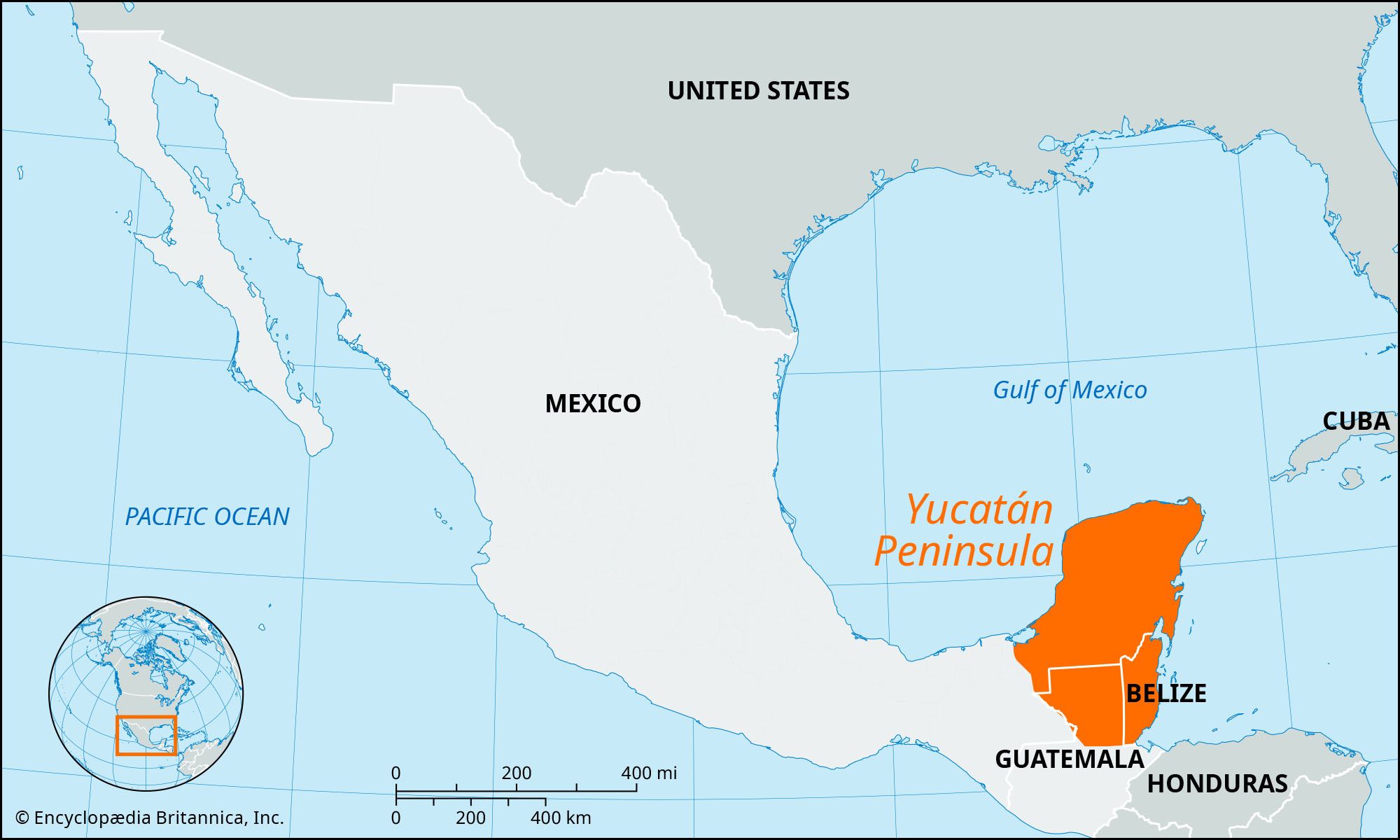
Yucatán Peninsula
Peninsula in North AmericaWikipedia
160
MENTIONS
131
EPISODES
115
PODCASTS
Search complete. 160 mentions across 131 episodes found for "Yucatán Peninsula".
Oct 30, 2026

Greg MargueriteNARRATOR
Buried at the site of a mass extinction event.
Greg MargueriteNARRATOR
Buried at the bottom of a crater created by an impactor that struck the Yucatan Peninsula 65 million years ago, killing the dominant megafauna of the planet.
Greg MargueriteNARRATOR
resetting the biological clock, leaving the way clear for smaller and more adaptable forms of life to eventually fill the niches left behind.
Greg MargueriteNARRATOR
The extinction of the dinosaurs was not accidental.

Tyler KiwalaHOST
That is huge.
Tyler KiwalaHOST
So what's your opinion on the talk of merging Canada with the U.S. and pushing the Mexican border down to the Yucatan Peninsula where bottlenecks? Is it just because that was rightfully ours at once and we're taking it back?
Dan CooperGUEST
Oh, they want the ball? No, no, no.
Dan CooperGUEST
They're negotiating for all these things.

Michael J. CarterGUEST
My first conscious, and by that I mean where I was an adult, experience was on December 28, 1989.
Michael J. CarterGUEST
My girlfriend at the time and I were in Cancun, And we took a day trip to the Yucatan Peninsula.
Michael J. CarterGUEST
You know, we're in Mexico.
Michael J. CarterGUEST
And we went to see the pyramids, the Mayan pyramids at Chichen Itza and Tulum.

Joseph AP WilsonGUEST
Peru is one of the cradles of civilization on planet Earth.
Joseph AP WilsonGUEST
It's one of those places where cities were invented from scratch, right? Like it's every bit as important as the Yucatan Peninsula or as, you know, the Indus Valley or the Yellow River Valley or the Tigris and the Euphrates regions, right? These are all places where human civilizations developed complex states and empires organically from...
Joseph AP WilsonGUEST
from Stone Age precursors.
Joseph AP WilsonGUEST
And so the Nazca-Baracus region represents the region where the kind of Proto-Inca culture evolved and developed over thousands of years, including these mummification practices.

Garrett SwaderHOST
So the book covers natives from a few different regions in the Caribbean area affected by buccaneering and details ways that they were affected by raiders that came into their lands.
Garrett SwaderHOST
Some of the areas include the Yucatan Peninsula, the Mosquito Coast.
Garrett SwaderHOST
central america the darien isthmus uh the south sea on the pacific side and i think maybe some others i'm forgetting but uh that covers a lot of it
JosephHOST
yep that covers most of it and it's fun to read through that and you see the different some of the different words that are used for faction titles and blood and plunder so it's really easy to get pulled into it if you're well versed in blood and plunder
JosephHOST
But that's not what they were there for at this point.
Garrett SwaderHOST
So we kind of went through this before, but again, the historical context of this book, you're in the buccaneering period, which is in the mid 17th century, mostly regions in North America, Central America, a little bit of South America, probably on the Pacific side.
Garrett SwaderHOST
kind of the big players in the book are those various native, uh, factions that you can find in blood and plunder, like the, the, the Darien, the, uh, mosquito Zombo I know are covered, uh, the Maya on the, uh, Yucatan Peninsula, and I don't know if we have any, like, I guess, well, Golden Cap is Darien, but I don't know if we have any Native American tribes that were specifically South Sea dwelling.
Garrett SwaderHOST
The Maya

Steve RamirezGUEST
So I start the book at the end of the world.
Steve RamirezGUEST
And then I follow the conquistadors path all the way through Mexico, through the Sea of Cortez and down through the Yucatan, through the Central American rainforest, through the Amazon jungle, through the Peruvian cloud forest, all the way down into Northern Argentina, chasing Golden Dorado, and then all the way from Northern Patagonia to the very southern tip of Patagonia, and just south of this tip of Patagonia is another lighthouse and another pinnacle, and that also is named the end of the world.
Steve RamirezGUEST
But what you'll see at that title is a season in Patagonia, an angler and naturalist journey to a new world, not the end of the world.
Steve RamirezGUEST
And my point is, once you've traveled with me, once you've been in the rainforest, in the jungle with me, with the Kayapos, once you've been on this whole journey with me, and I'm following what happened when the conquistadors got here, how perspectives of how we treat each other in the world impacted our outcomes.
Steve RamirezGUEST
By the time you get to the end of this, you realize there's a lot of hope, but we've got to care enough to do something about it.
Steve RamirezGUEST
And the other thing I'm showing in this book is that we have a whole lot in common.
Steve RamirezGUEST
Because everywhere I went, from the jungle to the Yucatan to the Sea of Cortez, I mean, I met wonderful people who are my friends to this day.
Steve RamirezGUEST
And I think the message nowadays is they're not us, so they're no good.

Steve RamirezGUEST
So I start the book at the end of the world.
Steve RamirezGUEST
And then I follow the conquistadors path all the way through Mexico, through the Sea of Cortez and down through the Yucatan, through the Central American rainforest, through the Amazon jungle, through the Peruvian cloud forest, all the way down into Northern Argentina, chasing Golden Dorado, and then all the way from Northern Patagonia to the very southern tip of Patagonia, and just south of this tip of Patagonia is another lighthouse and another pinnacle, and that also is named the end of the world.
Steve RamirezGUEST
But what you'll see at that title is a season in Patagonia, an angler and naturalist journey to a new world, not the end of the world.
Steve RamirezGUEST
And my point is, once you've traveled with me, once you've been in the rainforest, in the jungle with me, with the Kayapos, once you've been on this whole journey with me, and I'm following what happened when the conquistadors got here, how perspectives of how we treat each other in the world impacted our outcomes.
Steve RamirezGUEST
By the time you get to the end of this, you realize there's a lot of hope, but we've got to care enough to do something about it.
Steve RamirezGUEST
And the other thing I'm showing in this book is that we have a whole lot in common.
Steve RamirezGUEST
Because everywhere I went, from the jungle to the Yucatan to the Sea of Cortez, I mean, I met wonderful people who are my friends to this day.
Steve RamirezGUEST
And I think the message nowadays is they're not us, so they're no good.

Doug CahoonGUEST
Throughout the summer, I was probably eating a quarter a day.
Doug CahoonGUEST
But now we're seeing so many of these newer varieties really getting to the growers in Mexico, in Guatemala, in Costa Rica, Yucatan.
Doug CahoonGUEST
And we're getting more of that consistent quality throughout the year that the season's no way the size of the domestic window.
Doug CahoonGUEST
But certainly if folks can get a good watermelon and it stays good, they'll stick with it as long as it continues to eat well.

Jesse RogersonGUEST
Let's put that in perspective for the one that killed the dinosaurs.
Jesse RogersonGUEST
That was an impactor that happened 65 million years ago off the coast of the Yucatan Peninsula.
Jesse RogersonGUEST
That thing was 10 kilometers in size.
David CooperHOST
OK, that's huge.
Jesse RogersonGUEST
Let's put that in perspective for the one that killed the dinosaurs.
Jesse RogersonGUEST
That was an impactor that happened 65 million years ago off the coast of the Yucatan Peninsula.
Jesse RogersonGUEST
That thing was 10 kilometers in size.
David CooperHOST
OK, that's huge.
121 more episodes mention Yucatán Peninsula.
Create an account to see the whole feed, search across every transcript, and follow the entities you care about.