Yuan dynasty
DynastyWikipedia
137
MENTIONS
44
EPISODES
32
PODCASTS
Search complete. 137 mentions across 44 episodes found for "Yuan dynasty".
Oct 1, 2026

Steven SirskiHOST
So Song Dynasty, 960 to 1279.
Steven SirskiHOST
Yuan Dynasty, 1271 to 1368.
Steven SirskiHOST
This is when Kublai Khan, Mr. Mongol, beheads anybody who doesn't agree with him.
Steven SirskiHOST
And he takes over.
Steven SirskiHOST
I don't know.
Steven SirskiHOST
But Putonghua, standard Mandarin Chinese is your official national language in the province.
Steven SirskiHOST
So that we go from Yuan Dynasty, 1271 to 1368.
Steven SirskiHOST
That's all the Mongols.

ChenHOST
And then this is an important one.
ChenHOST
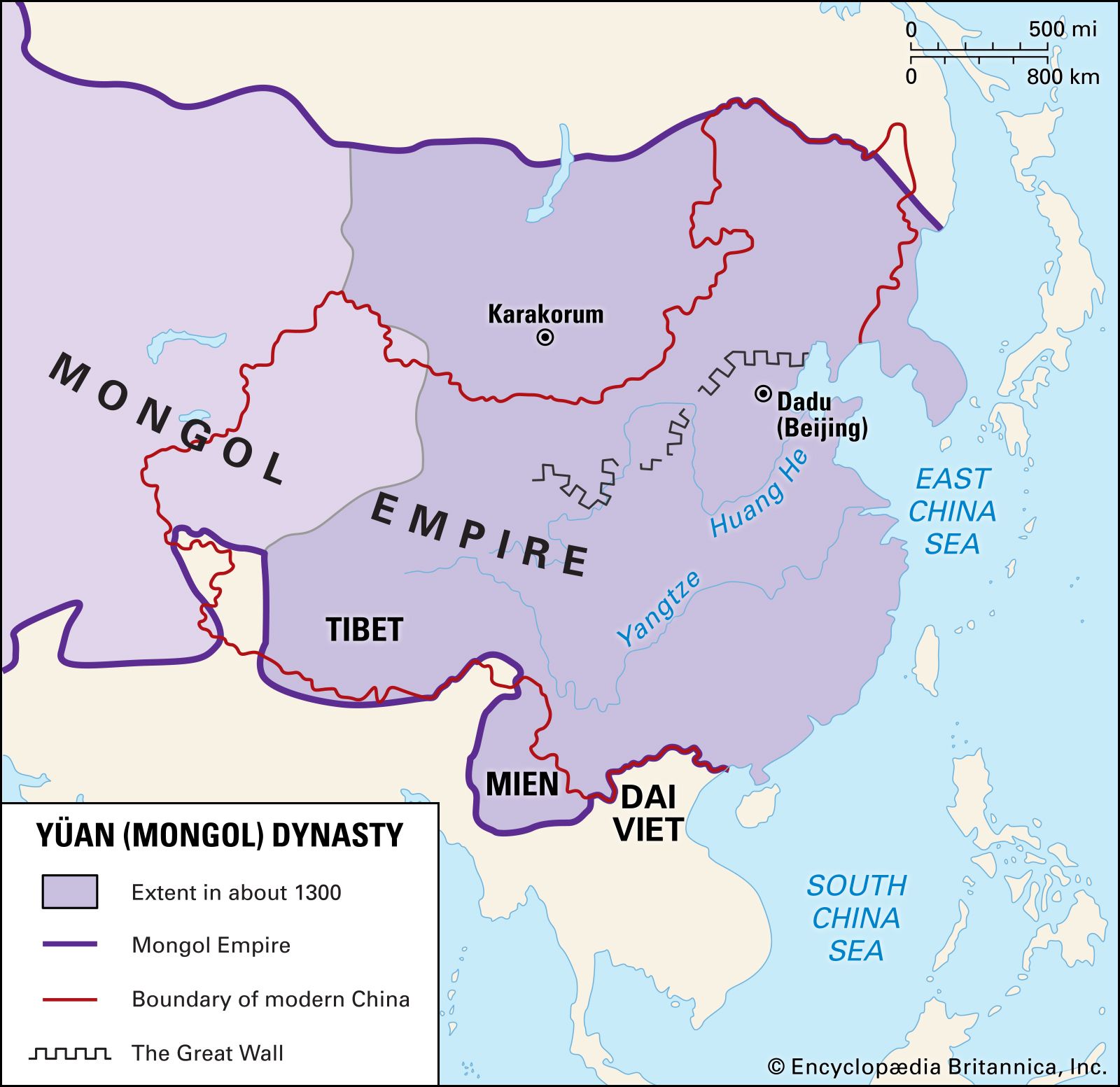
Kangis Khan's grandson, Kublai Khan, who was also the founding emperor of Yuan Dynasty, he didn't rebuild the Beijing city.
ChenHOST
He started fresh.
ChenHOST
In 1260s, he built a brand new city on a different size, Da Du.

BrooksGUEST
And, and that's kind of been talked about by like the, the historical masters of, of Daoist Neidan, um, a, a number of them.
BrooksGUEST
And so for example, like, uh, Li Daochun in the Yuan dynasty.
BrooksGUEST
So he founded what's called the Middle School of Neidan, and it was ...
BrooksGUEST
He, he really kind of synthesized different schools and he synthesized Buddhism and Daoism together.

Jonathan ClementsGUEST
Firstly, he doesn't just talk about the Ming dynasty.
Jonathan ClementsGUEST
He talks about the Yuan dynasty, the Mongol dynasty that preceded it.
Jonathan ClementsGUEST
And the reason that he does that is because of new understanding of climate science.
Jonathan ClementsGUEST
So what Timothy Brook says is that he lumps these two dynasties together because between the 13th century and the 17th century, China was subjected to nine absolutely cataclysmic climate catastrophes.
Jonathan ClementsGUEST
He calls them the Nine Sloughs.
Jonathan ClementsGUEST
And each of these was a terrible event that brought drought and floods and then famine and then disease.
Jonathan ClementsGUEST
And because it spanned the Yuan dynasty and the Ming dynasty, he lumps them both together because he says the Yuan dynasty was brought down by one of these sloughs.
Jonathan ClementsGUEST
And that's what allowed the Ming rebels to take over.

John GreenHOST
And India in 1994? Obviously the plague affected a lot of individuals' lives, but it also affected world history.
John GreenHOST
Like, plague probably contributed to the fall of the Yuan Dynasty in China in the 14th century, but its greatest effects were felt in Western Europe.
Jimmy ConradADVERTISER
Okay, let's go to the Thought Bubble.
John GreenHOST
There's some debate about whether the Black Death kick-started Europe's economy and ended the Middle Ages.

Marianne SpiegelNARRATOR
That celebrated Venetian traveler and author Marco Polo, writing in 1280, described a visit to a Chinese factory and stated that the porcelain was exported all over the world.
Marianne SpiegelNARRATOR
The Yuan dynasty, 1279 to 1367, saw the advent of Roman Catholic missionaries and Florentine traders.
Marianne SpiegelNARRATOR
They came to Peking and Hangzhou and far-off Cathay, the land of mystery, romance, and poetry, first to make acquaintance with the Western barbarians.
Marianne SpiegelNARRATOR
We read of porcelain of this period having been molded, modeled, and painted with flowers.

JimmyHOST
When famine and rebellion ended the Su, the victorious Tang rulers claimed the mandate and ushered in an era of prosperity often called a Golden Age.
JimmyHOST
Likewise, in the 14th century, the Mongol-born Yuan Dynasty was wracked by floods, plagues, and peasant rebellions.
JimmyHOST
These were calamities taken as signs that the Mongols had lost heaven's favor.
JimmyHOST
Seizing the moment, a rebel leader named Zhu Yuanzhang led the uprising that toppled the Mongol rulers.

Yinghui WuGUEST
It's a very protein form.
Yinghui WuGUEST
It can exist as a independent art songs, or what we call 三曲, which reached its peak in the Yuan Dynasty.
Yinghui WuGUEST
And she can also be strung together in a suite, the so-called 套曲, and be shaped into plays with plot and characters and dialogues.
Yinghui WuGUEST
So Qu is important to the discussion in this chapter because since Qu was the basic building block of Ming drama, the appreciation of Ming drama puts great emphasis on the musicality and singability of operatic songs.

Yinghui WuGUEST
It's a very protein form.
Yinghui WuGUEST
It can exist as a independent art songs, or what we call , which reached its peak in the Yuan Dynasty.
Yinghui WuGUEST
And you can also be strung together in suites, or the so-called and be shaped into plays with plot and characters and dialogues.
Yinghui WuGUEST
So Qu is important to the discussion in this chapter because since Qu was the basic building block of Ming drama, the appreciation of Ming drama puts great emphasis on the musicality and singability of operatic songs.

Yinghui WuGUEST
It's a very protein form.
Yinghui WuGUEST
It existed, it can exist as a independent art songs, or what we call sanqu, which reached its peak in the Yuan Dynasty.
Yinghui WuGUEST
And you can also be strung together in suites, or the so-called paoqu, and be shaped into plays with plot and characters and dialogues.
Yinghui WuGUEST
So Qu is important to the discussion in this chapter because since Qu was the basic building block of Ming drama, the appreciation of Ming drama puts great emphasis on the musicality and singability of operatic songs.
34 more episodes mention Yuan dynasty.
Create an account to see the whole feed, search across every transcript, and follow the entities you care about.