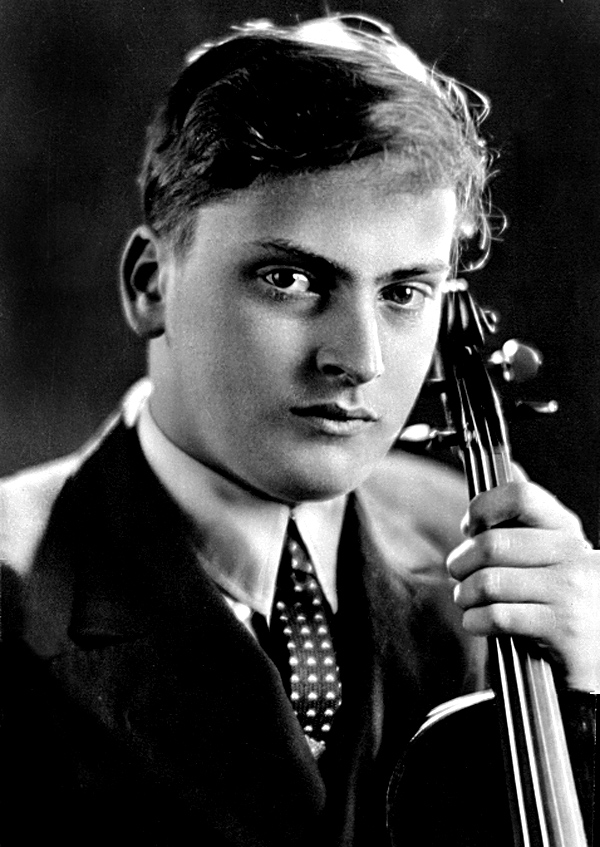
Yehudi Menuhin
American-British-Swiss conductorWikipedia
8
MENTIONS
8
EPISODES
8
PODCASTS
Search complete. 8 mentions across 8 episodes found for "Yehudi Menuhin".
Sep 17, 2026

Lynne ParkerGUEST
with my now, well, they were quite elderly then, my in-laws, because they wanted to go to the International Festival.
Lynne ParkerGUEST
And we saw Rudolf Nureyev dance on stage, Yehudi Menuhin playing violin.
Lynne ParkerGUEST
I think they were in the same show.
Lynne ParkerGUEST
I mean, now...

Mark SmithNARRATOR
Outstanding conductors include Gabrilowitsch, Russian-Jew, Walter and Klemperer, German, Koussevitzky and Smolens, Russian-Jews, Stokowski, Polish, Ormandy and Rappe, Hungarians, Ganz, Swiss, Koschets, Ukrainian, Szell, Russian, Busch, Dane, Kindler, Netherlander, Damrosch, German, Rodzinski, Yugoslav, Victor Kolar, Czech.
Mark SmithNARRATOR
Leading violin players of worldwide fame are Elman, Heifetz, Zimbalist, Russian-Jews, and Yehudi Menuhin, Romanian-Jew, Ysaye, Belgian, De Foch, Czech, Predakyvych, Ukrainian.
Mark SmithNARRATOR
Famous pianists include Rachmaninoff, Russian, Iturbi, Spaniard, Hanti, Hungarian.
Mark SmithNARRATOR
Leading flutist is Kalamaros, Greek.

Andy RobinsonHOST
Not even
James CookHOST
Yehudi Menuhin wants a thousand violins.
James CookHOST
It's too
Andy RobinsonHOST
many violins.

David SwarbrickHOST
They apparently originated in South India, arriving here as early as the 13th century and setting up largely a ground gall with strategic village outposts as far north as Kandy and even Chilau.
David SwarbrickHOST
To watch the prune as cinnamon bush is like watching Yehudi Menuhin play Elgar's violin concerto in B minor.
David SwarbrickHOST
Our homespun approach is infinitely more modest, but it gets the job done.
David SwarbrickHOST
Pruning starts every year at about 18 months into the plant's life, with cross branches removed and the plants kept to a height of no more than three metres.

Julian Lloyd WebberGUEST
Now, honestly, I'm not trying to put you off.
Julian Lloyd WebberGUEST
There are also heartwarming tales of collaborations with some of the world's finest composers, including Joaquin Rodrigo, Malcolm Arnold, Philip Glass, and my brother Andrew, as well as making music with the likes of John Cleolane, Stephan Grappelli, and working with some of the world's greatest conductors, including my favourite of them all, Yehudi Menuhin.
Julian Lloyd WebberGUEST
But it's not easy to write about classical music for a public which is not always interested, as the BBC Music Magazine reviewer very politely put it.
Julian Lloyd WebberGUEST
So I set out to inject as much humour as possible.

William BoughtonHOST
I wanted to explore more English music, particularly that of the 20th century, so I created the English String Orchestra, with whom I was music and artistic director for 25 years, and made over a hundred recordings.
William BoughtonHOST
We toured throughout Europe in all the major halls, and I invited the late and great Yehudi Menuhin to be the orchestra's principal guest conductor, with whom we made numerous tours, including the US, and were frequent guests at his festival in Gstaad, Switzerland.
William BoughtonHOST
I also became the music director of the Jyväskylä Sinfonia in Finland, an odd but very happy marriage, which will be the story for a future podcast.
William BoughtonHOST
And then I came to the New Haven Symphony in 2007 to be its 10th music director and started teaching at the Yale School of Music, finally becoming the director of the Yale Symphony Orchestra in 2018, and retired ostensibly in 2025.

Charlotte GardnerHOST
Yeah.
Charlotte GardnerHOST
'Cause I, yeah, ultimately it always has to be about the emotion, doesn't it? There's a story that Gábor Takács-Nagys tells all the time about, um, how when he was on the jury of the Wigmore Hall International String Competition and Menuhin was the chairman of the board, um, Menuhin said to them, "You can forgive them mistakes, but to not play with emotion is unforgivable."
Charlie Lovell-JonesGUEST
Mm.
Charlotte GardnerHOST
And it, it's that.

María DueñasGUEST
And yes, I was actually listening not just to Heifetz, but to many, let's say, golden age violinists before I started the violin.
María DueñasGUEST
I was listening to Oistrakh and Menuhin and sharing.
María DueñasGUEST
And then when I grew older, I actually started telling them apart so I could recognize their sounds.
María DueñasGUEST
They were so individual, like everyone had such a unique way of playing.