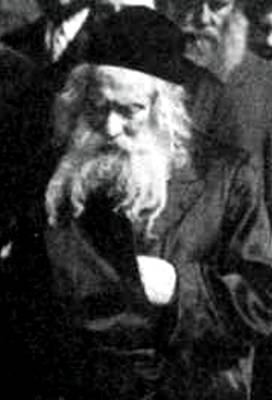
Yehudah Aryeh Leib Alter
RabbiWikipedia
83
MENTIONS
37
EPISODES
27
PODCASTS
Search complete. 83 mentions across 37 episodes found for "Yehudah Aryeh Leib Alter".
Nov 3, 2026

Hershel SchachterHOST
Jewish history.
Hershel SchachterHOST
The Kabbalah on the Sefat Emet.
Hershel SchachterHOST
The mentor of the Sefat Emet is the Tashbishi Kedushah.
Hershel SchachterHOST
But if it's twice removed, then it's tashmis and tashmis.
Hershel SchachterHOST
It does not Ɣal hen kal gaytz mizeh yesham v'al mikra aren kodesh im hut min arush ein ozerat kavad atur.

Assaf BednarshHOST
What do you think is the best way to answer the stira? So, okay, there are two ways that I've seen the Akronim try to answer the Stira.
Assaf BednarshHOST
One way to answer the Stira is, the question is basically, what's the rule, what's the exception, right? What's the rule, what's the exception for Rashi? So one way to answer the Stira, which I put here from the Chassam Sofer and the Sfas Emes, each in their own way, how do they answer the Stira and Rashi? They say, no, the rule is Datkov Gimel.
Assaf BednarshHOST
Here is the exception.
Assaf BednarshHOST
So, one way is the Chassam Sofer and the Sfas Emes, the O, they all have They say, no, this is the rule.
Assaf BednarshHOST
The rule is that it's potter.
Assaf BednarshHOST
Why are you in Ozarki's imprint? And they go, what is more increasing after the Dap Yotessam and Aleph? What is more increasing after the Dap Yotessam and Aleph? Shmuel says, I think this is the...

Zvi KahnHOST
So those are the Zereshimshon's two opening questions on this Pasuk.
Zvi KahnHOST
Okay, next paragraph, the Yuvan, This may be understood, in what's written by the author of the Sefer Ma'avar Yabok, in the section of that Sefer entitled Sfas Emes, Parak Yates, the 19th chapter, and this is what the author of the Ma'avar Yabok says, Ve'ha hesped lemes hu to'eles godo, Eulogies said for a deceased person are highly effective.
Zvi KahnHOST
Because through the tears that are caused by the hespedim, by a proper eulogy, through the tears that come from listening to a eulogy, ye foschu lameis sharei dimo ha'el yonim.
Zvi KahnHOST
the upper, the heavenly gates of tears are opened, which are removed from the midas hadin, from the quality of justice, from Hashem's justice.

Aaron GreenbergHOST
I don't need any more tests.
Aaron GreenbergHOST
So the pinnacle, therefore, according to the Sfas Emes, the pinnacle takes place at the Akedah.
Aaron GreenbergHOST
Why? Because Avram, who loves Hashem, had to almost put away his love and bring out his Yira
DavidPANELIST
in

Yaakov B. NeuburgerHOST
So the knot by the bar, that's going to be open and closed, loosened, untied and tied, but the knot near the animal that stays, that so you have a boat right so you have the long cord where you tie the boat to the what do you call it to the dock the thing on the dock I know you tie it to a what's that the thing yeah so the knot by the boat stays right you don't untie the knot by the boat But there's going to be a knot that you have to tie around the thing in the dock, and that changes from time to time.
Yaakov B. NeuburgerHOST
Okay, so the Sfas Emet says, Sfas Emet says, sometimes you just make a hook, a loop, and you just loop it on.
Yaakov B. NeuburgerHOST
So he asks, why don't I talk with that? We'll get to that.
Yaakov B. NeuburgerHOST
And just like your Chayiv, To make that knot, you're also chayiv if you undo that knot.

speaker_0HOST
It's natural.
speaker_0HOST
Perhaps what the Sfas Emes calls Misuk HaDin, a sweetening of Yitzchak's character of Din, what I'm calling a counterbalancing of his natural state, is introducing Tzchoik in the right way and with the right measure means that it softens the character of Yitzchak from being 100% Din to being slightly softer because of the element of Tzchoik that's present.
speaker_0HOST
So with this, we've answered the initial questions that we began with.
speaker_0HOST
Why was Yitzchak called to her based on the word tzchoik? How come both Avraham and Sarah needed to have tzchoik, and how come it meant different things each time? That is the nature of tzchoik.

Rabbi Yochanan CohenHOST
As the Be'hel Ze'hir, the same thing we see take the inyan of giving over the derech Hashem.
Rabbi Yochanan CohenHOST
So the Sfas Emes says that why take a till today we still could have the zchus of the Akeida? So look at the, the macheles, it's called macheles that we still eat from the Akeida, ma nischach.
Rabbi Yochanan CohenHOST
So he says because Avraham Avinu knew that all his actions, what he does in avodas Hashem, is eitzes to help us, the future generations, that we should be able to survive.
Rabbi Yochanan CohenHOST
It's nogea to everybody.
Rabbi Yochanan CohenHOST
Zot haSfas Emes, "Vechein tzochi kol adam le'zbein." Every person has to know, "Ki ma'aseh ov noigim ledor doros." Your action is nogea for your future dor doros.
Rabbi Yochanan CohenHOST
Every time a person omed benesiyonim is gamah has effect for the future generations.
Rabbi Yochanan CohenHOST
So he says since Avraham Avinu, what gave him the koach to be omed benesiyones? The fact that he knew that he's being mashpia for the doros habaim.
Yochanan CohenHOST
We all have it in us now, the koach, like it says in the Shlah HaKadosh.
Yochanan CohenHOST
The Aibishter asked Avraham Avinu, "Vakashim, I'm begging you, please be omed be-nisayon." Like the Sefat Emet said it wasn't a tzivui.
Yochanan CohenHOST
The Aibishter asked him please.
Yochanan CohenHOST
So the Shlah HaKadosh, every time we are omed be-nisayon, we have a nisayon, the Aibishter kaveachol-- image in your mind as if the Aibishter is standing and is begging you, "Please be omed be-nisayon.
Hershel SchachterHOST
So every time the person is ma'ano samapata girl, they're in violation of the dinim, li ya'akodish lo ziakdesha.
Hershel SchachterHOST
So whenever he gets malkos, you don't pay mamon, there's a weak machloket Sefat Emet.
Hershel SchachterHOST
We pasken with the Rambam that not only misot paters from mamon, malkos also paters from mamon.
Hershel SchachterHOST
So how do you ever have oines of the fat of teimani? You should always say, "Come live with the rabbi, and then earn on the bike and the shaman." So the Rama answers, "The fully said there, I said, 'My sea kid is your...' This is the girl is not carrying some of the madness with us.
27 more episodes mention Yehudah Aryeh Leib Alter.
Create an account to see the whole feed, search across every transcript, and follow the entities you care about.