Yalta Conference
31
MENTIONS
23
EPISODES
23
PODCASTS
Search complete. 31 mentions across 23 episodes found for "Yalta Conference".
Sep 30, 2026

Patrick CookHOST
Was the Cold War inevitable?
Giles MiltonGUEST
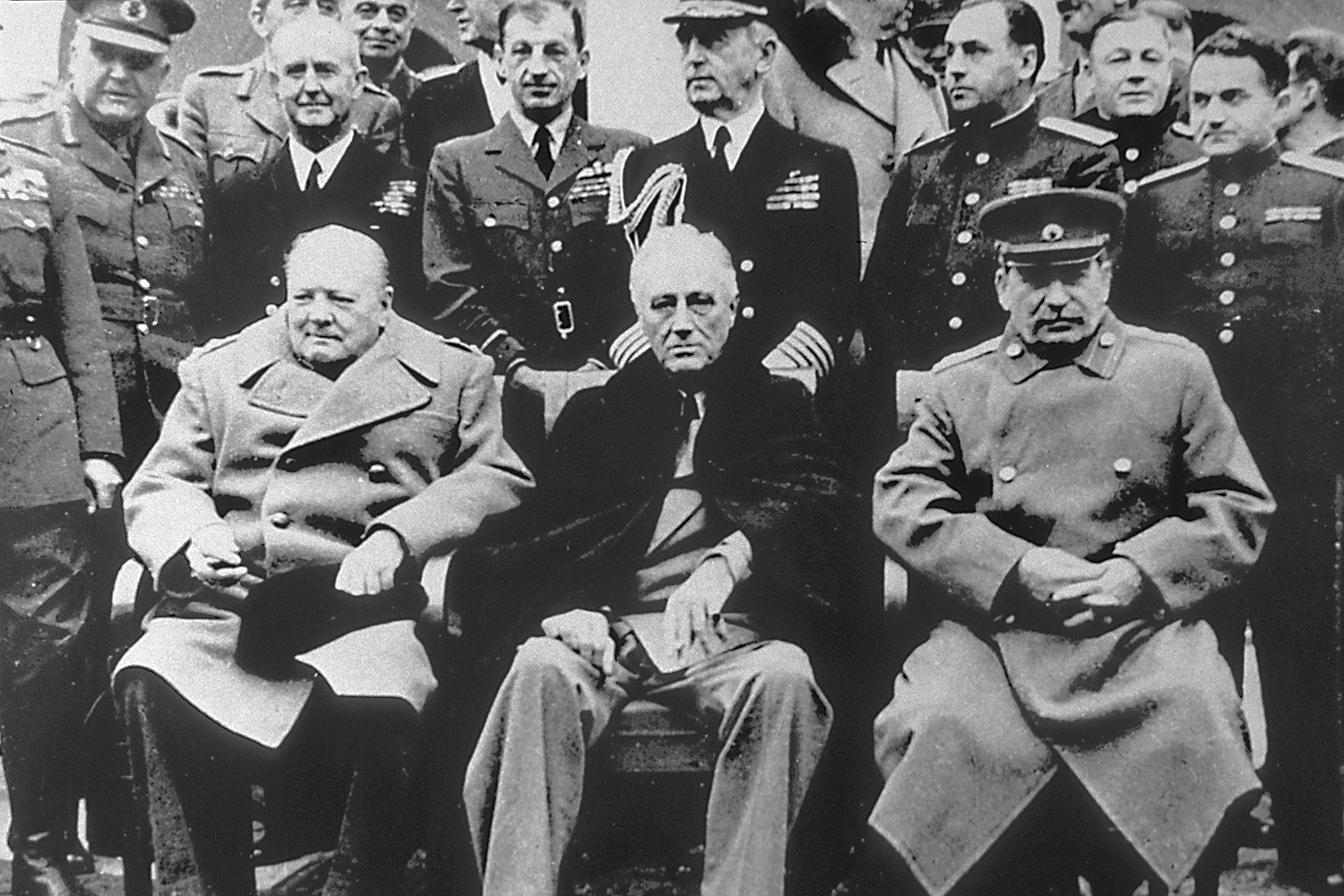
Was it inevitable? Well, I think at the Yalta Conference, which was the, the great, uh, conference at the-- in February 1945, where Churchill, Stalin, and Roosevelt met to discuss really the architecture of the post-war world.
Giles MiltonGUEST
They all thought that, um, they were going to remain as allies in the post-war period, and I think everyone left that conference.
Giles MiltonGUEST
This was an enormous conference of politicians, of bureaucrats, uh, hundreds of people there, um, experts.
Giles MiltonGUEST
Um, and he knew he was gonna get it, because frankly, by that point, by w- in the early months of 1945, the Red Army was already moving into Eastern and Central Europe.
Giles MiltonGUEST
So I think Stalin was incredibly upbeat and optimistic because he knew he was gonna get what he wanted.
Patrick CookHOST
And what did they agree at the Yalta Conference?
Giles MiltonGUEST
Well, really, they were planning the architecture of the post-war world, who was going to get what.

Dwayne SwayzeHOST
Charge number seven.
Dwayne SwayzeHOST
The Yalta Conference.
Dwayne SwayzeHOST
Is that how you pronounce that? Yeah.
Dwayne SwayzeHOST
Okay.
Dwayne SwayzeHOST
There's too much space between the hosts, so this is my favorite.
Dwayne SwayzeHOST
He says there's so much space between us with no table that we look like we're dividing up Europe at the Yalta Conference instead of having a conversation.
Dwayne SwayzeHOST
Ooh, so intellectual.
Dwayne SwayzeHOST
Ooh.

JoeHOST
It also required the recognition of Soviet sphere of influence over Northern Korea, as well as a few other things.
JoeHOST
Obviously, there's a lot more to the overall Yalta Agreement, but these were the parts that specifically regarded the Soviets entering the war against the Japanese.
JoeHOST
There are other things like America, the UK, and others will continue to support them logistically.
JoeHOST
Obviously, that's what they're there for, all that kind of stuff.
NateHOST
I'm just saying, can you imagine the dark power levels if you had given Lavrentiy Beria a car that long?
JoeHOST
Oh, no.
JoeHOST
Now, the Japanese weren't totally unaware that the Soviet attitude towards them was changing, even if they didn't know about the Yalta Agreement regarding the invasion of Manchuria.
JoeHOST
For starters, the neutrality pact with the Japanese expired that April, and the Soviets told the Japanese...

Aaron BennettNARRATOR
In the belief that active Soviet participation might shorten the war and save thousands of American lives, President Franklin D. Roosevelt was disposed to compromise with Stalin.
Aaron BennettNARRATOR
The two agreed informally at the Yalta Conference of February 1945 that Korea should be independent and that, if a transition period were necessary, a trusteeship should be established, according to James F. Byrnes, United States Secretary of State.
Aaron BennettNARRATOR
He added in his memoirs that a desire to help the Koreans develop the skills and experience that would enable them to maintain their independence was the inspiration for President Roosevelt's acquiescence in the trusteeship idea.
Aaron BennettNARRATOR
The Soviet dictator made a plea at Yalta for historical justice.
12 MINS LATER
Aaron BennettNARRATOR
Germany and Italy were launching aggressions of the same stamp in Europe and Africa, and the world was to know little stability until all three totalitarian states had been crushed in World War II.
Aaron BennettNARRATOR
Soviet Russia had a grim struggle for survival while resisting the full tide of Nazi invasion.
Aaron BennettNARRATOR
But at the time of the Yalta Conference, Stalin was in a position to ask a stiff price for military aid in the Pacific.
Aaron BennettNARRATOR
The United States agreed that the Port Arthur area and southern Sakhalin should be returned to Russia to redress the wrongs of 1905.

Mikhail ZygarGUEST
That was, that was the breach of all international norms, and that's okay because international law as it used to be does not exist any longer.
Mikhail ZygarGUEST
That's, that's the, the idea of, of Vladimir Putin for many years, and actually, he started speaking, uh, speaking out about that since 2007 when, uh, in Munich, during the Munich International Conference, he made his infamous Munich speech, and he called for the new Yalta, for the new conference to establish the new world order, to redivide the world.
Mikhail ZygarGUEST
So yes, ba- basically, that's, that's something he, he would like to have.
Olivia MannisHOST
Yeah, I mean, I think history is often marked by these moments of what we sort of term a realignment of a world order, a fundamental shift, and sort of on that note, we've been talking about the present, we've been talking about this perceived shift in how the world functions, right? Or at least that Russia claims, uh, there's a shift.

Fulton SheenSOUNDBITE_SPEAKER
The faculty of one university is one communist too many.
Fulton SheenSOUNDBITE_SPEAKER
One communist among the American advisors at Yalta was one communist too many.
Taylor MitchellHOST
Well, it is Hispanic Heritage Month and President Trump recently recognized the Hispanic community.
Taylor MitchellHOST
There have been a lot of talks about Hispanic representation and whether Hispanic voters feel the administration is delivering on campaign promises.

Andrew Hunter MurrayHOST
... between Churchill and Stalin and the US presidents R- Roosevelt and then Truman after Roosevelt died, and they were deciding what the deal was and how, you know, how the world was going to look and the shape of Europe and the f- you know, the idea of the United Nations, all of this stuff.
Andrew Hunter MurrayHOST
So there was Tehran, and there was Yalta and Potsdam, and, um, goldfish were a bit of a feature of the Yalta conference-
Anna PtaszynskiHOST
Hmm
Andrew Hunter MurrayHOST
... certainly.

Holly Berkley FletcherHOST
Right.
Julia CurleeGUEST
And so you'll have this opportunity for a new Yalta, for anybody remembering, of the U.S.-Soviet Union and Great Britain dividing up the world between us, standing astride all of these little powers that we expect them to do what we want.
Julia CurleeGUEST
And the images will be horrible, and the message to other democracies will be you're on your own.
Julia CurleeGUEST
I hope it doesn't happen.

Rana MitterPANELIST
And of course, the Soviet Union is the stated or unstated opponent there.
Rana MitterPANELIST
The Soviets never had a huge direct footprint in Asia in quite the same way that they did in Eastern Europe under the Yalta Agreement, when, of course, most of Eastern Europe was essentially part of a Soviet-dominated bloc.
Rana MitterPANELIST
While there were, of course, communist states, and there still remain some in Asia during that same era, the 1940s to the 1980s, China, Vietnam, North Korea, each of them was and is a Different, autonomous, quirky enough, you might say, that just describing them as essentially under the thumb of the Soviets, as you might do, you know, say, East Germany at its worst, doesn't really work.
Rana MitterPANELIST
I mean, China under Chairman Mao was never going to be a simple tool of the Soviets.

ComboHOST
Or prisoner of war.
Benj CarmichaelGUEST
The Yalta Conference.
ComboHOST
What if one of them was called POW and the other was called Dunkirk?
Benj CarmichaelGUEST
What
13 more episodes mention Yalta Conference.
Create an account to see the whole feed, search across every transcript, and follow the entities you care about.