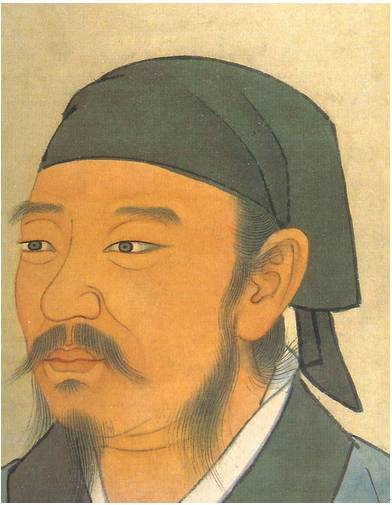
Xunzi
Chinese philosopherWikipedia
9
MENTIONS
7
EPISODES
6
PODCASTS
Search complete. 9 mentions across 7 episodes found for "Xunzi".
Oct 18, 2026

Peter AdamsonHOST
In addition to the Luxuriant Gems and the Huainanzi, we're going to use one other early Han text to explore the metaphysical ideas of this period, a work by Lu Jia called Xinyu, meaning New Discourses.
Peter AdamsonHOST
Lu Jia was probably a second-generation student of the great Confucian philosopher Xunzi, and also a confidant of the first Han emperor, Liu Bang, so his ideas are very revealing about the metaphysical assumptions used to justify and rationalize Han political rule.
Peter AdamsonHOST
In all three of these works we find the same set of principles, which are certainly invoked in political contexts, but also serve to explain nothing less than the natural world and the place of humans within it.
Peter AdamsonHOST
A concise statement found near the start of Lu Jia's New Discourses gets across all of the key points.

Katherine L. AlexanderGUEST
Um, and I started in my sophomore year of college taking a Chinese literature course, and I had-- I really wanted to be a Chinese major, um, but had not, for a reason I'll explain in a moment, been able to declare that major yet.
Katherine L. AlexanderGUEST
And so I'm 19 years old, the Jin Ping Mei, the U- the English translation has two of the five volumes, and I get to the end of the semester, uh, and I tell my advisor, "I wanna read more." Um, I also, while reading those, you know, two volumes, the first 40 chapters, and writing my term paper for the class, I'm in my dorm room bunk bed reading Andrew Plaks' Masterworks of Chinese Literature and about the intricacies of Xunzi and Confucian moral philosophy in this dirty book, and I remember saying to my roommates, "People can do this? I wanna do this." And so I go to my-- who would become my future advisor, and I say, "I, I wanna read more." And this is where I essentially talked my way into a Chinese major, because we have to go backwards for a moment before I start reading the dirty book.
Katherine L. AlexanderGUEST
And it's that I grew up-- I was born and raised in Taiwan.
Katherine L. AlexanderGUEST
My parents were, um, missionaries in Taiwan, and so there's another parallel because David Roy, the translator of the Jin Ping Mei, was himself a missionary kid who was born and raised in China and ended up translating this incredibly dirty book.

Katherine L. AlexanderGUEST
Um, and I started in my sophomore year of college taking a Chinese literature course, and I had-- I really wanted to be a Chinese major, um, but had not, for a reason I'll explain in a moment, been able to declare that major yet.
Katherine L. AlexanderGUEST
And so I'm 19 years old, the Jin Ping Mei, the U- the English translation has two of the five volumes, and I get to the end of the semester, uh, and I tell my advisor, "I wanna read more." Um, I also, while reading those, you know, two volumes, the first 40 chapters, and writing my term paper for the class, I'm in my dorm room bunk bed reading Andrew Plaks' "Masterworks of Chinese Literature" and about the intricacies of Xunzi and Confucian moral philosophy in this dirty book.
Katherine L. AlexanderGUEST
And I remember saying to my roommates, "People can do this? I wanna do this." And so I go to my, who would become my future advisor, and I say, "I, I wanna read more." And this is where I essentially talked my way into a Chinese major, because we have to go backwards for a moment before I start reading the dirty book, and it's that I grew up-- I was born and raised in Taiwan.
Katherine L. AlexanderGUEST
My parents were, um, missionaries in Taiwan.

Katherine L. AlexanderGUEST
Um, and I started in my sophomore year of college taking a Chinese literature course, and I had-- I really wanted to be a Chinese major, um, but had not, for a reason I'll explain in a moment, been able to declare that major yet.
Katherine L. AlexanderGUEST
And so I'm nineteen years old, the Jin Ping Mei, the U- the English translation has two of the five volumes, and I get to the end of the semester, uh, and I tell my advisor, "I wanna read more." Um, I also, while reading those, you know, two volumes, the first forty chapters, and writing my term paper for the class, I'm in my dorm room bunk bed reading Andrew Plaks' Masterworks of Chinese Literature and about the intricacies of Xunzi and Confucian moral philosophy in this dirty book, and I remember saying to my roommates, "People can do this? I wanna do this." And so I go to my, who would become my future advisor, and I say, "I, I wanna read more." And this is where I essentially talked my way into a Chinese major, because we have to go backwards for a moment before I start reading the dirty book.
Katherine L. AlexanderGUEST
And it's that I grew up-- I was born and raised in Taiwan.
Katherine L. AlexanderGUEST
My parents were, um, missionaries in Taiwan and so there's another parallel because David Roy, the translator of the Jin Ping Mei was himself a missionary kid who was born and raised in China and ended up translating this incredibly dirty book.
Peter AdamsonHOST
The writings of some of these men, the Confucians or Ru, took Kong Zi and his disciples as models in their reflections on self-cultivation.
Peter AdamsonHOST
The Mengzi and the Xunzi already did this, identifying Kong Zi and other sages as paradigms of virtue that we should seek to imitate.
Peter AdamsonHOST
But it's only in the Han that we begin to see focused and sustained treatments of these issues.
Peter AdamsonHOST
One example is provided by the late Han thinker Xu Gan.

speaker_4HOST
Canon-making, the act of a civilization officially choosing which books become its standard, is always a profoundly political act.
speaker_4HOST
We've spent this whole deep dive looking at the five load-bearing beams of Chinese thought, but by making these five the standard, what got left out? Imagine a parallel universe where Mozi's radical, fiercely impartial love for all strangers or Xunzi's tough-minded, cynical insistence on strict behavioral control were the centerpieces instead.
speaker_4HOST
What does the philosophy we choose not to canonize say about the civilization we actually build? Thank you so much for joining us on this deep dive.
speaker_4HOST
We will catch you next time.

Elliott BernsteinHOST
He said, when in doubt, you don't need to push for a clean answer.
Elliott BernsteinHOST
The last point I want to mention is that underneath all of this is an even older stratum of argument between Mencius and Xunzi.
Elliott BernsteinHOST
Mencius believed goodness is already in us, like a seed.
Elliott BernsteinHOST
Teaching means tending to what's there, so you start with the heart.
Elliott BernsteinHOST
Xunzi believed our nature bends like warped wood, and straightness has to be imposed from the outside.
Elliott BernsteinHOST
Teaching means clamping and shaping, so you start with the texts and the rules.
Elliott BernsteinHOST
The ordering we find in 7.25 aligns with Xunzi's philosophical claim, text first, conduct next, and the inner qualities last.
Elliott BernsteinHOST
Cheng Yi's decision to call commitment and credibility the root is Mencius' ordering, applied to a passage that reads the other way around.