Xi'an
City in ChinaWikipedia
139
MENTIONS
68
EPISODES
55
PODCASTS
Search complete. 139 mentions across 68 episodes found for "Xi'an".
Oct 7, 2026

Laszlo MontgomeryHOST
Chang'an was too far to the west.
Laszlo MontgomeryHOST
That place, which is today's Xi'an, was perfect in the age of the Silk Road.
Laszlo MontgomeryHOST
But now, as the age of the Maritime Silk Road was starting to hit its stride, the capital had to get closer to where the wealth would be flowing.
Laszlo MontgomeryHOST
Adjacent to the palace, he built a park 120 kilometers in circumference that contained a 9-kilometer lake with three islands in the middle adorned with all these pavilions.
41 MINS LATER
Laszlo MontgomeryHOST
All of Li Xiumin's inner circle were amply rewarded for their role in the coup, and as I mentioned, they went on to serve Li Xiumin after he became the Taizong Emperor in the aftermath of the incident at Xianwu Gate.
Laszlo MontgomeryHOST
Even many of the closest comrades of Li Jiancheng and Li Yuanji, rather than be executed, were welcomed into the new government and ended up serving loyally.
Laszlo MontgomeryHOST
And so, on August 8th, 626, a month after this all went down in the ancient city of Xi'an, the Emperor Gaozu announced that he was passing the emperorship to Li Shimin.
Laszlo MontgomeryHOST
The very next day, Li Shimin mounted the throne and became the second emperor of the Tang Dynasty, Tang Taizong.

Amanda ReedGUEST
in the afterlife.
Rachel FeltmanHOST
And if I'm remembering correctly, um, 'cause my, my little brother was born in Xian, so there was a time when we talked about the Terracotta Warriors a lot.
Amanda ReedGUEST
Mm-hmm
Rachel FeltmanHOST
Mm-hmmBut I am pretty sure all their faces are different.

Dou HongyuHOST
Israel's National Security Council also warned of heightened risks of attacks against Israelis and Jews abroad around the third anniversary of the Hamas-led October 7 attack.
Dou HongyuHOST
Now, for more, we're joined by Professor Wang Jing, a Middle East expert in Xi'an, China.
Dou HongyuHOST
Thank you very much for joining us, Professor Wang.
Dou HongyuHOST
Now, three years into this round of Palestinian-Israeli conflict, how would you characterize the current military and security situation compared with the outbreak stage? Has the nature of the fighting evolved over time?
10 MINS LATER
Wang JinGUEST
Although it's unfortunate, but unfortunately, I think it is something realistic, reality that we have to face.
Dou HongyuHOST
Thank you very much.
Dou HongyuHOST
That was Professor Wang Jin, a Middle East expert in Xi'an, China.
Dou HongyuHOST
You're listening to World Today.

Tony RobinsonNARRATOR
Professor Zhang Jianlin is the world's leading archeologist of the Tang era.
Tony RobinsonNARRATOR
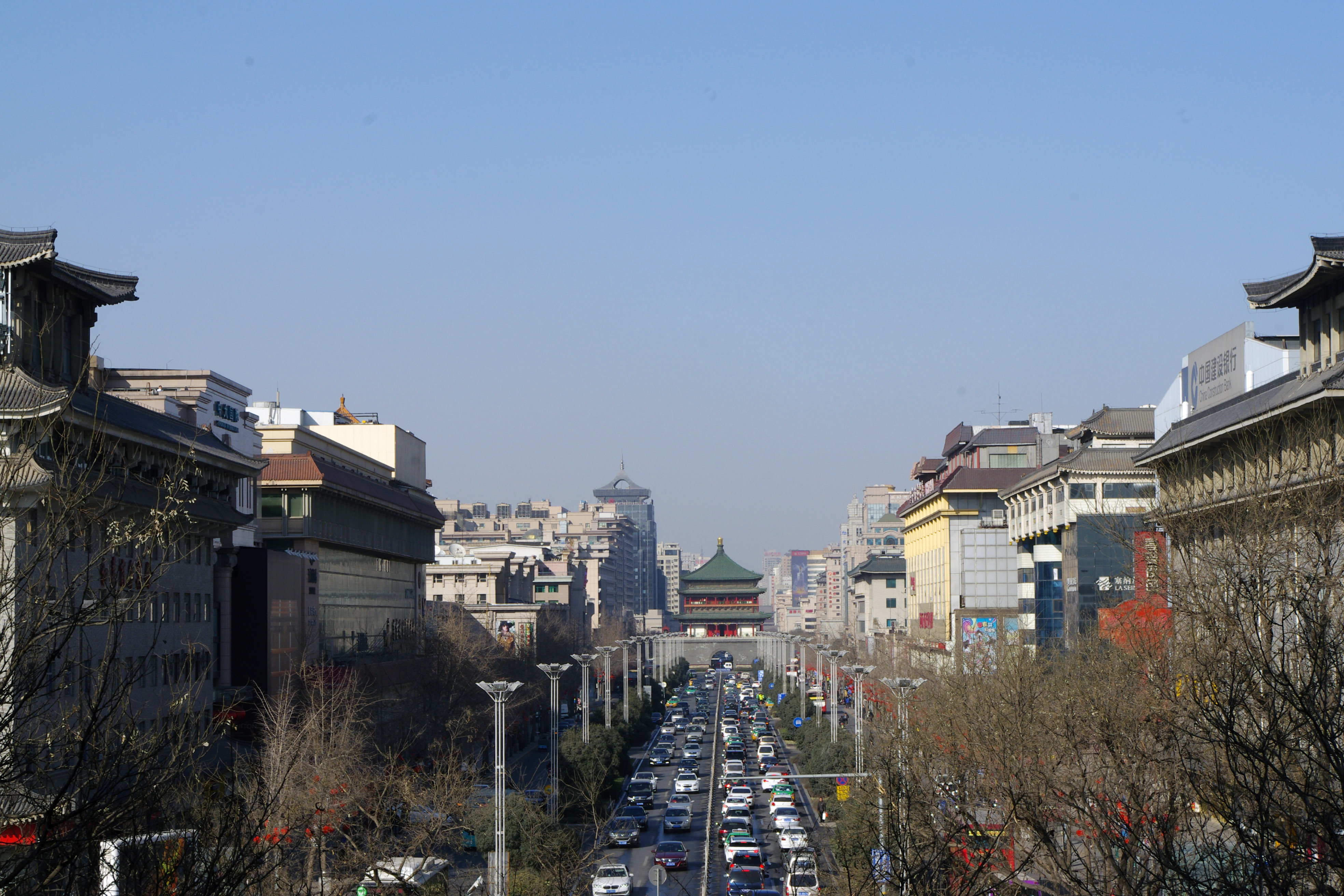
Today the city of Xi'an has grown to encompass old Chang'an, Wu's capital.
Tony RobinsonNARRATOR
With a population of 12 million, Xi'an is rapidly expanding.
Tony RobinsonNARRATOR
It's also home to Professor Zhang's conservation facility.
Tony RobinsonNARRATOR
Historian Dr. Harry Rothschild has heard about some intriguing recent finds that date to Wu's reign.
13 MINS LATER
Tony RobinsonNARRATOR
Silk Road trade not only made Wu's empire wealthy, it brought so many foreigners to China that her capital became one of the first truly cosmopolitan cities in the world.
Tony RobinsonNARRATOR
People from all across the world traveled to Chang'an, and many chose to stay.
Tony RobinsonNARRATOR
And this multicultural influence can still be felt in present-day Xi'an.

Steve HatherlyHOST
There were shared laughs and surprising similarities between the two cultures and between the players.
Steve HatherlyHOST
So after spending several days in China, what left the deepest impression on these young players and coaches? And beyond the scores and competition, what did they take away from the experience? Let's hear from our reporter Li Yunqi, who speaks with Robert Dubrovsky, coach of the baseball team from Cornerstone College in Iowa, and Xia Mofeng, a student from Xi'an Physical Education University.
Li YunqiCORRESPONDENT
Let me paint you a picture that we are sitting right next to a baseball field.
Li YunqiCORRESPONDENT
And behind me, there are some Chinese and American young people that are playing a tournament that's brought four U.S. teams all the way to China across the Pacific.
Li YunqiCORRESPONDENT
And now we are sitting here with one of our guests, Xia Mo Feng, and she is a student from Xi'an Physical Education University.
Li YunqiCORRESPONDENT
Thank you for joining us.
Li YunqiCORRESPONDENT
as well as also we'd like to thank for one of the four american baseball teams robert dabrosky from corner college in iowa and robbie thanks for joining us here from the daga for half an hour
Li YunqiCORRESPONDENT
for mo phone you you don't play baseball right and uh for robbie you flew all the way it's your very first time in china And for you two, how does it feel? How's the vibe? Because for me, I have never been on a baseball field before.
Yao ShujieGUEST
They come here, they experience not only the megacities, such as, uh, Beijing and Shanghai, where they can see, uh, lots of modern buildings and also, uh, the modernity of the Chinese, uh, you know, megacities.
Yao ShujieGUEST
But they also go to many, uh, historical, uh, countryside or medium-sized cities, such as Datong, uh, such as Luoyang, such as, uh, you know, Xi'an, and the typically emerging cities, such as Chongqing, which theoretically is the most populous, uh, you know, megacity in China, have a population of, of over thirty, uh, million people.
Yao ShujieGUEST
So for foreign visitors, there are so many things, uh, for them to see and for them to explore.
Yao ShujieGUEST
And, um, you, you know, these kinds of message, messages is sent back or taken back to their home and passed to their friend and neighbor, and more and more people are coming to China.

LinaHOST
Mm
EricaCORRESPONDENT
... and the Terracotta Army Museum in Xi'an, China.
LinaHOST
That list is quite revealing in itself, Erica, I think.
EricaCORRESPONDENT
Mm-hmm.

Mark AtkinsonGUEST
My journey into China started back in 1982.
Mark AtkinsonGUEST
I went on a Christmas family vacation to Beijing and then to some of the other cities in China like Xi'an and Shanghai and Hangzhou.
Mark AtkinsonGUEST
We flew into Beijing in December of 82 on a nearly empty 747.
Mark AtkinsonGUEST
And when we touched down, China seemed very mysterious because it was quite dark.
Mark AtkinsonGUEST
When we went to the sites in those days, the sites, you know, very few tourists in 1982.
Mark AtkinsonGUEST
And we went to the Temple of Heaven and the Great Wall.
Mark AtkinsonGUEST
And then in Xi'an, you know, we went to the Terracotta Warriors.
Mark AtkinsonGUEST
When I went back to college, I decided in addition to studying electrical engineering, I was going to study Chinese because I felt that from that trip, I could see that China had a great potential for growth.

Theo WrenfieldNARRATOR
This arrangement allowed the early Zhou, during what historians now call the Western Zhou period, to maintain a surprising degree of stability across an enormous landscape.
Theo WrenfieldNARRATOR
The capital, established near modern-day Xi'an, became a center of ritual and administration, where bronze vessels continued to be cast.
Theo WrenfieldNARRATOR
now often inscribed with lengthy inscriptions celebrating military victories, land grants, or the virtues of the ruling family.
Theo WrenfieldNARRATOR
These inscriptions give us, even now, three thousand years later, a remarkably intimate window into how the Zhou understood their own legitimacy and purpose.
1 HR 6 MINS LATER
Theo WrenfieldNARRATOR
He consulted alchemists and mystics who promised potions and remedies that might extend his life indefinitely.
Theo WrenfieldNARRATOR
Tragically, some of these so-called elixirs, often containing mercury, may have slowly poisoned the very emperor they were meant to preserve, a quiet irony that historians have long noted with a kind of sorrowful wonder.
Theo WrenfieldNARRATOR
Perhaps the most extraordinary expression of his obsession with the afterlife lies buried near the ancient capital of Xi'an.
Theo WrenfieldNARRATOR
Where in 1974, a group of farmers digging a well stumbled upon something that would astonish the world.

Tommy CullumHOST
I've talked to many people, and you hear many people say, that they've seen this stuff you know it's not out there sometimes you can't find it because it's very it's rare and and as well you know we know that sometimes things are controlled and there's certain information that they seem to not want out as well you know for whatever
Mark OllyGUEST
reason that is yeah well very often you'll get something that will come out and then all of a sudden it'll vanish yeah it just doesn't fit the narrative you know that that's the usual one The last big one like that was when they, because I'm kind of heading towards Noah's Ark here, when they actually took the same radar they're using on Noah's Ark, which is this ground penetrating radar, they did that on the pyramid of the first emperor at Xi'an in China.
Mark OllyGUEST
They know what's inside that giant pyramid.
Mark OllyGUEST
It's the biggest pyramid on planet Earth.
58 more episodes mention Xi'an.
Create an account to see the whole feed, search across every transcript, and follow the entities you care about.