X-ray crystallography
17
MENTIONS
3
EPISODES
3
PODCASTS
Search complete. 17 mentions across 3 episodes found for "X-ray crystallography".
Oct 9, 2026

Michael ForrestSOUNDBITE_SPEAKER
It comes up on an XRF scanner as limestone material-wise or SEM, but it's not.
Michael ForrestSOUNDBITE_SPEAKER
You look at the XRD and the SEM results of this stuff, and it's foreign.
Michael ForrestSOUNDBITE_SPEAKER
It's very, very strange.
Stephen ShawHOST
And so finally, of course, we're looking at the artifact aspect of this and how people say, oh, you can't take artifacts out of countries, right? Well, the policy of Mexico has been for years, right? Oh, these are just tourist attractions, tourist things.

Ekin Doğuş ÇubukGUEST
Okay, so in our lab, uh, phase transitions come about usually because we mix the precursors that are different, um, crystals basically, but then we r- raise the temperature or do something else to encourage them to react, and then atoms start reacting, and they form into this new crystal.
Ekin Doğuş ÇubukGUEST
Um, and the, this shows up in the XRD pattern because usually if the geometry of the atoms change drastically, the XRD pattern changes a lot.
Ekin Doğuş ÇubukGUEST
But what really happens in, like, a typical practical materials discovery campaign is when you first try something, it doesn't work, and the outcome isn't just, like, a clear yes or no, but it's usually, like, a very mixed phase.
Ekin Doğuş ÇubukGUEST
Uh, it will usually have some of the precursors.
Ekin Doğuş ÇubukGUEST
So the simulations can always say, "Oh, this phase doesn't look like what we predicted, but this is a slightly variat- variation of it.
Ekin Doğuş ÇubukGUEST
Let me now do force field calculation to see if it's still stable." Or like the AI can say, "Based on the previous experiment and this one, this is probably not the phase we wanna make, so let's change the conditions."
Liam FedusGUEST
Yeah, for, for listeners, XRD is X-ray diffraction, which you already described.
SwyxHOST
Yeah.

Dogus CubukGUEST
And at some point you put it in a characterization instrument.
Dogus CubukGUEST
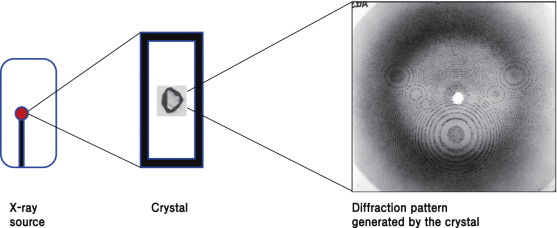
For inorganic crystals, the method we use the most is an XRD, X-ray diffraction.
Dogus CubukGUEST
It's the same X-rays you get at the dentist.
Dogus CubukGUEST
It just happens that X-ray wavelength is of a comparable length scale as the distance between atoms.
Dogus CubukGUEST
And then if it succeeded, maybe you want to see if it's a superconductor.
Dogus CubukGUEST
So then you put it in another instrument that can measure the diamagnetic response, which tells you if it's a superconductor at a given temperature.
Liam FedusGUEST
Yeah, I think the XRD is a really interesting example, too, because the materials don't come out labeled.
Liam FedusGUEST
Yes.