Working memory
99
MENTIONS
17
EPISODES
17
PODCASTS
Search complete. 99 mentions across 17 episodes found for "Working memory".
Sep 15, 2026

Mandy GrassHOST
So we talked last week about executive functioning.
Mandy GrassHOST
So there's a lot of parts that go into cleaning your room, like working memory, like remembering what you're supposed to do, task initiation, planning, organizing, time management, managing side quests-
LolaGUEST
Mm-hmm
Mandy GrassHOST
... all of that sort of stuff.
10 MINS LATER
Mandy GrassHOST
... all of that information is really hard for you.
LolaGUEST
Yeah.
Mandy GrassHOST
So that's actually called your working memory, so that means your ability to take everything I said and hold it.
Mandy GrassHOST
We talked about this when you did your neuro psych, when they give you the numbers and they say, "Repeat the numbers.

Zach MorrisHOST
It looks like distraction, but what if a developing brain is actually supposed to explore? New research suggests children's attention may work differently from adults and that their tendency to explore broadly could actually help them learn.
Zach MorrisHOST
The research focuses on something scientists call working memory.
Zach MorrisHOST
Think of working memory as your brain's temporary sticky note.
Zach MorrisHOST
It helps you keep information in mind while you're using it, like remembering what you're doing, what you've already discovered, and what you should ignore.
Zach MorrisHOST
As adults develop stronger working memory abilities, we become better at filtering information.
Zach MorrisHOST
Basically, our brain gets pretty good at saying, "That's not important.
Zach MorrisHOST
Ignore it." Young children aren't quite as good at that filtering yet, and according to psychologist Vladimir Sloutsky, that may actually encourage children to explore most of their surroundings.
Zach MorrisHOST
Researchers also gave adults a second mental task while they played.

Sue LarkeyHOST
Executive function, just so those of you who've never heard of it, you, as I say, you're probably like me, where for my first 10 years, I saw these things, but I didn't know that this came under this umbrella of executive functioning.
Sue LarkeyHOST
So it includes emotional control, impulse control, planning and prioritizing, organizing, task initiation, flexibility, and working memory.
Sue LarkeyHOST
Now, if any of those words are new to you, make sure you have a look at my blog because there's more explanation in there.
Sue LarkeyHOST
I just try and make this easy listening and it is complex executive functioning.
15 MINS LATER
Sue LarkeyHOST
And that's what put me onto it originally.
Sue LarkeyHOST
So that's a brilliant book.
Sue LarkeyHOST
Working memory.
Sue LarkeyHOST
Now, this is, can you hear me? It's so hard.

speaker_1HOST
it comes down to how human memory actually functions.
speaker_1HOST
The brain only has a very limited amount of working memory, like the processing power available at any given immediate moment.
speaker_0HOST
Right, like RAM in a computer.
speaker_1HOST
Perfect analogy.
speaker_1HOST
If you were using all of that working memory just to figure out what sounds the letters make, you have zero power left to understand what the sentence actually means.
speaker_0HOST
Oh, wow.
speaker_0HOST
So it is strictly an energy saving strategy.
speaker_0HOST
Oh, because they've lost their place.

CornHOST
What's actually happening when he's absorbed in a task and forgets to grab his wallet?
Herman PoppleberryHOST
Working memory overload.
Herman PoppleberryHOST
Working memory is the small temporary holding space where the brain keeps things it needs right now.
Herman PoppleberryHOST
In ADHD, that space is smaller or it gets disrupted more easily.
Herman PoppleberryHOST
When you're deeply absorbed in something, the task fills the entire working memory capacity.
Herman PoppleberryHOST
The thought of, I need to grab my wallet before I leave was in there, but it got pushed out, not because he forgot it in the long-term sense.
Herman PoppleberryHOST
It was a prospective intention, an item in working memory, and working memory ran out of room.
CornHOST
So it's not a retrieval failure from long-term storage.

Olimpiu PopHOST
It will be impossible.
Olimpiu PopHOST
And what you mentioned and what you underline now as well is it should be an extension of ourself, our brains, and have also a working memory, some kind of metadata that will allow you more context.
Olimpiu PopHOST
And the ISN is the facility through which we are mentioning to do that.
Olimpiu PopHOST
It will allow you to make things a lot easier and then just resume at different points and then avoid the different types of systems that you need to just do by hand.
Scott JensonGUEST
that allowed you to kind of store all your data for that particular project.
Scott JensonGUEST
And you could open and close it like a file, but it acted like a folder.
Scott JensonGUEST
And so it was meant to be a way for you to have working memory of that stuff.
Scott JensonGUEST
And then the final one was more of a history that was totally stolen from a classic paper in the 90s called Lifestreams.

Diana PellicanoGUEST
So I'm going to choose to not act on that impulse and make a better decision for myself now that will benefit me in the future.
Diana PellicanoGUEST
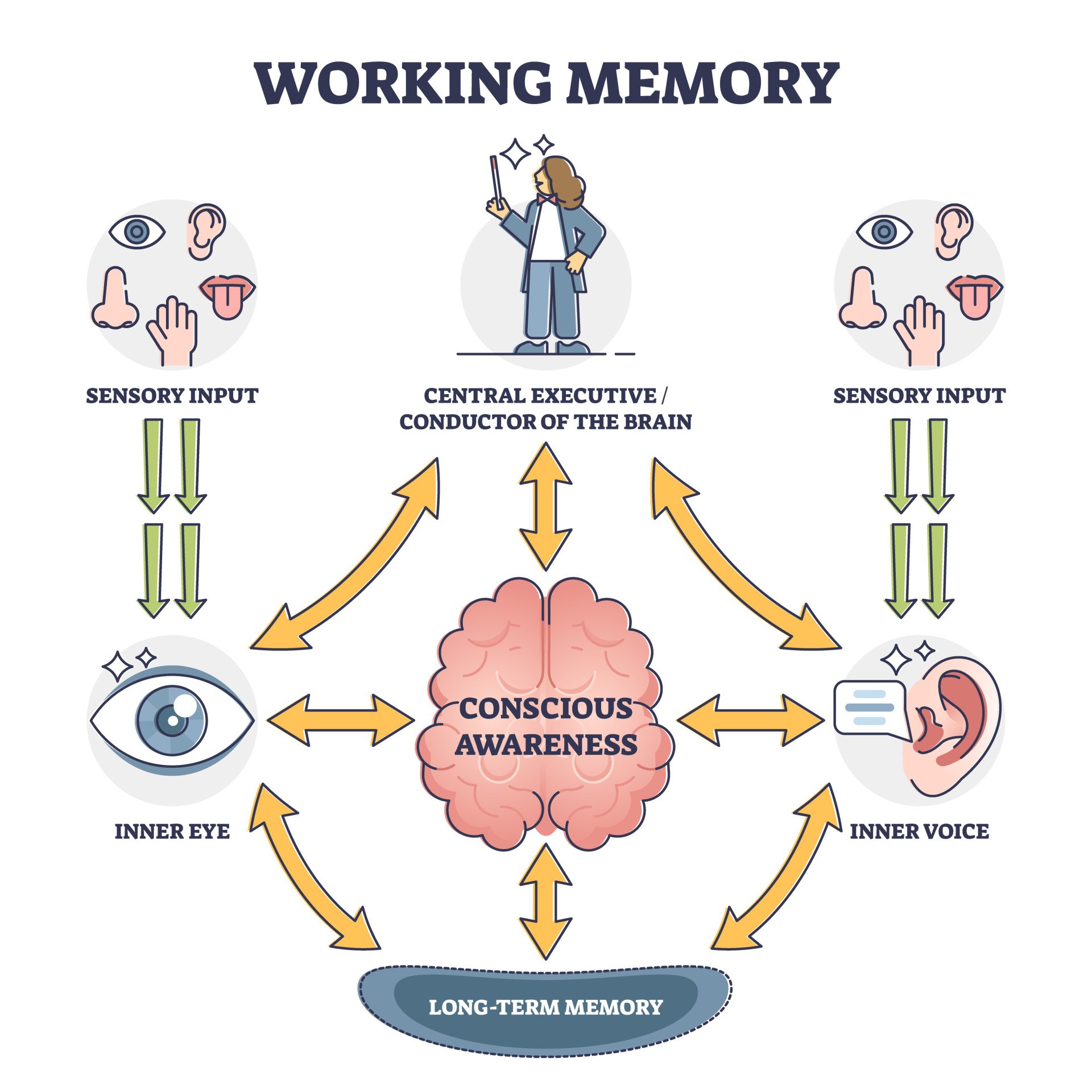
And how we really work on these skills with students is understanding that to build executive functioning skills, to have good executive functioning skills, You need a strong nonverbal working memory, which is our visual imagery system, and we need a strong verbal working memory, which is our self-talk system.
Diana PellicanoGUEST
And we need the nonverbal and the verbal working memory to work together.
Diana PellicanoGUEST
And what this looks like for an adult, I like to say, is I hate cleaning, okay? It is like my most non-preferred task.
Diana PellicanoGUEST
I don't like doing it.
Diana PellicanoGUEST
And all of that, so teaching kids to visualize, and what we call it is making a mental movie of the future, or we make mental movies of the relevant past.
Diana PellicanoGUEST
Maybe the last time we were asked to go quietly into the library, how did that go? We visualize how that all went.
Diana PellicanoGUEST
And then the verbal working memory is what we call the brain coach, where we're talking to our brain and we're helping our brain make decisions that will help us in the future.

Joyce MaglaqueGUEST
Yes, so that's actually how it is like with an ADHD person.
Joyce MaglaqueGUEST
So when we talk about ADHD, one of the executive functions is working memory.
Joyce MaglaqueGUEST
A person with ADHD, if you look at memory as a basket, the basket of an ADHD person is very wide but it's shallow oh so that's why if there's information in your mind there's always that thought that you're gonna forget it because it'll easily overflow so that's the reason why they have to like say it I have to say it or sometimes it's all it can also be part of the impulsivity like if it is if the person is like too slow but you already know like what's next oh my god and
Mirza SisonHOST
I'm like yeah it's

Penn HoldernessHOST
Mm-hmm
Emily KingGUEST
... because our working memory is like a mental scratch pad, and with ADHD or any executive functioning weaknesses for whatever reason, it doesn't stay on the mental scratch pad.
Emily KingGUEST
It's like I tell you my phone number-
Kim HoldernessHOST
[laughs]
Penn HoldernessHOST
Like, that stays there.
Penn HoldernessHOST
Yeah.
Emily KingGUEST
So we have to think about not only attention, so are they attending to us, but when we say it to them, it really doesn't stick because of working memory weaknesses-
Penn HoldernessHOST
Mm-hmm
7 more episodes mention Working memory.
Create an account to see the whole feed, search across every transcript, and follow the entities you care about.