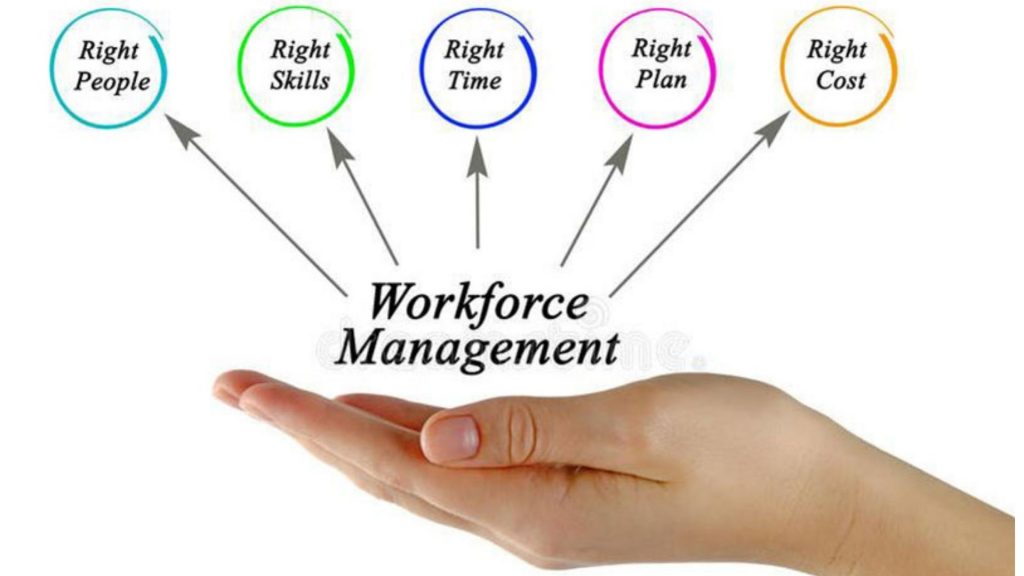
Workforce management
19
MENTIONS
5
EPISODES
4
PODCASTS
Search complete. 19 mentions across 5 episodes found for "Workforce management".
Sep 26, 2026

Jan SantafeedeHOST
And joining me as co-host is Felipe Escobar, director of marketing and design at focus services.
Jan SantafeedeHOST
WFM used to be a back office function with rising contact complexity and multi-channel demand.
Jan SantafeedeHOST
Why is workforce management now a business imperative?
Felipe EscobarHOST
Workforce management balances service level and cost.
Felipe EscobarHOST
Mastering forecasting, scheduling, and real-time management drives customer satisfaction and gives a measurable competitive advantage.
Jan SantafeedeHOST
Let's start right there.
Jan SantafeedeHOST
What are the foundational elements of Call Center WFM and how does forecasting feed scheduling?
Felipe EscobarHOST
Forecasting uses historical data, seasonality, and business intelligence to predict volume and handle time.
Felipe EscobarHOST
Those elements support accuracy and agility.
Jan SantafeedeHOST
How do you improve agent engagement through WFM?
Felipe EscobarHOST
Focus on schedule predictability, self-service shift swaps, preference bidding, and fair overtime and time-off processes.
Felipe EscobarHOST
Those practices reduce turnover and improve performance.
Jan SantafeedeHOST
And the trends to watch?
Felipe EscobarHOST
AI and machine learning will continue to improve forecasting.
Felipe EscobarHOST
Automation will handle repetitive WFM tasks.
Felipe EscobarHOST
Gig and on-demand staffing models will grow.

Ken FoleyGUEST
There's varying security models for each of the modules or applications, and they all tie back to Infor Federation Services, where you set up roles and you add users to those roles.
Ken FoleyGUEST
So FSM, HRT Payroll, Mobile Supply Chain Management, XM, WFM, Burst, CSF Analytics, HRT Analytics, WFM Analytics, EPM, that's the BI, FSM stuff, the cubes, and for document management.
Chris AreyHOST
Man,
Ken FoleyGUEST
there's all these different applications and they all have their own security model.
21 MINS LATER
Ken FoleyGUEST
It provides audit trails for all the activities.
Ken FoleyGUEST
You know, like I said before, it works with everything.
Ken FoleyGUEST
So landmark applications and non-landmark like WFM, XM, BERS, IDM, and so forth.
Ken FoleyGUEST
They have, like I said, the pre-built templates, and those can obviously modify, as I said.

James TerryGUEST
Now, for HR teams previously, they didn't always have that type of data and that information.
James TerryGUEST
But now that they have it, now that you have AI allowing you to be able to bring in more of this information, from an ERP system, from a WFM, WMS warehouse management system, and a lot of the data around the temporary staffing, you can start to put this together and be able to have insights that previously, like the data was there, but you weren't able to effectively consolidate it and view it in a way that helped you understand the trends.
James TerryGUEST
Now HR professionals have this and they're able to drive much more meaningful change that has financial impacts to the organization as a whole.
James TerryGUEST
And so you're starting to see HR professionals are being thought of more as like profit centers.

Pete TiliakosHOST
Yeah.
Pete TiliakosHOST
Can I ask about the context of like, like what kind of a lift of WFM do you guys have? Are we talking unions? Are we talking, uh, multiple-- obviously multiple business units, but what's the, what's the s- what's the elephant you're biting off here? [chuckles]
Tom SterlingGUEST
Yeah.
Tom SterlingGUEST
So we have about, about eighteen thousand, uh, frontline workers that we-