Work breakdown structure
40
MENTIONS
9
EPISODES
5
PODCASTS
Search complete. 40 mentions across 9 episodes found for "Work breakdown structure".
Nov 20, 2026

Phill AkinwaleHOST
I'm gonna give you a few, just a few.
Phill AkinwaleHOST
The first one is a work breakdown structure.
Phill AkinwaleHOST
Tell me, project manager, when last did you create a WBS for your project? When? Let me ask you another question.
Phill AkinwaleHOST
When last did you get everyone into a room and say, I would like you to participate in the creation of the WBS for just one hour.
Phill AkinwaleHOST
It will help realign all of our focuses and perspectives and put us all on the same page and then lead the workshop like someone who knows what they're doing.
Phill AkinwaleHOST
When last did you do that? That's how you lead in this space, my friend.
Phill AkinwaleHOST
That's not how you do it.
Phill AkinwaleHOST
You got to get up from behind the desk and practicalize and pragmatize this stuff.

Phill AkinwaleHOST
That's the scope.
Phill AkinwaleHOST
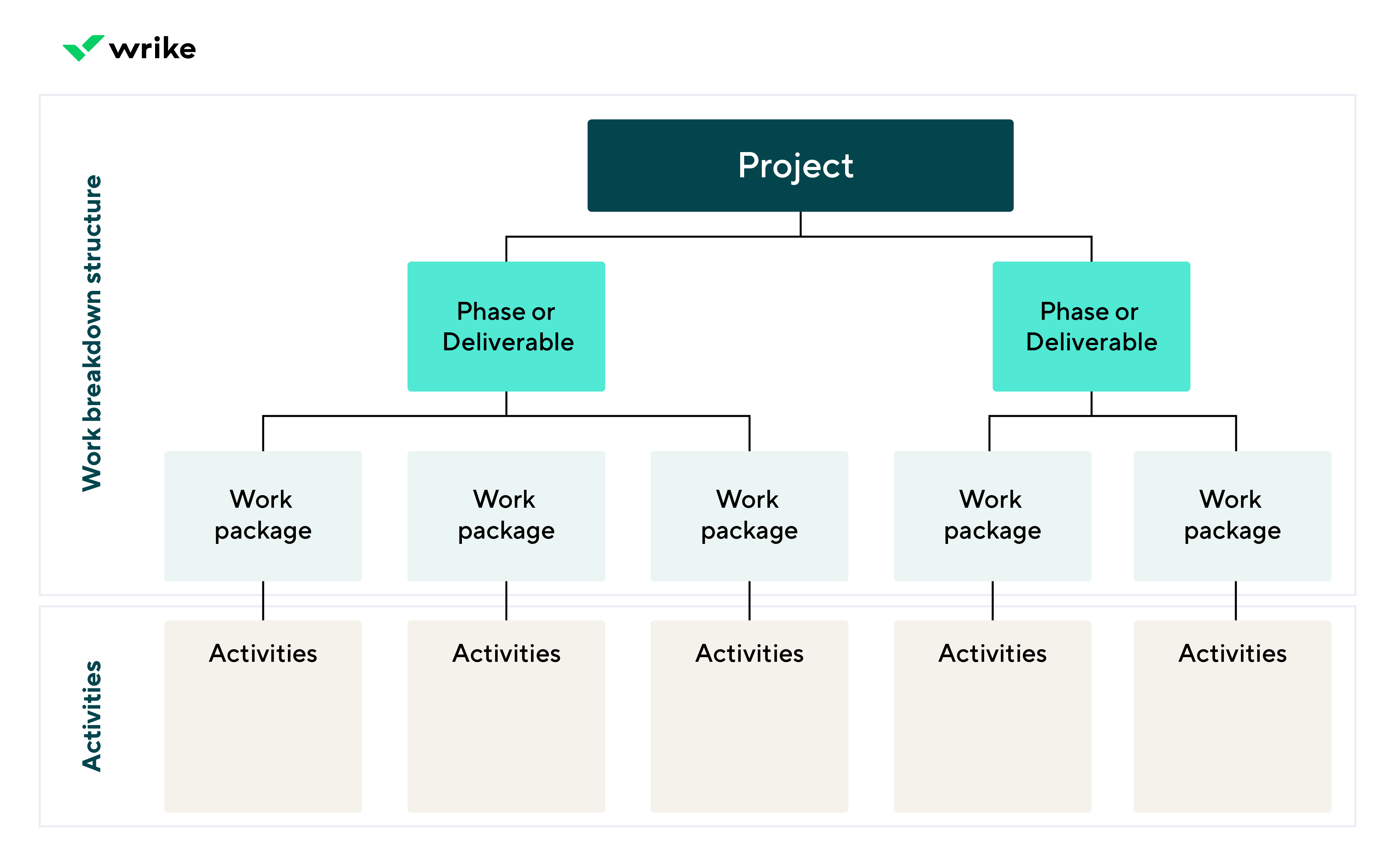
This scope needs to be broken down in what we call a work breakdown structure into smaller, more manageable pieces.
Phill AkinwaleHOST
So this is our WBS over here.
Phill AkinwaleHOST
This is your work breakdown structure.
Phill AkinwaleHOST
And we have the work that goes down to the work package level, like so.
Phill AkinwaleHOST
Okay? This is our WBS, which is breaking down all the work into work packages.
Phill AkinwaleHOST
We usually start off with a 1.1 here, and then a 1.1, 1.2, 1.3, and then down to 1.1.1, 1.1.2, 1.1.3, 1.1, and so on.
Phill AkinwaleHOST
Or 1.2.1, 1.2.2, 1.3.1, and 1.3.2, and so on and so forth.

speaker_0HOST
Defining scope requires decomposition.
speaker_0HOST
In predictive projects, this takes the form of a work breakdown structure, or WBS.
speaker_0HOST
The WBS is a hierarchical, deliverable-oriented chart that breaks scope into smaller components.
speaker_0HOST
A WBS dictionary accompanies it, providing definitions, owners, and acceptance details for each element.
speaker_0HOST
In Agile projects, decomposition happens through backlog refinement.
speaker_0HOST
Epics are split into features, features into user stories, until work is right-sized for delivery.
speaker_0HOST
On the exam, look for answers that emphasize visible decomposition and explicit exclusions.
speaker_0HOST
Decomposition must also link every piece of work to ownership and acceptance proof.
speaker_0NARRATOR
This is episode 50 of season one.
speaker_0NARRATOR
Today we are exploring practical tools for scope boundaries, acceptance, work breakdown, and backlog discipline.
speaker_0NARRATOR
The outcomes of effective scope management include fewer disputes, faster approvals, and increased stakeholder trust.
speaker_0NARRATOR
When stakeholders know exactly what will be delivered and how acceptance will be confirmed, confidence rises.
speaker_0NARRATOR
Correct answers emphasize structured boundaries and disciplined acceptance.
speaker_0NARRATOR
Scope management applies across predictive, agile, and hybrid contexts with tailoring.
speaker_0NARRATOR
Predictive projects often rely on formal documents like the scope statement, work breakdown structure, WBS, and scope baseline.
speaker_0NARRATOR
Agile projects rely on a transparent product backlog refined regularly.
speaker_0NARRATOR
It does not mean nobody can explain what was agreed, who made the decision, or how completion was established.
speaker_0NARRATOR
Work Breakdown Structure The Work Breakdown Structure, or WBS, is a hierarchical decomposition of the project's scope into smaller components.
speaker_0NARRATOR
It divides large deliverables into manageable work packages that can be planned and tracked.
speaker_0NARRATOR
The WBS helps clarify responsibilities and prevents scope from being overlooked.
speaker_0NARRATOR
It is one of the foundational artifacts in predictive project management.
speaker_0NARRATOR
RACI matrix.
speaker_0HOST
A project has many domains, each with required artifacts.
speaker_0HOST
Scope statements, WBS, backlog, schedule, plans, forecasts, cost, budgets, earned value records, quality, plans, checklists, acceptance evidence, risk registers, response logs, communications, plans, reports, procurement, contracts, change orders, and stakeholder engagement maps, logs.
speaker_0HOST
Identifying the full inventory prevents gaps.
speaker_0HOST
Once identified, each artifact must have an owner, a contributor list, and an approval path.

EliHOST
The memo titled, quote, Clawed Enterprise Users' Important Updates to Licensing and Usage Costs states that, quote, all costs are consumption-based.
EliHOST
Usage above the allowance goes to a work breakdown structure, WBS, Accenture's billing code for a project or team.
EliHOST
Heavy use remains possible, but it now needs a budget owner.
EliHOST
Oh my golly, specific projects or specific departments need to actually budget and pay for AI use.
EliHOST
Access is conditional.
EliHOST
The memo says, quote, pending a WBS and obtaining a license does not guarantee indefinite or ongoing access to cloud.
EliHOST
And one employee lost access entirely.
EliHOST
So basically, just because you get the WBS and you get a license, doesn't mean that they're just going to give you an unlimited amount of money for this.
Phill AkinwaleHOST
The PMI used to have all of that in other areas.
Phill AkinwaleHOST
When it comes to scope, I think your biggest takeaway for scope is your WBS and your scope baseline.
Phill AkinwaleHOST
Pay attention to all these things I'm saying because these are the things that will make you kill the process domain.
Phill AkinwaleHOST
The scope baseline contains the WBS, the WBS dictionary, and the project scope statement.
Phill AkinwaleHOST
When it comes to schedule, the big thing that you need to understand is in PMBOK 8, let's just talk about PMBOK 8.
Phill AkinwaleHOST
So in PMBOK 8, you only have three processes in scheduling, but there's more to it that meets the eye because in scheduling, you have to think about planning processes.
8 MINS LATER
Phill AkinwaleHOST
It's called developer managed project scope.
Phill AkinwaleHOST
You just know it as scope, right? Those of you who are getting into your studying, scope has to do with requirements.

John SuderHOST
That's the company allowance.
John SuderHOST
Go over it and you have to charge the rest to what they call a WBS, a work breakdown structure, which is consultant for a project budget.
John SuderHOST
But here's who it hit.
John SuderHOST
Some employees had been running $500 to $1,000 a month, mostly in cloud code.