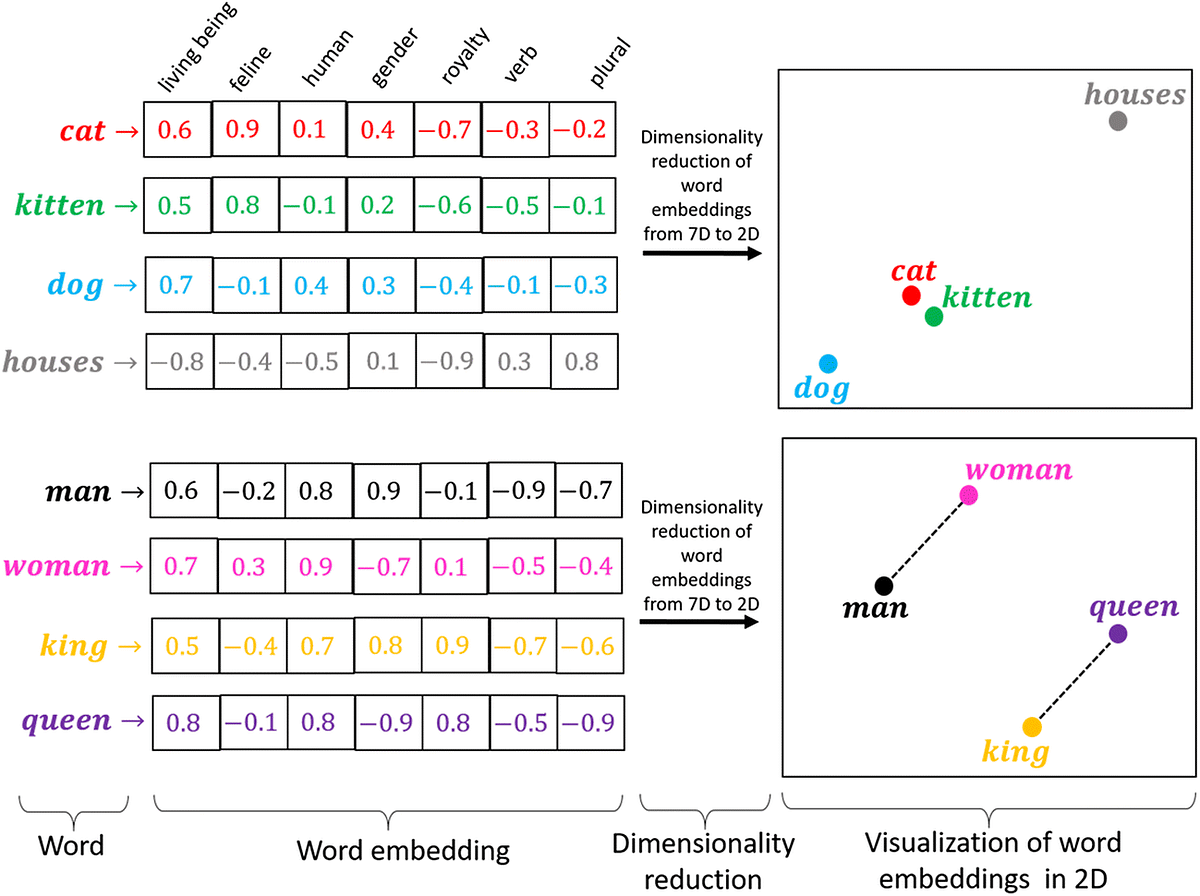
Word embedding
66
MENTIONS
9
EPISODES
8
PODCASTS
Search complete. 66 mentions across 9 episodes found for "Word embedding".
Nov 18, 2026

speaker_0NARRATOR
Retrieved context, retrieval augmented generation, or RAG, chunks of records pulled from your index often more sensitive than the prompt itself.
speaker_0NARRATOR
Embeddings in vector databases' numeric versions of your documents' VEC2 text demonstrated exact recovery of 92% of 32 token inputs, including names from clinical notes.
speaker_0NARRATOR
Queues and payload stores requests waiting for a GPU data at rest is usually not considered.
speaker_0NARRATOR
Logs and traces full request bodies when debug logging is on ends up in a third-party log tool.
speaker_0NARRATOR
If you already have a BAA with your cloud provider, self-hosting in that account adds no new vendor.
speaker_0NARRATOR
Your agent needs features outside the BAA scope, batch jobs, file uploads, code execution.
speaker_0NARRATOR
your policy says no retention and the covered option keeps data for 30 days eu data must stay in the eu there are also state laws like texas sb 1188 that limit where records can live volume is steady and high which open source inference servers can you self-host the short skimmable list tool best for limitations vllm high throughput llm serving with broad model support one model per server You build routing and auth around ITS GLang multi-turned chat, structured output, RAG with shared prefixes smaller ecosystem than VLL Malama local development and single-user setups not designed for multi-tenant production TEI Text Embeddings Inference Embeddings and Rerankers 1 model per server No generation TGI Text Generation Inference Existing deployments only put in maintenance mode by hugging FaceSci.
speaker_0NARRATOR
Superlinked inference engine.

Alicia IrelandHOST
RAG was also discussed.
Alicia IrelandHOST
Embeddings are part of the 7.2 work, but there is no decision yet on whether RAG belongs in core or in plugins.
Alicia IrelandHOST
On what will ship with WordPress 7.2, the group asks for continued testing of the Secrets API, especially on Multisite, preparing developer notes for the Abilities API before RC1, and more feedback on a change to Abilities permissions that, if it doesn't receive support, could be reverted.
Alicia IrelandHOST
It was approved to move the shared abilities into their own Composer package within the WordPress organization on GitHub, so projects such as WooCommerce can use them without installing the entire AI plugin.

Jim HedgerHOST
Profile relevance model.
Jim HedgerHOST
It's profile relevance model using LLM-generated embeddings to show users more relevant posts from people.
Kristine SchachingerHOST
Wait, what was that? Embeddings?
Jim HedgerHOST
It's using LLM-generated embeddings.
Kristine SchachingerHOST
Nice.

Ghita Houir AlamiGUEST
For various reasons, I think you do need a mechanism on top of your initial first pass search.
Ghita Houir AlamiGUEST
Embeddings are not going to be enough for the whole dimensionality problem, where if you're trying to encode information into like an embedding with like a certain number of dimensions, you can like prove like there were some papers about this as well.
Ghita Houir AlamiGUEST
You can prove that, you know, you're never going to be able even for like a small K to retrieve all of the documents in the right order.
Ghita Houir AlamiGUEST
And so having like a step after this is definitely necessary.

OliverHOST
There's one piece of quiet magic that makes the search work, and the word is less cold than it looks.
OliverHOST
Embeddings.
OliverHOST
Stay with me.
OliverHOST
They're friendlier than the syllable.

Ben KusGUEST
And that's always been a problem.
Ben KusGUEST
And so then the really cool thing and the exciting thing is that the next generation of context retrieval, powered by some of the same technologies like vector embeddings and the ability to not just understand the lexical search capabilities but the semantic capabilities, like the meaning-based searches, this is now significantly improving.
Ben KusGUEST
And so then the idea of can a person, or an agent in this case, find the data it needs It may be the key to unlocking the benefits that any company would have to be able to use agents effectively.
Ben KusGUEST
And this is definitely an area that we're focused on.
Ben KusGUEST
Now, the problem was, I mean, it was amazing.
Ben KusGUEST
Here's 300 documents.
Ben KusGUEST
chunk them up, find the most related paragraph using vector embeddings, and then give it to an agent, which is awesome.
Ben KusGUEST
And when it works, it's great.

Christopher ManningHOST
I'll then introduce the ideas of the Word2Vec algorithm for learning word meaning, and then Going from there, we'll concretely work through how you can work out objective function gradients with respect to the word2vec algorithm and say a teeny bit about how optimization works.
Christopher ManningHOST
And then right at the end of the class, I then want to spend a little bit of time giving you a sense of how these word vectors work and what you can do with them.
Christopher ManningHOST
So really, the key learning for today is I want to give you a sense of how amazing deep learning word vectors are.
Christopher ManningHOST
So we have this really surprising result that word meaning can be represented, not perfectly, but really rather well by a large vector of real numbers.
Christopher ManningHOST
And that's sort of in a way a commonplace of the last decade of deep learning, but it flies in the face of thousands of years of tradition.
33 MINS LATER
Christopher ManningHOST
And so they're actually then grouped close together to the verb to be.
Christopher ManningHOST
So there's a lot of interesting structure in this space that then represents the meaning of words.
Christopher ManningHOST
So the algorithm I'm going to introduce now is one that's called Word2Vec, which was introduced by Tamás Mikulov and colleagues in 2013 as a framework for learning word vectors.
John HewittHOST
But when we discuss pre-training, it's important to know that subwords are a part of it.
John HewittHOST
Then we'll sort of motivate, we'll go on another journey of motivation of motivating model pre-training from word embedding.
John HewittHOST
So we've already seen pre-training in some sense in the very first lecture of this course because we pre-trained individual word embeddings that don't take into account their contexts on very large text corpora and saw that they were able to encode a lot of useful things about language.
John HewittHOST
So after we do the motivation, we'll go through model pre-training three ways.
John HewittHOST
And we're going to reference, actually, the lecture on Tuesday.
11 MINS LATER
John HewittHOST
So we never saw Tasty enough with however many As in order to add it into our subword vocabulary.
John HewittHOST
But we're still able to split it into things.
John HewittHOST
And then the neural network that runs on top of these subword embeddings could be able to sort of induce that, oh, yeah, this is one of those things where people chain letters together, chain vowels together in English for emphasis.

speaker_6HOST
No.
speaker_6HOST
It relies on vector embeddings.
speaker_4HOST
So when we upload our internal company documents into a RAG system, a specialized embedding model reads all the text and converts every sentence into a coordinate in a massive multi-dimensional space.
speaker_6HOST
Exactly.