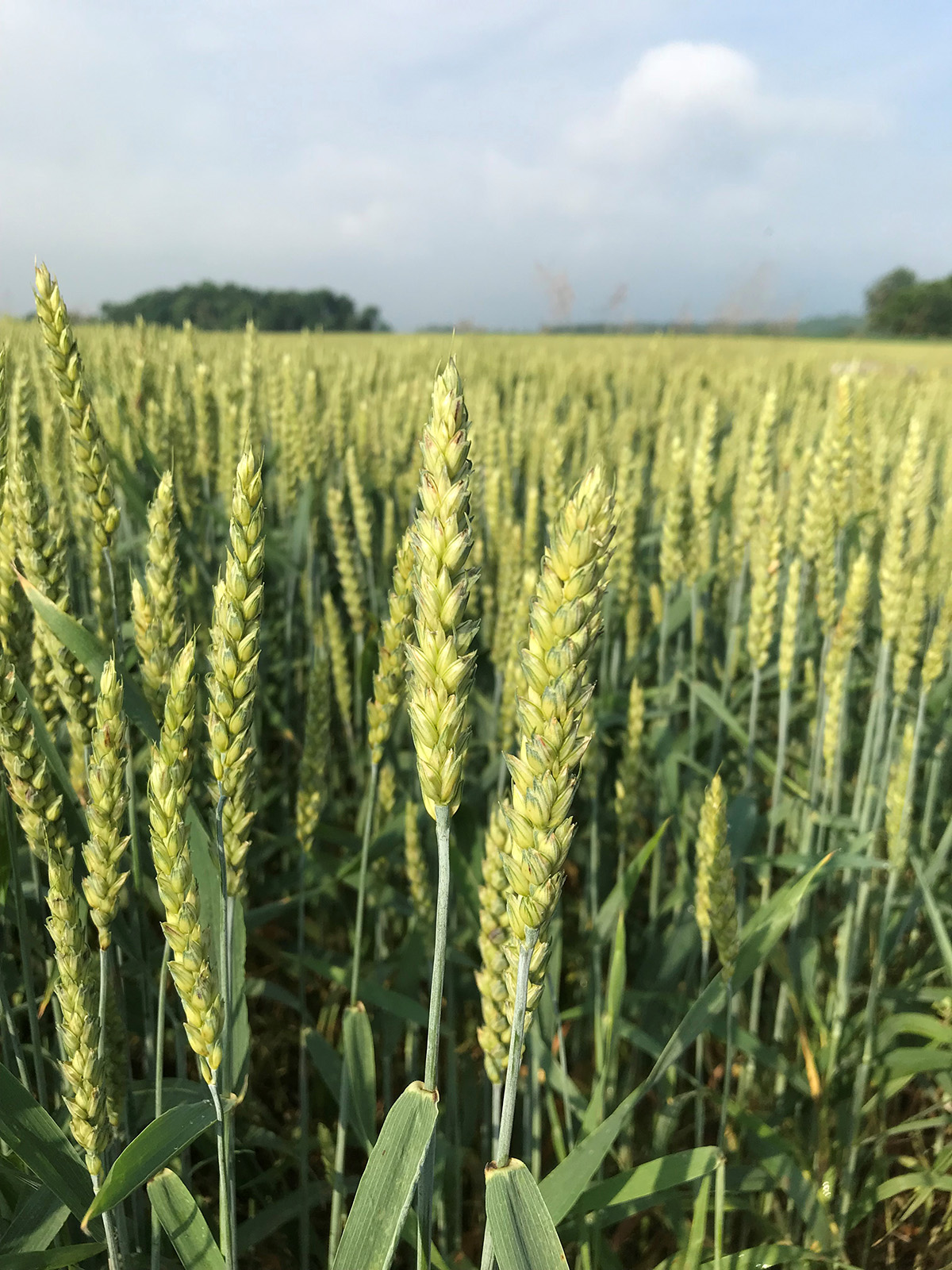
Winter wheat
33
MENTIONS
10
EPISODES
7
PODCASTS
Search complete. 33 mentions across 10 episodes found for "Winter wheat".
Nov 20, 2026

Mackenzie JohnstonHOST
Meanwhile, drought conditions were largely unchanged across the High Plains, except for new areas of drought emerging in northeastern Kansas and slight improvements down in southwestern Oklahoma.
Mackenzie JohnstonHOST
When we look at the percentage of U.S. areas experiencing drought, corn country currently stands at 25%, soybeans 34%, winter wheat 50%, spring wheat 32%, and cattle 35%.
Joe VaclavikHOST
Matt, it's turned a little bit dry in your neighborhood again.
Matt BennettGUEST
We're dry as a bone, Joe.
Matt BennettGUEST
I mean, no creeks running, no tiles running.
Matt BennettGUEST
It's a time of year where you're not going to be super concerned about being dry, but you know, it's uncomfortably dry right now.
Joe VaclavikHOST
looking at u.s winter wheat production prospects which is perhaps a little bit more topical now than anything related to row crops usda's chief meteorologist said this week that the u.s winter wheat crop is benefiting hugely from el nino he said the drought that was dominating the plains as winter wheat planting started is mostly diminishing And you look at we talked about this last week, I think, or two weeks ago, Kansas.
Joe VaclavikHOST
There's not much drought.
Joe VaclavikHOST
for next year.
Joe VaclavikHOST
You've got to start somewhere, right? I think the winter wheat acreage number might be the most topical thing right now.
Joe VaclavikHOST
The projection is that we'll see a total of 44 million all wheat acres.
Joe VaclavikHOST
They don't break it out into winter and spring.
Mackenzie JohnstonHOST
Soybean harvest advanced to 92% complete, up from 88% a week earlier and slightly ahead of the five-year average of 91%.
Mackenzie JohnstonHOST
Last week's harvest pace came in just below trade expectations of 93%.
Mackenzie JohnstonHOST
Meanwhile, winter wheat planting is nearing completion, reaching 89% complete.
Mackenzie JohnstonHOST
The good to excellent rating for the crop was reported at 49%, up from 44% the prior week and ahead of the five-year average of 43%.

Lane NordlundCORRESPONDENT
The National Wheat Foundation has announced its 2026 National Wheat Yield Contest winners, with several Western producers earning top honors.
Lane NordlundCORRESPONDENT
Riley Reynolds at Twin Falls, Idaho, claimed the top irrigated winter wheat title for the second straight year, producing more than 214 bushels per acre.
Lane NordlundCORRESPONDENT
Jake Druffle of Colton, Washington topped the dry land winter wheat category at 196 bushels per acre.
Lane NordlundCORRESPONDENT
And Helly and Bruce Roddencloud of Amity, Oregon earned top honors in dry land spring wheat at more than 144 bushels per acre.
Lane NordlundCORRESPONDENT
In Montana, Michael Wood of Joplin was recognized for a dry land spring wheat yield topping 90 bushels per acre, more than 219% above his county average.
Austin KnutsonSOUNDBITE_SPEAKER
Sponsored by the Montana Department
Lane NordlundCORRESPONDENT
of Justice.
Lane NordlundCORRESPONDENT
Going from the wheat yield contest winners to the 2027 winter wheat crop, where weather is slowing things down just a bit, USDA meteorologist Brad Rippey shares the details.
Lane NordlundCORRESPONDENT
The National Wheat Foundation has announced its 2026 National Wheat Yield Contest winners with several Western producers earning top honors.
Lane NordlundCORRESPONDENT
Riley Reynolds at Twin Falls, Idaho, claimed the top irrigated winter wheat title for the second straight year, producing more than 214 bushels per acre.
Lane NordlundCORRESPONDENT
Jake Druffle of Colton, Washington topped the dryland winter wheat category at 196 bushels per acre.
Lane NordlundCORRESPONDENT
And Helly and Bruce Roddenklau of Amity, Oregon earned top honors in dryland spring wheat at more than 144 bushels per acre.
Lane NordlundCORRESPONDENT
In Montana, Michael Wood of Joplin was recognized for a dryland spring wheat yield topping 90 bushels per acre.
Austin KnutsonSOUNDBITE_SPEAKER
Sponsored by the Montana
Lane NordlundCORRESPONDENT
Department of Justice.
Lane NordlundCORRESPONDENT
Going from the wheat yield contest winners to the 2027 winter wheat crop, where weather is slowing things down just a bit, USDA meteorologist Brad Rippey shares the details.

Louise GartnerHOST
Your days are shorter, so it just becomes more difficult the deeper you get into the fall to get those crops out of the fields.
Louise GartnerHOST
Winter wheat plantings are running 83%, that's down one from the average.
Louise GartnerHOST
Texas is at 77%, that's up two from the average.
Louise GartnerHOST
Oklahoma's at 62%, down 17 from the average.
Louise GartnerHOST
Kansas, 86% is down one from the average.
Louise GartnerHOST
Montana's at 95% complete, that is up one from the average.
Louise GartnerHOST
We did see some winter wheat crop condition ratings from USDA yesterday afternoon.
Louise GartnerHOST
Nationwide, we're at 44% good to excellent, and poor to very poor is at 18%.

Ty KehrigHOST
The key question is whether the jump in sales begins to translate into stronger physical movement.
Ty KehrigHOST
The 2027 U.S. winter wheat crop has largely caught up to a normal planting pace.
Ty KehrigHOST
The USDA reported 76% planted through October 25th versus a five-year average of 77%, up from 63% in the previous week.
Ty KehrigHOST
National emergence reached 53% versus 54% average.
Ty KehrigHOST
The IGC maintained 26-27 wheat production near 820 mmT, with record consumption of approximately 827 mmT, with major exporter ending stocks projected to fall about 7% to 68.1 mmT.
Ty KehrigHOST
World wheat trade is forecast near 199.1 mmt, which is down roughly 7%, as improved production in several key importing regions does reduce demand outlook.
Ty KehrigHOST
European winter wheat establishment remains an important 2027 production risk, as soil moisture problems do persist.
Ty KehrigHOST
The October GRC Mars report identified low soil moisture across parts of France, Germany, Poland, Central and Southeastern Europe, while excessive rainfall and water logging have delayed winter sowing in the Baltic states and Finland.

Todd GleasonHOST
If you're a farmland owner, a farmer, or just interested in the transition of the prairie soils from prairie to crop rotation, you'll want to stay with us.
Todd GleasonHOST
And then, of course, as we wrap up our time together, we will take a look at the weather forecast, too.
Todd GleasonHOST
We'll do that with Mike Tenor from T-Storm Weather on this Thursday edition of the Closing Market Report from Illinois Public Media.
Todd GleasonHOST
December corn for the day settled at $4.51 and a quarter, a half of a cent lower.
Todd GleasonHOST
The March contract at $4.64 and three quarters down a quarter.
18 MINS LATER
Todd GleasonHOST
Let's turn our attention to the growing regions across the planet and how the climate is impacting each of them at this point.
Todd GleasonHOST
Mike Tenor is here.
Todd GleasonHOST
He is the president and CEO of T-Storm Weather out of Naperville, Illinois.

speaker_1NARRATOR
From the piney woods of East Texas to the rocky ranges of the Trans-Pecos, and from the panhandle down to the Rio Grande Valley, here's today's top stories.
James HuntCORRESPONDENT
Winter wheat in the South Plains is off to an encouraging start.
James HuntCORRESPONDENT
I'm James Hunt, and we'll talk about that on Texas Ag Today.
Tom NicolettiCORRESPONDENT
Although more moisture is needed on the Texas rolling plains, farmers there have begun planting their winter wheat crop.
Tom NicolettiCORRESPONDENT
I'm Tom Nicoletti, and we'll go to that region of the state to find out more on Texas Ag Today.
Jessica DomelCORRESPONDENT
Work continues on a full five-year farm bill.
Kerry MartinHOST
That's just a bit behind the 94% five-year average pace.
Kerry MartinHOST
Texas peanuts now stand at 25% harvested.

Joshua WeeseHOST
Welcome to Insight with new media broadcasters, I'm Joshua Weese.
Joshua WeeseHOST
Today, USDA meteorologist Brad Rippey covers winter wheat progress, USDA livestock analyst Anthony Fisher talks about data from the Cattle on Feed report, and Agriculture Secretary Brooke Rowlands talks about their fields program.
Brad RippeySOUNDBITE_SPEAKER
finally are getting past the three-quarters mark on winter wheat planting, now at 76% on October 25th, and that intended acreage planted typical number for this date is only a little higher at 77%.
Brad RippeySOUNDBITE_SPEAKER
We actually saw some really phenomenal progress as crops were harvested in parts of the eastern Corn Belt, producers going right back in and planting winter wheat, so Ohio One example there, we saw an advance from 38% of the wheat planted a week ago, all the way to 68% on October 25th.
Brad RippeySOUNDBITE_SPEAKER
Even with that, still behind the five-year average of 78%.
Brad RippeySOUNDBITE_SPEAKER
And you can blame that on the late maturation of corn and soybeans across the Eastern Corn Belt.
Louise GartnerHOST
And so beans, or excuse me, corn has kind of taken a back seat just on the priority to get the beans out of the field and get them marketed.
Louise GartnerHOST
Winter wheat plantings are sitting at 76%.
Louise GartnerHOST
That's down one from the average.
Louise GartnerHOST
Texas is at 70%.