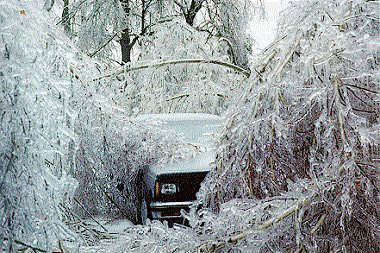
Winter storm
Disaster typeWikipedia
35
MENTIONS
9
EPISODES
9
PODCASTS
Search complete. 35 mentions across 9 episodes found for "Winter storm".
Sep 14, 2026

Adam WilbournHOST
... there's people like Bayley and Dan Fletcher-
Michael SidgwickHOST
Goes with Winterstorm
Adam WilbournHOST
... have had two matches already, and they're arguably both were better than the Arena Mexico match.
Michael SidgwickHOST
Yeah, yeah, all them boiling hot Dynamites in those 2,000-seater buildings.

speaker_3ADVERTISER
oh, oh, O'Reilly!
speaker_4NARRATOR
section one of in time of emergency this is a librivox recording all librivox recordings are in the public domain for more information or to volunteer please visit librivox.org in time of emergency a citizen's handbook on nuclear attack natural disasters by united states office of civil defense introduction a major emergency affecting a large number of people may occur any time and anywhere it may be a peacetime disaster such as a flood tornado fire hurricane blizzard or earthquake it could be an enemy nuclear attack on the united states in any type of general disaster lives can be saved if people are prepared for the emergency and know what actions to take when it occurs with the aid of federal and state governments cities and counties in all parts of the country are developing their local civil defense systems the fallout shelters supporting equipment and emergency plans needed to reduce the loss of life from an enemy attack while these local government systems have been set up mainly as safeguards against nuclear attack they have saved lives and relieved suffering in many major peacetime disasters people have been warned of impending storms and similar dangers told how to protect themselves sheltered from the elements fed and clothed treated for injury and illness and given help in resuming their normal lives experience has shown that as cities counties and towns develop their systems to preserve life under nuclear attack conditions they also become better prepared to deal effectively with peacetime disasters in cooperation with the u s office of civil defense and the states many local governments are improving their civil defense systems by preparing community shelter plans these plans include instructions to local citizens on what to do in the event of a nuclear attack this handbook in time of emergency contains basic general information on both nuclear attack and major natural disasters this general guidance supplements the specific instructions issued by local governments since special conditions may exist in some communities the local instructions may be slightly different from this general guidance in those cases the local instructions should be followed part one is concerned with nuclear attack and basic actions to take part two discusses preparations and emergency actions that will help individuals cope with major natural disasters floods hurricanes tornadoes winter storms and earthquakes in addition to following the advice given in this handbook and the instructions of their local governments people can prepare themselves better to meet any major disaster by taking training courses to develop their emergency skills especially recommended are these courses Personal and Family Survival, 12-hour course, a basic orientation course in civil defense, which also tells people how to improve their protection against the effects of a nuclear attack.
speaker_4NARRATOR
Medical Self-Help, 16-hour course, how to care for the sick and injured if a doctor or nurse is not available.
speaker_4NARRATOR
First Aid, courses of various lengths, how to help the sick and injured until professional medical assistance is obtained.
1 HR 41 MINS LATER
speaker_4NARRATOR
If the patient has headache or general discomfort, give him one or two aspirin tablets every three or four hours, half a tablet for a child under 12. if he is nauseous give him motion sickness tablets if available if his mouth is sore or his gums are bleeding have him use a mouthwash made up of a half teaspoonful of salt to one quart of water if there is vomiting or diarrhoea he should drink slowly several glasses each day of a salt and soda solution one teaspoonful of salt and one half teaspoonful of baking soda to one quart of cool water plus bouillon or fruit juices if available a mixture of kaolin and pectin should be given for diarrhea whatever his symptoms the patient should be kept lying down comfortably warm and resting remember that radiation sickness is not contagious or infectious and one person cannot catch it from another person end of section six section seven of in time of emergency a citizen's handbook on nuclear attack natural disasters by united states office of civil defense this librivox recording is in the public domain part two major natural disasters Many of the actions recommended in Part 1 of this handbook to help you prepare for and live through a nuclear attack, such as learning the warning signals, stocking emergency supplies, taking a course in emergency skills, and knowing how to fight fires at home, also would help you in case a major natural disaster occurs in your area.
speaker_4NARRATOR
If you are prepared for nuclear attack, you are also prepared to cope with most peacetime disasters.
speaker_4NARRATOR
disasters that kill hundreds of americans every year injure thousands inflict widespread suffering and hardship and cause great economic loss part two of this handbook is intended to help you prepare for those natural disasters that may occur in your area and tell you the right actions to take if they occur chapter i gives general guidance applicable to various types of natural disasters succeeding chapters give special advice on floods hurricanes tornadoes winter storms and earthquakes chapter one general guidance there are certain things you can learn and do that will help you get ready for and cope with almost any type of natural disaster perhaps the most basic thing you can do is to keep calm this may mean the difference between life and death in many disasters people have been killed or injured needlessly because they took thoughtless actions when they should have done something else or done nothing at all just then in a time of emergency taking proper action may save your life take time to think and then take the considered action that the situation calls for usually this will be the action you have planned in advance or the action you are instructed to take by responsible authorities here is other guidance that applies to most types of natural disasters Warning.
speaker_4NARRATOR
Learn your community's warning signals.

speaker_3NARRATOR
The result is that the invisible mixture entering lungs on a still, bitter night can be chemically distinct from what fills the same streets on a breezy, mild afternoon.
speaker_3NARRATOR
Winter storms can build electrical charges stronger than many summer thunderstorms.
speaker_3NARRATOR
In certain intense systems, especially those that produce heavy snow, the turbulence and collisions inside clouds create ideal conditions for separating electrical charge.
speaker_3NARRATOR
Ice crystals, sleet particles, and soft hail called grapple, bump, and rub against each other in powerful updrafts, transferring charge in the process.
45 MINS LATER
speaker_3NARRATOR
Researchers track them with drones and satellite imagery to uncover the processes behind them.
speaker_3NARRATOR
For people encountering them from shore or the air, the circles look almost intentional, as if drawn by a hidden hand beneath the ice.
speaker_3NARRATOR
Winter storms can move heat between continents.
speaker_3NARRATOR
Large-scale weather systems that form in cold seasons can tap into warm ocean currents, redistribute that energy, and send it across vast distances.

AaronHOST
Anyways, I'm sorry.
AaronHOST
So Winter Storm traps Katie at the mansion, right? She's stuck.
AaronHOST
And she starts noticing like little things.
AaronHOST
There's a line that's cut.

Lee SmalleyNARRATOR
Recording by Lee Smalley.
Matt PerardNARRATOR
Snowstorm in the Sahara.
Matt PerardNARRATOR
Notes from the Journal of a Military Surgeon, from Chambers-Edinburgh Journal, number 452.
Matt PerardNARRATOR
This is a LibriVox recording.
Matt PerardNARRATOR
All LibriVox recordings are in the public domain.
Matt PerardNARRATOR
For more information or to volunteer, please visit LibriVox.org. Reading by Matt Perard.
Matt PerardNARRATOR
Snowstorm in the Sahara.
Matt PerardNARRATOR
Notes from the Journal of a Military Surgeon.

Ashanté M. ReeseGUEST
It also often includes using these moments of crisis as a way to engage and do some type of political education.
Ashanté M. ReeseGUEST
So like with the winter storm in Texas, for example, You saw many people using that time to be able to talk about the inequalities of our grid system.
Ashanté M. ReeseGUEST
Why are big box stores still, you know, why are their lights still on and communities that have a high proportion of elders are without power for days, those kinds of things, to kind of point toward away from the so-called natural disaster and more toward the man-made aspects of things.
Ashanté M. ReeseGUEST
The political education or the teaching piece is a really important part of mutual aid.
Ashanté M. ReeseGUEST
It gives us an opportunity to really think about someone as our neighbor and not just someone in need or a charity case.
Ashanté M. ReeseGUEST
And it also gives us an opportunity to really sit with how precarious of a position any of us could be in at any given moment.
Ashanté M. ReeseGUEST
So Winter Storm was such a great example of that.
Ashanté M. ReeseGUEST
Also in that chapter, I talk about the protests of 2024, which is a different kind of instability, but instability no less, right? So mutual aid asks us, what will we do when the rug under our feet is pulled away? Who are we waiting on or are we stepping up? Who can we who can we support and who can support us? And so that sort of mutual the mutuality piece is distinct from I am supposed to have a good heart and I'm supposed to do these things to people to, you know, in the sense of how charity often works.

Ashanté M. ReeseGUEST
It also often includes using these moments of crisis as a way to, um, engage and do some type of political education.
Ashanté M. ReeseGUEST
So, um, like with the winter storm in Texas, for example, you saw many people using that time to be able to talk about the inequalities, um, of our grid system.
Ashanté M. ReeseGUEST
Why are, why are big box stores still, you know, why are their lights still on and communities that have a high proportion of elders are without power for days? Those kinds of things.
Ashanté M. ReeseGUEST
To kind of point toward away from the so-called natural disaster and more toward the man-made aspects of things.
Ashanté M. ReeseGUEST
Um, it gives us an opportunity to really think about someone as our neighbor and not just, uh, someone in need or a charity case.
Ashanté M. ReeseGUEST
And it also gives us an opportunity to really sit with how precarious of a position any of us could be in at any given moment.
Ashanté M. ReeseGUEST
So Winter Storm was such a great example of that.
Ashanté M. ReeseGUEST
Um, also in that chapter, I talk about the protests of 2024, which is a different kind of instability, but instability no less, right? So mutual aid asks us, what will we do when the rug under our feet is pulled away? Um, who are we waiting on or are we stepping up? Who can we, who can we support and who can support us? And so that sort of mutual, the mutuality piece, um, is distinct from I am supposed to have a good heart and I'm supposed to do these things to people to, you know, in a, in, in the sense of how charity often operates.

speaker_3NARRATOR
Winter weather phenomena.
speaker_3NARRATOR
Blizzards are powerful winter storms with high winds.
speaker_3NARRATOR
Not all snowstorms are blizzards.
speaker_3NARRATOR
For a storm to qualify as a blizzard, it must have sustained winds of at least 35 miles per hour, along with heavy snow or blowing snow that reduces visibility to less than a quarter mile.
speaker_3NARRATOR
Lake effect snow is a unique phenomenon, a collaboration between water, air, temperature, and geography that creates some of winter's heaviest snowfalls.
speaker_3NARRATOR
Nor'easters bring heavy snow to coastal regions.
speaker_3NARRATOR
Along the eastern coast of North America, particularly from the Mid-Atlantic to New England, winter storms called nor'easters bring heavy snow, high winds, and coastal flooding.
speaker_3NARRATOR
These storms form when cold air from Canada meets warm air over the Atlantic Ocean.

Chris ChapmanNARRATOR
Chapter two.
Chris ChapmanNARRATOR
Winter Storms and Spring Floods.
Chris ChapmanNARRATOR
The Bridal Veil and the Upper Yosemite Falls, on account of their height and exposure, are greatly influenced by winds.
Chris ChapmanNARRATOR
The common summer winds that come up the river canyon from the plains are seldom very strong, but the north winds do some very wild work, worrying the falls and the forests, and hanging snow banners on the comet peaks.