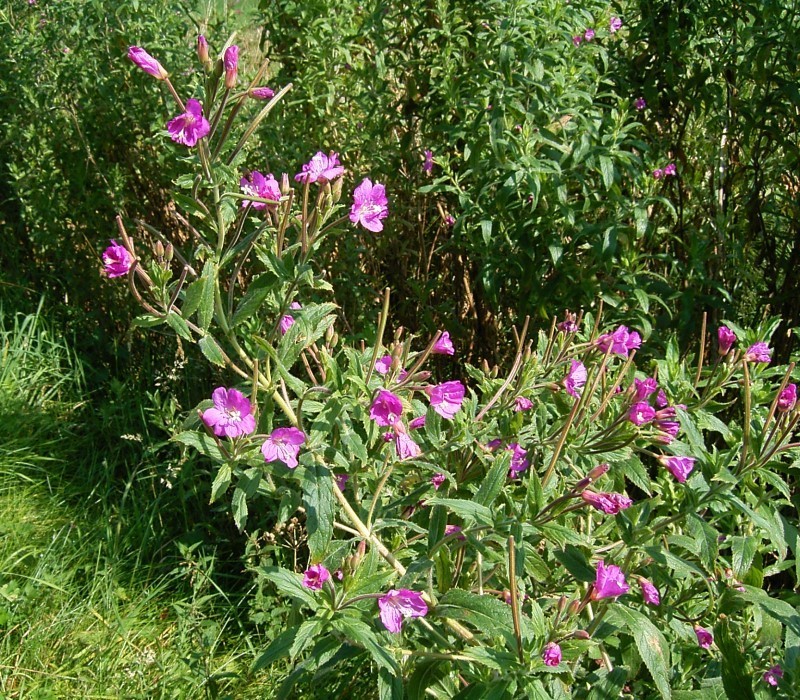
Willowherbs
PlantWikipedia
4
MENTIONS
4
EPISODES
4
PODCASTS
Search complete. 4 mentions across 4 episodes found for "Willowherbs".
Sep 6, 2026

ClaireNARRATOR
Saxifraga, or Siberian tea, produced from a decoction of the leaves of that plant, but used only as a beverage in the same manner as those of China tea.
ClaireNARRATOR
Epilobium, or Russian tea, is prepared from the dried leaves of the common willow, and are also extensively used for mixing with the regular teas of commerce, commanding as high as four rubles a pound in the dried state for that purpose, being also in common use among the poorer classes of that country as a substitute for China tea.
ClaireNARRATOR
Puxifolium, or Labrador tea, is made from an infusion of the leaves of that plant, and used extensively as a beverage by the natives of that country and adjoining provinces.
ClaireNARRATOR
Appalachian, or Pennsylvania tea, is prepared from an infusion of the punos plant, found growing in a wild state on the Allegheny Mountains, and used as a beverage as well as for the purpose of imparting heat, and while very closely resembling the tea plant of China in its structural character, of its merit or drinking qualities as a tea nothing definite has as yet been ascertained.

speaker_10NARRATOR
Saxifraga or Siberian tea produced from a decoction of the leaves of that plant, but used only as a beverage in the same manner as those of China tea.
speaker_10NARRATOR
Epilobium or Russian tea is prepared from the dried leaves of the common willow and are also extensively used for mixing with the regular teas of commerce, commanding as high as four rubles a pound in the dried state for that purpose, being also in common use among the poorer classes of that country as a substitute for China tea.
speaker_10NARRATOR
Puxifolium or Labrador tea is made from an infusion of the leaves of that plant and used extensively as a beverage by the natives of that country and adjoining provinces.
speaker_10NARRATOR
Appalachian or Pennsylvania tea is prepared from an infusion of the punos plant found growing in a wild state on the Allegheny Mountains and used as a beverage as well as for the purpose of imparting heat.

ClaireNARRATOR
Saxifraga, or Siberian tea, produced from a decoction of the leaves of that plant, but used only as a beverage in the same manner as those of China tea.
ClaireNARRATOR
Epilobium, or Russian tea, is prepared from the dried leaves of the common willow, and are also extensively used for mixing with the regular teas of commerce, commanding as high as four rubles a pound in the dried state for that purpose, being also in common use among the poorer classes of that country as a substitute for China tea.
ClaireNARRATOR
Puxifolium, or Labrador tea, is made from an infusion of the leaves of that plant, and used extensively as a beverage by the natives of that country and adjoining provinces.
ClaireNARRATOR
Appalachian, or Pennsylvania tea, is prepared from an infusion of the punos plant, found growing in a wild state on the Allegheny Mountains, and used as a beverage as well as for the purpose of imparting heat, and while very closely resembling the tea plant of China in its structural character, of its merit or drinking qualities as a tea, nothing definite has as yet been ascertained.

Jennifer PainterNARRATOR
All the plants have a high northern range, and one, the dwarf Arctic birch, is never found at sea level in latitudes as far south as the Dogger Bank, except very rarely in the Baltic provinces of Germany.
Jennifer PainterNARRATOR
The plants already found are Ranunculus lingua, Castalia alba, Cochlearia species, Lychnis flos-cuculi, Arenaria trinervia, Spiraea ulmaria, Rubus fructicosus, Epilobium species, Galium species, Valeriana officinalis, Menyanthes trifoliata, Lycopus europaeus, Atriplex patula, Betula alba, Betula nana, Corylus avellana, Salix repens, Salix aurita, Sparganium simplex, Alisma plantago, Potamogeton natans, Rupia rostrata, Scorpus species, Carex species, Phragmitis communis.
Jennifer PainterNARRATOR
Among the nine species of beetle determined by Mr. G.C. Champion, it is noticeable that two belong to sandy places.
Jennifer PainterNARRATOR
This suggests that the fen may have had its seaward edge protected by a belt of sand dunes, just as the coast of Holland is at the present day.