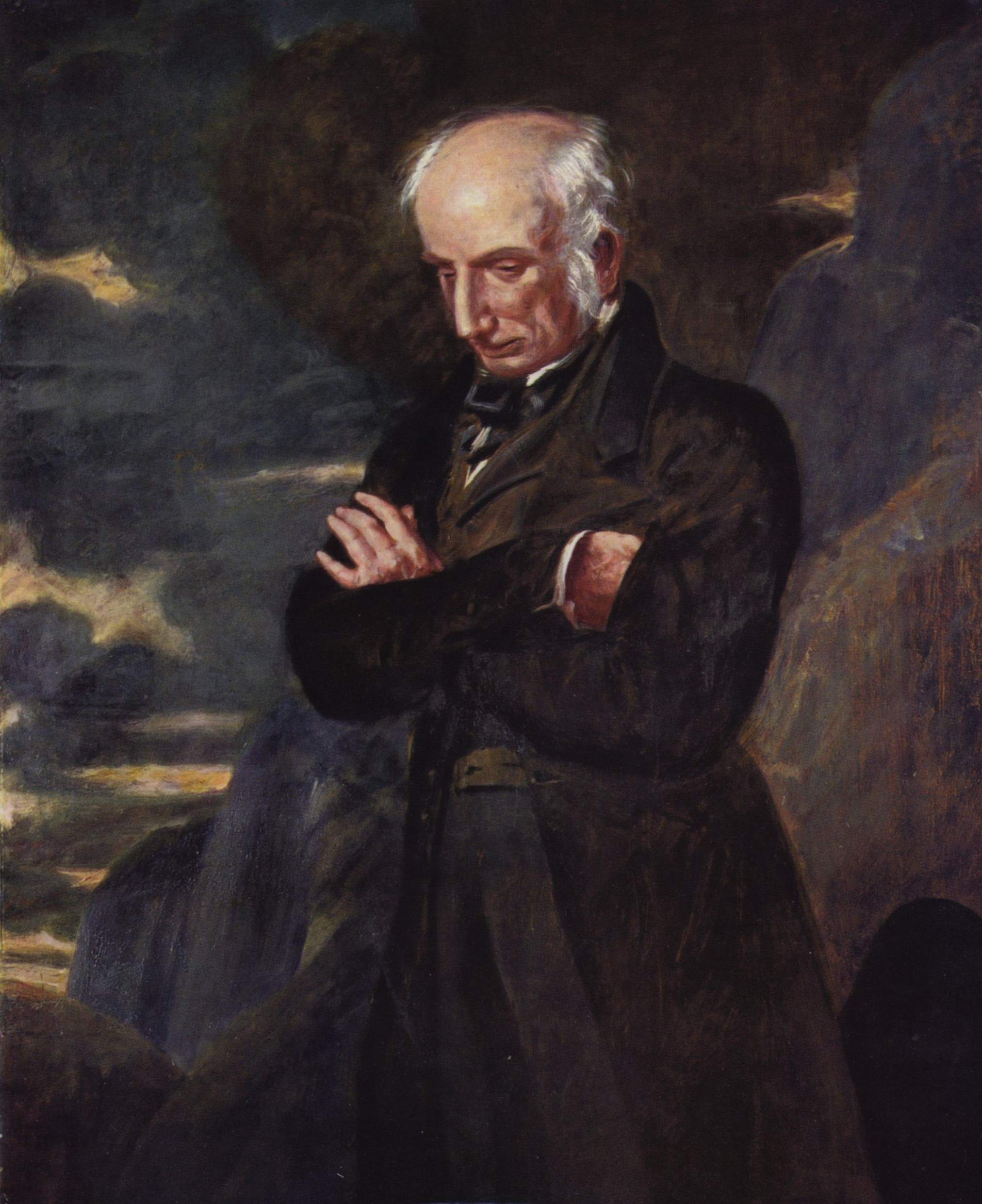
William Wordsworth
English poetWikipedia
560
MENTIONS
220
EPISODES
184
PODCASTS
Search complete. 560 mentions across 220 episodes found for "William Wordsworth".
Oct 27, 2026

Paul FryHOST
That would probably be the case, for example, with Keats.
Paul FryHOST
In Gertrude Stein, the dominant is repetition undoubtedly, and in Wordsworth or Joyce or Woolf, the dominant is perhaps not formal.
Paul FryHOST
Think of the feeling that Wordsworth's blank verse just kind of disappears into prose.
Paul FryHOST
I don't think that's quite true, but there's a general feeling that, as Matthew Arnold said, Wordsworth has no style.
Paul FryHOST
In Wordsworth or Joyce or Woolf, the dominant is the interiority of consciousness.
Paul FryHOST
That is, the way in which what we call stream of consciousness or the inwardness of thought motivates everything else that goes on in the text.
Paul FryHOST
In other words, an enormous variety of aspects literature, understood as literariness, can become the dominant.

Louis MarkosGUEST
Maybe we're, what is it? Not in utter nakedness, but trailing clouds of glory do we come.
Louis MarkosGUEST
That's a poem by William Wordsworth.
Louis MarkosGUEST
I'm sorry, let me come back.
Louis MarkosGUEST
So what the myth does is, is it shows us in a concrete term, the real consequences that philosophy is not just mental masturbation, but philosophy does have ethical ramifications on the way we choose and the way we do it.

Jon ShorrHOST
You're still tuned in to those ever-fainter whomp whomps, the heavy metal thunder from your kind.
Jon ShorrHOST
Too much with you, same as the world was too much with Wordsworth.
Jon ShorrHOST
Not that you can pretend his sensibilities, for you are a card-carrying devotee of the Anthropocene, full-on contributor, a plastic bag-using, frequent-flying lackey aware of your behavior yet rarely altering it.
Jon ShorrHOST
You, the only critter on the river who even notices humankind's womp-womps.

Andrew RimbyHOST
Yeah.
Andrew RimbyHOST
Like people think poetry is just a spur of ideas like that William Wordsworth idea of, you know, exactly, but it really isn't right.
Andrew RimbyHOST
There's a planning, there's a process.
Andrew RimbyHOST
We all have our process.
Paul FryHOST
So the question again is, and the question it seems to be raised in advance by Empson, is why should these sorts of tensions, these movements of complex reconciliation, result in unity? It's very interesting.
Paul FryHOST
Brooks's reading of She Dwelt Among Uncommon Ways, the wonderful Lucy poem by Wordsworth, emphasizes the irony of the poem.
Paul FryHOST
Brooks feels that he's on very thin ice talking about Wordsworthian irony at all, but at the same time does bring it out rather beautifully, talking about the irony of the poem basically as the way in which you can't really say that Lucy can be a flower and a star simultaneously.
Paul FryHOST
She's a flower.
Paul FryHOST
She's perishable.
Paul FryHOST
Why is he calling attention, in other words, to this logical disparity? She lived unknown.
Paul FryHOST
and few could know? How can she be unknown if few know anything about her? In other words, the poem is full not of complexities, but who says they're being reconciled? They're just sitting there oxymoronically not reconciling themselves at all.
Paul FryHOST
So Bateson's argument is that Wordsworth is calling attention to a conflict of emotion or feeling that can't be reconciled, hence the pathos of the ending, the difference to me and so on.

Christine RuckerNARRATOR
Introduction.
Christine RuckerNARRATOR
One of Wordsworth's early sonnets begins, "Great men have been among us, hands that penned, and tongues that uttered wisdom better none, than later Sidney, Marvell, Harrington, young Vane, and others who called Milton friend." For even in 1802, Andrew Marvell was still remembered as the British Aristides, who when all men of distinction were receiving bribes from the enemies of England or misappropriating the public monies, continued the noble traditions of our political life.
Christine RuckerNARRATOR
While he lived, he was regarded by foe as well as friend as a most powerful defender of persecuted religious sects, and soon after his death, it became generally known that he had been the daring satirist who had exposed the corruption in court and parliament.
Christine RuckerNARRATOR
Towards the middle of the eighteenth century, his fame was revived by a group of men dissatisfied with monarchical government, and his writings with those of Milton and Algernon Sidney were republished.
43 MINS LATER
Christine RuckerNARRATOR
Marvell, in spite of derivations from the metaphysical school, is one of our most original poets.
Christine RuckerNARRATOR
His union of imagination and wit, pathos, realism, and fancifulness gives his verse a remarkable individual quality, which is enhanced by the Doric delicacy of his style.
Christine RuckerNARRATOR
In order to find so picturesque and exquisite a painter of gardens, woods, and fields as Marvell, one might hesitate to turn to Chaucer, Wordsworth, or Tennyson, or to Mr. George Meredith at his best.
Christine RuckerNARRATOR
For in this one matter, at least, Marvell ranks only second to Shakespeare.

Sean Philip CooperHOST
Doesn't he drive?
Drew Nathaniel KeenePANELIST
Look at what happens when you have romantic poets actually grow old, like Wordsworth and Coleridge.
Drew Nathaniel KeenePANELIST
That's the thing.
Drew Nathaniel KeenePANELIST
They fall out of favor.
Drew Nathaniel KeenePANELIST
They change their mind about the time of
Sean Philip CooperHOST
revolution.
Sean Philip CooperHOST
They thought of Wordsworth and Coleridge as traitors to the cause, right? But when you read Wordsworth and you realize that he saw the French Revolution uphand, firsthand, you know, and had to flee for his life, you can understand why he would have been a little bit more sanguine about the notion of revolutionary behavior afterwards.
Drew Nathaniel KeenePANELIST
He didn't see the alternative uphand from the point of view of a peasant, either.

Matt GiulianoHOST
Albion is a conventional European poetic synonym for England, Tiber's Mistress as shorthand for Rome, and Illyrium for the Balkans wouldn't sound out of place amidst the stock imagery of the European tradition.
Matt GiulianoHOST
The poem also repeatedly highlights the sublimity and almost prelapsarian ideal of nature, in a similar vein as the English romantics John Keats or William Wordsworth.
Matt GiulianoHOST
Oh, does not nature teach us primal bliss? Who has not felt her lessons in his youth? And having felt, who can forget forsooth the voice of birds, the toll and hum of bees, and all air filled with sounds sweeter uncouth? Dark heights, majestic woods, and rolling trees have been my teachers, and my teachers still be these.
Matt GiulianoHOST
One interesting departure from the English poetic tradition is that Whitman uses basically no references to Greek and Roman mythology.

Steve BirdHOST
And finally, licensing Stanley and Marvel Music.
Steve BirdHOST
And then it's got a Wordsworth quote at the bottom, the one that involves Splendor in the Grass.
Matt BirdHOST
Yes.
Matt BirdHOST
Yeah, no, it's really nice.

Iain McGilchristGUEST
I've never gone back from there.
Iain McGilchristGUEST
I still think that Wordsworth is incomparably the greatest English poet.
Lee C. CampHOST
Have you had numerous experiences of such transfiguration?
Iain McGilchristGUEST
Well, yes, I suppose I have.
210 more episodes mention William Wordsworth.
Create an account to see the whole feed, search across every transcript, and follow the entities you care about.