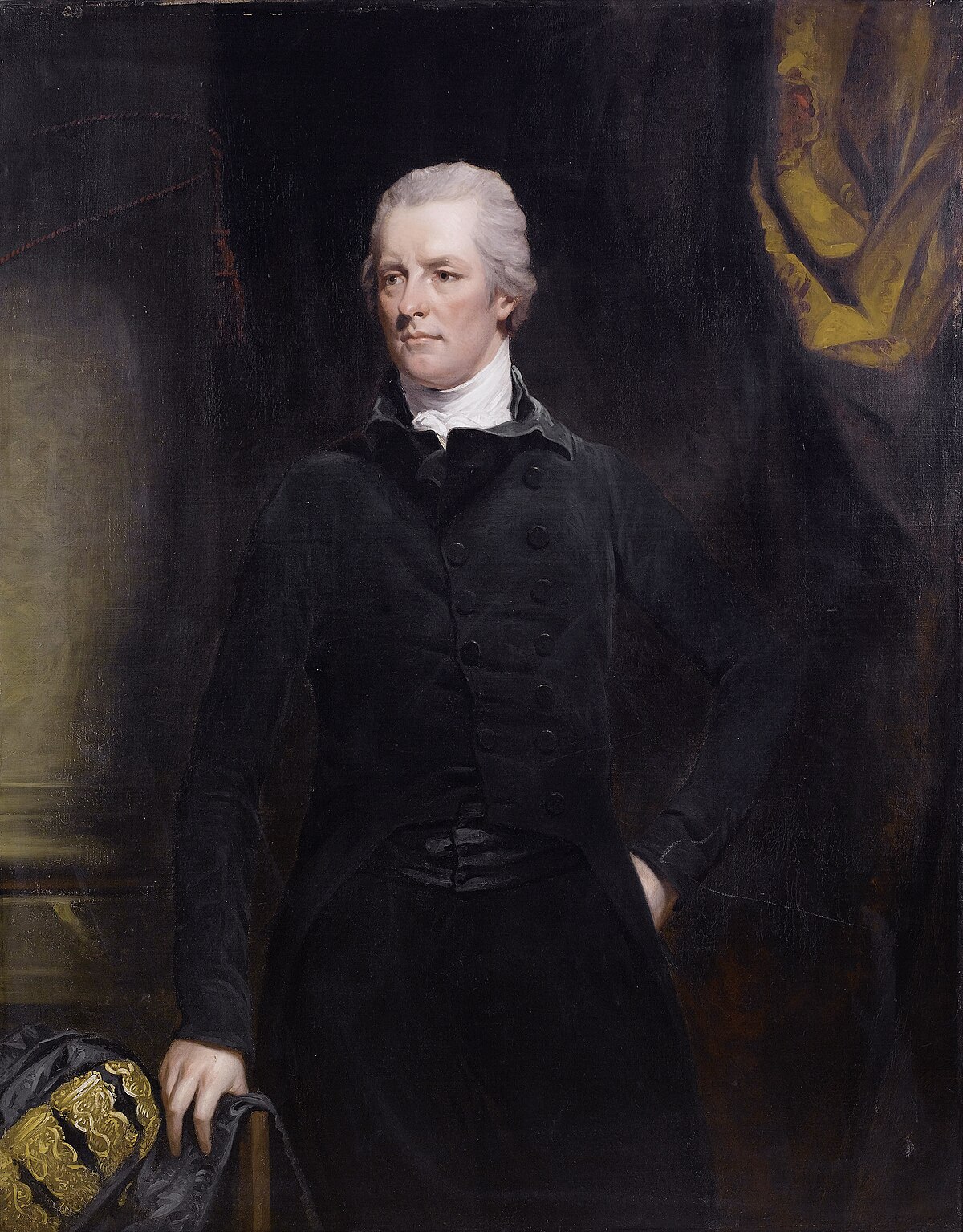
William Pitt the Younger
Former Prime Minister of the United KingdomWikipedia
142
MENTIONS
85
EPISODES
74
PODCASTS
Search complete. 142 mentions across 85 episodes found for "William Pitt the Younger".
Sep 16, 2026

Bruce KachokNARRATOR
We may notice that Simeon's life was almost exactly contemporary with that of his illustrious friend and fellow Cantabrigian William Wilberforce, who was born in 1759 and died in 1833.
Bruce KachokNARRATOR
William Pitt the Younger began his shorter life also in 1759, but Pitt, an undergraduate at fifteen, had left Cambridge before Simeon entered.
Bruce KachokNARRATOR
Another famous name of 1759 is Richard Porson.
Bruce KachokNARRATOR
Like Simeon and along with him, Porson was on the foundation of Eton and he took his bachelor's degree from Trinity College in 1782.

Philip GouldNARRATOR
Page 7 I conclude then that Suffolk represents the minister whom George III ought to have met, rather than the one who was actually in power when this book was written.
Philip GouldNARRATOR
It is very strange to find no trace of William Pitt in our author's prophecy, all the more so that his policy is entirely inspired by that of the great commoner.
Philip GouldNARRATOR
The entire beating down of France, the seizure of the Spanish possessions in the East and West Indies, the development of the american colonies the perpetual increase of the fleet are all pitt's ideas yet among the ministers of george the sixth there is certainly no one who in the least adumbrates the great statesman who had been thrust from power only a year before this book appeared Was the author under the impression that George III disliked his mighty subject to such an extent that it would be useless to urge a reconciliation? Or was he content that Pitt's ideas should be carried out even if Pitt himself should not be entrusted with their realization? That the political England of 1900 is practically that of 1763 is most clearly visible in the budgets which the ministers of George VI present to their parliaments.
Philip GouldNARRATOR
our author has no conception of the enormous increase of national wealth which was to swell our revenue within a century to eight or ten times that of his own day or rather he foresaw a large development both of trade and of manufactures but forgot that such a movement would translate itself into figures he is perpetually harping on the dangerous swelling of the national debt all through the nineteenth century and more especially in the reign of george the fourth page three but when we examine the enormous burden which must very soon drive the nation to come to the sponge we find that it amounted in nineteen hundred to no more than two hundred eleven million pounds in seventeen sixty three it was standing at about a hundred and forty million pounds so that our author imagined that the addition of some seventy million pounds more would be a fair estimate for the next century what would he have said if he had been informed that in january eighteen sixteen it would amount to over nine hundred million pounds and that the mere interest on it in that year would be more than double his total estimate for the annual revenue of the united kingdom the very modest total to which the receipts of the exchequer were to amount in nineteen hundred is fourteen million pounds a sum that would have astonished all the world had we not been in possession of such a flourishing commerce as a matter of fact it seems probable that the real estimates for that year will amount to between eight and nine times our author's calculation looking into the details the army navy and civil service each cost in eighteen ninety nine just about eight times the sum indicated in the detailed budget set forth on page thirty three on the other hand the money required for the management of the national debt is less than six times the four million two hundred fifty thousand pounds which our author allows for it in nineteen hundred he had estimated that financial stress would have cut down the four per cents of his own day to two per cents by the time of george the sixth as a matter of fact we have come down to two and three quarters per cent but by the peaceful method of conversion and not by the violent shock of the repudiation of half the covenanted interest our author like most eighteenth-century writers was a great exponent of the all importance of trade and colonization the financial salvation of great britain he tells us is bound up with the development of our north american colonies the immense region of country which the english there possess was what most extended and forwarded the british manufactures of australia and south africa there is naturally enough no mention in the book the first settlement in the former was a quarter of a century in the future seventeen eighty eight in the latter there was only an obscure dutch colony at the cape the east india company is still flourishing but the limits of its territories are nowhere stated we only know that in the reign of george the sixth they comprised not only indian possessions but batavia and the former dutch settlements in java the company is found in nineteen twenty aiding the king with a fleet as well as with a powerful land army page eighty six but north america was to be the great land of promise by the year nineteen twenty there were eleven million of souls in the british american dominions they were in possession of perhaps the finest country in the world and yet had never made the least attempt to shake off the authority of great britain page one hundred it is a minor point to note that the united states have now about seventy million inhabitants and the dominion of canada well over five million the really interesting fact in our author's picture is to see that he had just conceived of the possibility of a revolt of the united colonies and then rejected it george grenville's unhappy legislation was still in the future though quite close at hand it began indeed less than a twelvemonth after our pamphlet was printed Other American grievances were already in existence, but our author gives his reasons for thinking that they would never grow dangerous.

Horatio GouldHOST
... and uses kind of, um-
Fin TaylorHOST
Pitt the Younger.
Fin TaylorHOST
We should talk about Pitt the Younger.
Horatio GouldHOST
Pitt the Younger.
Horatio GouldHOST
Pitt the Younger doesn't get talked about.
Horatio GouldHOST
He's probably one of the greatest prime ministers of all time.
Fin TaylorHOST
Yeah.

Kirsten WeaverNARRATOR
We may notice that Simeon's life was almost exactly contemporary with that of his illustrious friend and fellow Cantabrigian William Wilberforce, who was born in 1759 and died in 1833.
Kirsten WeaverNARRATOR
William Pitt the Younger began his shorter life also in 1759, but Pitt, an undergraduate at fifteen, had left Cambridge before Simeon entered.
Kirsten WeaverNARRATOR
Another famous name of 1759 is Richard Porson.
Kirsten WeaverNARRATOR
Like Simeon, and along with him, Porson was on the foundation of Eton, and he took his bachelor's degree from Trinity College in 1782.

Lee EvansHOST
in 1967.
Lee EvansHOST
So Attlee is unique among the prime ministers that we'll be talking about, because like Bonalor, and like quite a few pre-Second World War prime ministers, people like Neville Chamberlain, William Gladstone, Pitt the Younger, if we go quite far back, his remains are also in Westminster Abbey.
Lee EvansHOST
So when Attlee died, at the time he was living in a flat in the bit of land that's wedged between Fleet Street and Embankment in central London.
Lee EvansHOST
And there was a very short, very, very short funeral for him at Temple Church in London.

Christopher ReynoldsGUEST
Yes, it does.
Christopher ReynoldsGUEST
So you've got William Wilberforce goes to university with William Pitt, who becomes prime minister, just to pick on one.
Christopher ReynoldsGUEST
But there's a group of Anglicans meeting in London at the Compton Street And I mean, I'll tell you, they were sick.
Christopher ReynoldsGUEST
Well, I mean, the Anglicans thought they were sick because they were meeting and praying together and working out what they were going to do and whatever.
27 MINS LATER
Christopher ReynoldsGUEST
So a lot of nonsense goes on about La Perouse.
Christopher ReynoldsGUEST
So here's Philip.
Christopher ReynoldsGUEST
They have the meeting, as I mentioned, on April the 19th in William Pitt's house on a Saturday afternoon.
Christopher ReynoldsGUEST
And they get all excited about going off to Australia.

Alec DatesmanNARRATOR
B. Poland.
Alec DatesmanNARRATOR
Chapter twenty-four, William Pitt, 1708 to 1778.
Alec DatesmanNARRATOR
While Frederick the Great was making Prussia a prominent European power, the elder William Pitt, first Earl of Chatham, was making England great.
Alec DatesmanNARRATOR
He held the office of Prime Minister only once and that for not more than two years.
Alec DatesmanNARRATOR
But his wisdom and uprightness gave him such influence that he was the real ruler of the country for many years.
12 MINS LATER
Alec DatesmanNARRATOR
They sent a letter to the King of England begging that they might have the same rights as those of his subjects who were born in England.
Alec DatesmanNARRATOR
Quite a number of men in the English Parliament said that the colonists were right.
Alec DatesmanNARRATOR
Among these was William Pitt, after whom the city of Pittsburgh was named.

David RonaldNARRATOR
We may notice that Simeon's life was almost exactly contemporary with that of his illustrious friend and fellow Cantabrigian William Wilberforce, who was born in 1759 and died in 1833.
David RonaldNARRATOR
William Pitt the Younger began his shorter life also in 1759, but Pitt, an undergraduate at fifteen, had left Cambridge before Simeon entered.
David RonaldNARRATOR
Another famous name of 1759 is Richard Porson.
David RonaldNARRATOR
Like Simeon, and along with him, Porson was on the foundation of Eton, and he took his bachelor's degree from Trinity College in 1782.

Phil ChenevertNARRATOR
We may notice that Simeon's life was almost exactly contemporary with that of his illustrious friend and fellow Cantabrigian William Wilberforce, who was born in 1759 and died in 1833.
Phil ChenevertNARRATOR
William Pitt the Younger began his shorter life also in 1759, but Pitt, an undergraduate at fifteen, had left Cambridge before Simeon entered.
Phil ChenevertNARRATOR
Another famous name of 1759 is Richard Porson.
Phil ChenevertNARRATOR
Like Simeon and along with him, Porson was on the foundation of Eton and he took his bachelor's degree from Trinity College in 1782.
75 more episodes mention William Pitt the Younger.
Create an account to see the whole feed, search across every transcript, and follow the entities you care about.