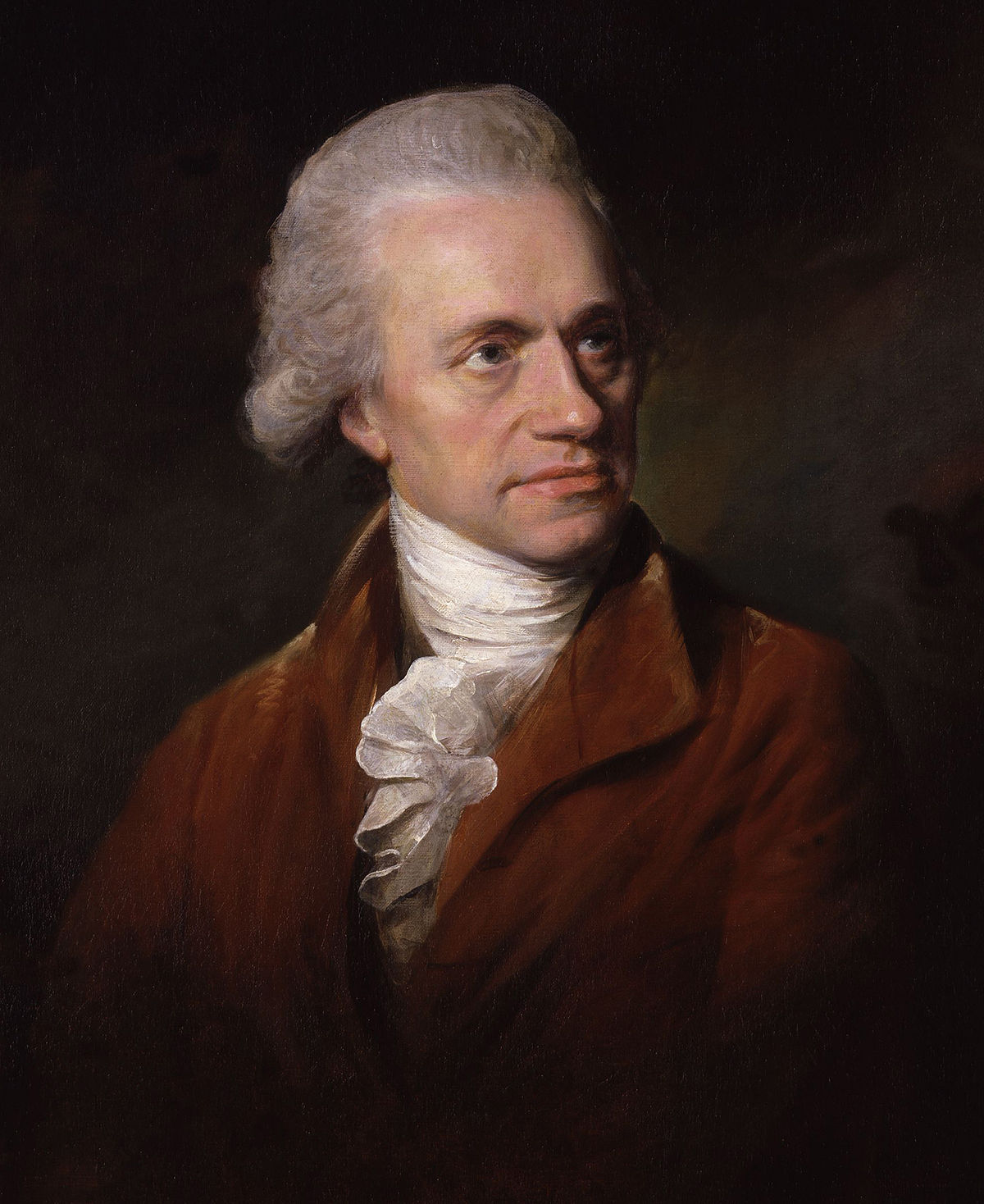
William Herschel
German-British astronomer and composerWikipedia
69
MENTIONS
32
EPISODES
22
PODCASTS
Search complete. 69 mentions across 32 episodes found for "William Herschel".
Sep 19, 2026

Matt O'DowdHOST
Astronomer Giacomo Maraldi quickly followed Huygens and in the early 18th century discovered ice caps on both poles, correctly inferring their nature.
Matt O'DowdHOST
Later that century, William Herschel watched the ice caps grow and shrink annually and thought he saw what he calls a comfortable but modest atmosphere.
Matt O'DowdHOST
Herschel generously decreed of Mars that its inhabitants probably enjoy a situation in many respects similar to ours.
Matt O'DowdHOST
Now, Herschel was a fantastic astronomer, but his wrongness about Mars's atmosphere is a nice example that even the smartest of us see what we want to see.

Wayne CookNARRATOR
We begin by discussing some of the more familiar kinds of radiation, such as radio and microwaves, light and x-rays.
Wayne CookNARRATOR
lasers by hal hellman the electromagnetic spectrum some eighty-five per cent of what man learns comes to him through his vision in response to the medium of light yet ironically it was until the end of the seventeenth century that he first began to get an inkling of what light really is it took the great scientific genius isaac newton to show that so-called white light is really a combination of all the colors of the rainbow a few years later the dutch astronomer christian huygens introduced the idea that light is a wave motion a concept finally validated in eighteen o three when the british physician thomas young ingeniously demonstrated interference effects in waves thus it was finally realized that the only difference between the various colors of light was one of wavelength for light was indeed found to be a wave phenomenon no different in principle from the water waves you have seen a thousand times if you stand at the seashore you can easily count the number of waves that approach the shore in a minute divide that number by sixty and you have the frequency of the wave motion in the familiar unit cycles per second sometimes referred to as hertz abbreviated hz for the nineteenth century german physicist heinrich hertz one thousand hertz equal one thousand cycles per second and footnote you would have to count pretty quickly to do this for light however light waves vibrate or oscillate at the rate of some four hundred million million times a second That's the vibration rate of waves of red light.
Wayne CookNARRATOR
Violet light results in vibrations that are just about twice that fast.
Wayne CookNARRATOR
With frequencies of this magnitude, discussion and handling of data and dimensions are cumbersome and rather awkward.
Wayne CookNARRATOR
Named for the Swedish physicist Anders J. Angstrom.
Wayne CookNARRATOR
End footnote.
Wayne CookNARRATOR
which is equal to one hundred millionth part of a centimeter thus we find that the visible light range runs from the violet at about four thousand angstroms to red at about seven thousand angstroms at roughly the same time that the wavelength of light was being determined the german-british astronomer william herschel performed an interesting experiment He held a thermometer in turn in the various colors of light that had been spread out by an optical prism.
Wayne CookNARRATOR
As he moved the thermometer from the violet to the red, the temperature reading rose, and it continued to rise as he moved the instrument beyond the red area, where no prismatic light could be seen.

Neil deGrasse TysonGUEST
No, he did the right thing.
Neil deGrasse TysonGUEST
He named it after his principal funder, okay? This was, uh, uh, William Herschel, end of the 1700s, named it after King George.
Michael StrahanHOST
Oh.
Neil deGrasse TysonGUEST
And that would not be the last time someone kissed up to someone in charge.

August Leo LiljenbergNARRATOR
Who would doubt their existence? Pronounced a respected German astronomer, Johann Bode, in 1776.
August Leo LiljenbergNARRATOR
Not longer after, William Herschel, one of the most influential astronomers in the field's history, concurred that though the sun may not be fit place for the punishment of the wicked, he deemed it almost certainly is infested with rational dwellers.
August Leo LiljenbergNARRATOR
His son, another reputed astronomer, later speculated that features like sunspots might themselves be organisms hovering above their heads, and only from time to time during maximum sunspot activity can they let their longing gaze wander through these openings to marvel at the fact there are also other stars out there.
August Leo LiljenbergNARRATOR
Such views sincerely held by serious scientists strike us now as absurd, even stupid.

PJ LandauNARRATOR
Recording by Noel Beadrian.
PJ LandauNARRATOR
William Herschel, Bandsman, part one.
PJ LandauNARRATOR
Old Isaac Herschel, the oboe player of the King's Guard in Hanover, had served with his regiment for many years in the chilly climate of North Germany, and was left at last broken down in health and spirits by the many hardships of several severe European campaigns.
PJ LandauNARRATOR
Isaac Herschel was a man of tastes and education above his position, but he had married a person in some respects quite unfitted for him.
PJ LandauNARRATOR
Still, Isaac Herschel dearly loved his art, and in it he found many amends and consolations for the sordid shifts and troubles of a straitened German household.
PJ LandauNARRATOR
All his spare time was given to music, and in his later days he was enabled to find sufficient pupils to eke out his little income with comparative comfort.
PJ LandauNARRATOR
William Herschel, the great astronomer, born in seventeen thirty-eight, was the fourth child of his mother, and with his brothers he was brought up at the garrison school in Hanover, together with the sons of the other common soldiers.
PJ LandauNARRATOR
There he learned not only the three Rs, but also a little French and English.

Fletcher PowellHOST
Oh, yeah.
Kathy PetrasGUEST
And I found William Herschel proposed the term, and he didn't know what to call them initially.
Kathy PetrasGUEST
He asked.
Kathy PetrasGUEST
someone a greek specialist he wanted a good name for the new bodies reached out to a close friend who wrote his son who was a greek scholar ross you would appreciate this and um the father had said what about stellula and i love this then the son didn't didn't only goes okay he just came up with asteroids it's a kind of star which my son furnished but he didn't like the name he just like chucked it in at the last minute because he had to come up with something and stellula didn't really do it for

SiddharthNARRATOR
After a time, he had built a lovely home at Heathfield in the midst of 40 acres of trees, flowers, and tasteful walks.
SiddharthNARRATOR
He gathered some of the greatest minds of the world, Dr. Priestley, who discovered oxygen, Sir William Herschel, Dr. Traven, Josiah Wedgwood, and scores of others who talked of science and literature.
SiddharthNARRATOR
Mrs. Watt so detested dirt and so hated the sight of her husband's leather apron and soiled hands that he built for himself a garret where he could work unmolested by his wife or her broom and dustpan.
SiddharthNARRATOR
She never allowed even her two pug dogs to come across the hall without wiping their feet on the mat.

Rob CummingsHOST
He was also prominent in astronomy, naming the seven moons of Saturn and the four moons of Uranus.
Rob CummingsHOST
Ironically, the planet Uranus had in fact been discovered by his father, Sir William Herschel, in 1781.
Rob CummingsHOST
Moving on to the present day, this week on YBA, we kick things off with the reviews wrap-up for the week ending the 4th September 2026, where a broker's decision to revisit 51 loans provides a pretty compelling example of why consistency matters.
Rob CummingsHOST
Then we move into our hump day helper, where I share the official notice of Suncorp's disappearance, confirming the rumour from earlier this year.
22 more episodes mention William Herschel.
Create an account to see the whole feed, search across every transcript, and follow the entities you care about.