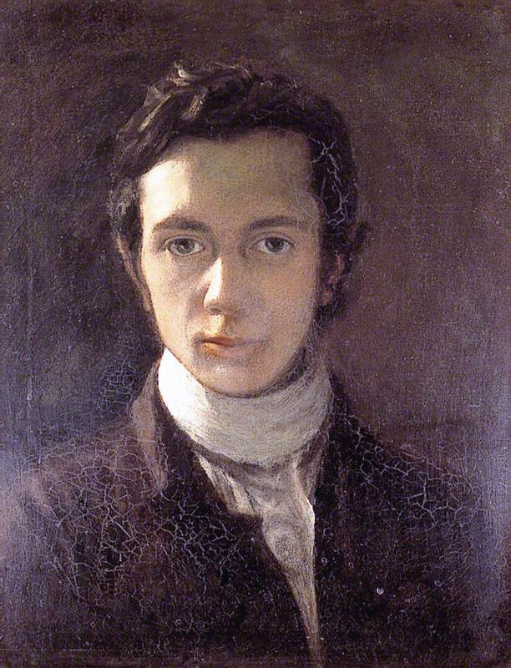
William Hazlitt
English essayistWikipedia
46
MENTIONS
20
EPISODES
19
PODCASTS
Search complete. 46 mentions across 20 episodes found for "William Hazlitt".
Sep 18, 2026

Public Domain ScholarNARRATOR
Read by Public Domain Scholar.
speaker_22NARRATOR
Of Persons One Would Wish to Have Seen by William Hazlitt.
speaker_22NARRATOR
This is a LibriVox recording.
speaker_22NARRATOR
All LibriVox recordings are in the public domain.
31 MINS LATER
speaker_22NARRATOR
But that was to meet again.
speaker_22NARRATOR
Our deliberations have never been resumed.
speaker_22NARRATOR
End of Of Persons One Would Wish to Have Seen by William Hazlitt.
Public Domain ScholarNARRATOR
Phantom Butterflies by T.F.

David WalesNARRATOR
To hang over the absorbing biographies of Dr. Franklin, Walter Scott, and Dr. Johnson.
David WalesNARRATOR
To peruse with fresh delight the masterpieces of Irving and Goldsmith and the best essays of Hazlitt, De Quincey, Charles Lamb, and Montaigne.
David WalesNARRATOR
To feel the inspiration of the great poets of all ages, from Homer down to Tennyson.
David WalesNARRATOR
To read Shakespeare, a book that is in itself almost a university.

speaker_5VOICE_ACTOR
To those who have well learned the art of reading, what inexhaustible delights does the world of books contain? With Milton to behold the bright countenance of truth in the quiet and still air of delightful studies.
speaker_5VOICE_ACTOR
To journey through far countries with Marco Polo, to steer across an unknown sea with Columbus, or to brave the dangers of the frozen ocean with Nansen or Dr. Kane, to study the manners of ancient nations with Herodotus, to live over again the life of Greece and Rome with Plutarch's heroes, to trace the decline of empires with Gibbon and Mommsen, to pursue the story of the modern world in the pages of Hume, Macaulay, Tiers, and Sismonde, and our own Prescott, Motley, and Bancroft, to enjoy afresh the eloquence of Demosthenes and the polished and splendid diction of Cicero, to drink in the wisdom of philosophers and to walk with Socrates, Plato, and the Stoics through the groves of Academia, to be kindled by the saintly utterances of prophets and apostles, St. Paul's high reasoning of immortality, or the seraphic visions of St. John, to study the laws that govern communities with the great publicists, or the economy of nations with Adam Smith and Stuart Mill, with the naturalists to sound the depths of the argument as to the origin of species and the genesis of man, with the astronomers to leave the narrow bounds of earth and explore the illimitable spaces of the universe in which our solar system is but a speck, with the mathematicians to quit the uncertain realm of speculation and assumption and plant our feet firmly on the rock of exact science, to come back anon to lighter themes and to revel in the grotesque humor of Dickens, the philosophic page of Bulwer, the chivalric romances of Walter Scott, the ideal creations of Hawthorne, the finished life pictures of George Eliot, the powerful imagination of Victor Hugo, and the masterly delineations of Thackeray, to hang over the absorbing biographies of Dr. Franklin, Walter Scott, and Dr. Johnson, to peruse with fresh delight the masterpieces of Irving and Goldsmith and the best essays of Hazlitt, De Quincey, Charles Lamb, and Montaigne, to feel the inspiration of the great poets of all ages from Homer down to Tennyson, to read Shakespeare, a book that is in itself almost a university, is not all this satisfaction enough for human appetite, however craving, solace enough for trouble, however bitter, occupation enough for life, however long.
speaker_5VOICE_ACTOR
There are pleasures that perish in the using, but the pleasure which the art of reading carries with it is perennial.
speaker_5VOICE_ACTOR
He who can feast on the intellectual spoils of centuries need fear neither poverty nor hunger.

S.K. EdisonNARRATOR
Read by S.K. Edison, New Jersey.
S.K. EdisonNARRATOR
Essay 17 on the fear of death from Table Talk, Essays on Men and Manners by William Hazlitt.
S.K. EdisonNARRATOR
This is a LibriVox recording.
S.K. EdisonNARRATOR
All LibriVox recordings are in the public domain.

Jared MooreNARRATOR
Some things are timeless, which is why we love them.
Jared MooreNARRATOR
In his recent essay, Advocacy in Literary Studies, Northwestern professor Gary Saul Morrison wrote, As William Hazlitt pointed out in his essay, why the arts are not progressive, literature, unlike the hard sciences, does not progress.
Jared MooreNARRATOR
Aristotle's poetics is still relevant in a way that his physics is not.
Jared MooreNARRATOR
Any first-year physics student knows more physics than Aristotle, but no dramatist has surpassed Shakespeare.

speaker_4NARRATOR
But Dryden was right, and the sentence of Pater is cheap journalism.
speaker_4NARRATOR
Hazlitt, who had perhaps the most uninteresting mind of all our distinguished critics, says, quote, Dryden and Pope are the great masters of the artificial style of poetry in our language, as the poets of whom I have already treated, Chaucer, Spencer, Shakespeare, and Milton, were of the natural, end quote.
speaker_4NARRATOR
In one sentence Hazlitt has committed at least four crimes against taste.
speaker_4NARRATOR
It is bad enough to lump Chaucer, Spencer, Shakespeare, and Milton together under the denomination of quote-unquote natural.
speaker_4NARRATOR
It is bad to commit Shakespeare to one style only.

Troy MillingsADVERTISER
Littell's Living Age, 1870.
Troy MillingsADVERTISER
The sketch by Sir Thomas Lawrence of Boswell, prefixed to Mr. Murray's edition of Johnson's Life, illustrates with striking accuracy the saying of Hazlitt.
KathleenNARRATOR
Hazlitt.that a man's life may be a lie to himself and others and yet a picture painted of him by a great artist would probably stamp his character the busy vanity the garrulous complacency of the man when out of sight of dr johnson as he may be supposed to have been when the portrait was etched are brought out with all the humour and point of a caricature without its exaggeration the thin nose that seems to sniff the air for information has the sharp shrewdness of a scotch accent the small eyes too much relieved by the high arched eyebrows twinkle with the exultation of victories not won an expression contracted from a vigilant watching of dr johnson who when he spoke spoke always for victory the bleak lips making by their protrusion an angle almost the size of the nose proclaim boswell's love of drawing people out a thirst for information at once droll and impertinent but which finally embodied itself in a form that has been pronounced by lord macaulay the most interesting biography in the world the ample chins fold upon fold tell of a strong affection gross and almost sottish for port wine and tainted meats whilst the folded arms the slightly inclined posture the strong and arrogant setting of the head exhibit the self-importance the shrewd understanding not to be obscured by vanity the imperturbable but artless egotism the clever inquisitiveness which have made him the best despised and best read writer in english literature the portraits handed down to us of boswell by his contemporaries are most graphic some of them are malignant some bitter some temperate and those that are temperate are probably just miss burney thus caricatures the appearance of boswell in johnson's presence when intent upon his note-taking the moment that voice burst forth the attention which it excited on mr boswell amounted almost to pain his eyes goggled with eagerness he leaned his ear almost on the shoulder of the doctor and his mouth dropped down to catch every syllable that was uttered nay he seemed not only to dread losing a word but to be anxious not to miss a breathing as if hoping from it latently or mystically some information end of section nine
Thomas PeterNARRATOR
Section 10 of Word Portraits of Famous Writers.
Thomas PeterNARRATOR
This is a LibriVox recording.
1 HR 4 MINS LATER
speaker_16NARRATOR
His hair was grey and his cravat and linen fine and very white.
speaker_16NARRATOR
1818.
speaker_16NARRATOR
From Hazlitt's Table Talk.

Larry WilsonNARRATOR
each of them has remarks relevant and irrelevant scribbled on their margins those favorite volumes cannot be called peculiar glories of literature but out of the world of books i have singled them as i have singled my intimates out of the world of men ah that makes pleasant reading for do not the sentiments expressed reflect our own feelings and do they not place us in gracious and distinguished company in his charming way goldsmith whispers the first time i read an excellent book it is to me as if i had gained a new friend when i read over a book i have perused before it resembles the meeting with an old one and to this dillon adds choose an author as you would choose a friend whilst langford touching the same thing declares that a wise man will select his book with care for he will not wish to class them all under the sacred name of friends and as friendship has its roots deep set in love and sympathy and is for serene days and country rambles and also for rough roads and hard fare shipwreck, poverty, and persecution, and moreover keeps company with the sallies of the wit.
Larry WilsonNARRATOR
It is easy enough to understand why such authors as Charles Lamb, Oliver Goldsmith, William Hazlitt, Lee Hunt, Richard Jeffreys, Thomas de Quincey, Joseph Addison, and, of later years, Robert Louis Stevenson, have our affections here they stand lamb goldsmith hazlitt hunt jeffreys the whole lovable company what shall i say concerning these friends of ours i am moved by deep and serious feelings but according to his own telling the gentle elia the first in mind had a general aversion from being treated like a grave or respectable character and kept a wary eye upon the advances of age that should so entitle him he heard it always while it was possible with people younger than himself he did not conform to the march of time but was dragged along in the procession his manners lagged behind his years he was too much of the boy man the toga virilis never sat gracefully on his shoulders the impressions of infancy had burnt into him and he resented the impertinence of manhood and therein surely rests the secret of his charm in spite of his brave confessions how firm to discerning hearts is the bed of the stream over which his thoughts flow who can doubt the source of a stream that flows so sweetly and what of oliver goldsmith poor goldy as he was called by his circle of intimates on earth he too was very human and indeed had many weaknesses and they tell us they who write of such matters with authority that his days of poverty and wretchedness were largely if not entirely the outcome of his follies even in the sphere in which he shines a clear bright inextinguishable star it is said that he had many shortcomings he had neither the gift of knowledge nor the power of research as an essayist and poet he has neither extended views nor originality as a critic upon the few occasions upon which he embarks on criticism his sympathies are of the most restricted kind and yet for the warmth and gentleness of his heart and the purity of his style we love him his playful and delicate style transformed everything he touched into something radiant with warmth and fragrant with a perfume all its own and how fared it with hazlitt the keen critic the impassioned writer unbending and severe insurgent in his political views we not told that he was really more of an artist and sentimentalist than a politician as for his life it was aesthetic bohemian and irregular in the extreme the restraints of domestic life were intolerable he wanted to be alone to write rough accommodation and coarse fare appeased him best tinkerdom was the ordinary state of his interior environment save for two pictures which served as a link with past aspiration and were treasured accordingly he had no property a fugitive amour seemed to furnish the emotional side of him with the stimulant it most required he was a night rambler and a reveller in rousseau over whose eloies and confessions he expended literally pints of tears such was the temperament of the writer artist and sentimentalist who gave us those incomparable essays on going a journey on the ignorance of the learned and on familiar style and what of those other old friends hunt jeffries de quincey robert louis stevenson but our inquiries have gone far enough what boots it to repeat that our friends were human in life just as surely as they are human in their books but with a humanity that allures charms captivates they do not preach to us these old friends of ours or make open claims to virtue and yet we are never so conscious of goodness as when they are near their lightest raillery scorns a mean act in their company meanness flees as from a pestilence our friends Wisely is it said that the best way to represent to life the manifold use of friendship is to cast and see how many things there are which a wise man cannot do himself.
Larry WilsonNARRATOR
And then it will appear that it was a sparing speech of the ancients to say that a friend is more than himself, for that a friend is far more than himself.
Larry WilsonNARRATOR
and so I thank Heaven for my friends, for the wise, the lovely, and the noble-minded who stand side by side ever willing, ever ready upon my humble shelf.

John Van StanNARRATOR
The Birth of Tragedy or Hellenism and Pessimism by Friedrich Nietzsche.
John Van StanNARRATOR
Translated by William Hazlitt.
John Van StanNARRATOR
Introduction by Elisabeth Förster-Nietzsche, which appears in the front of the first volume of Naumann's pocket edition of Nietzsche, has been translated and arranged by Mr.
John Van StanNARRATOR
A.M. Ludovici.
5 HRS 9 MINS LATER
John Van StanNARRATOR
End of chapter fourteen.
John Van StanNARRATOR
Recording by John Van Stan, Savannah, Georgia.
John Van StanNARRATOR
Chapter 15 of The Birth of Tragedy or Hellenism and Pessimism by Friedrich Nietzsche, translated by William Hazlitt.
John Van StanNARRATOR
This LibriVox recording is in the public domain.

speaker_6NARRATOR
each of them has remarks relevant and irrelevant scribbled on their margins those favorite volumes cannot be called peculiar glories of literature but out of the world of books i have singled them as i have singled my intimates out of the world of men ah that makes pleasant reading for do not the sentiments expressed reflect our own feelings and do they not place us in gracious and distinguished company in his charming way goldsmith whispers the first time i read an excellent book it is to me as if i had gained a new friend when i read over a book i have perused before it resembles the meeting with an old one And to this Dylan adds, choose an author as you would choose a friend, whilst Langford, touching the same thing, declares that a wise man will select his book with care, for he will not wish to class them all under the sacred name of friends.
speaker_6NARRATOR
And his friendship has its roots deep-set in love and sympathy, and is for serene days and country rambles, and also for rough roads and hard fare, shipwreck, poverty and persecution and moreover keeps company with the sallies of the wit it is easy enough to understand why such authors as charles lamb oliver goldsmith william hazlitt leigh hunt richard jeffries thomas de quincey joseph addison and of later years robert louis stevenson have our affections Here they stand, Lamb, Goldsmith, Hazlitt, Hunt, Jeffreys, the whole lovable company.
speaker_6NARRATOR
What shall I say concerning these friends of ours? I am moved by deep and serious feelings.
speaker_6NARRATOR
But, according to his own telling, the gentle Elia, the first in mind, had a general aversion from being treated like a grave or respectable character, and kept a wary eye upon the advances of age that should so entitle him.
10 more episodes mention William Hazlitt.
Create an account to see the whole feed, search across every transcript, and follow the entities you care about.