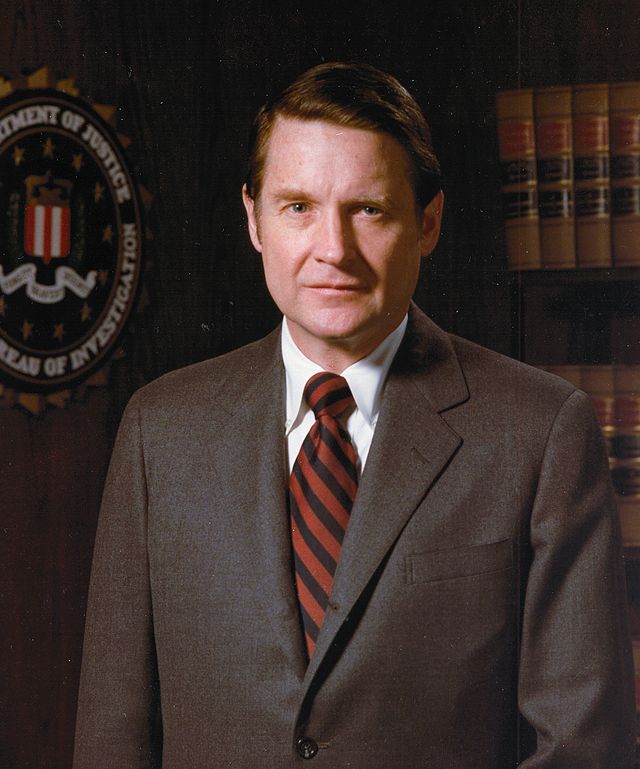
William Hedgcock Webster
Attorney and former Director of the Federal Bureau of Investigation of the United StatesWikipedia
8
MENTIONS
7
EPISODES
6
PODCASTS
Search complete. 8 mentions across 7 episodes found for "William Hedgcock Webster".
Sep 23, 2026

Jerri WilliamsHOST
Let me ask two questions to further set the scene.
Jerri WilliamsHOST
First of all, I take it that it was Judge Webster was the FBI director at the time? That's correct.
Jerri WilliamsHOST
And if you could let us know what the climate is in the public? What's the media like? How much does the, this is before you actually start the case.
Jerri WilliamsHOST
Because I had spoken to retired agent Buck Revell, who was, I think it was like a deputy director of the FBI.
29 MINS LATER
Ellen GlasserGUEST
But most of them came in and there was a rotation out.
Jerri WilliamsHOST
All right.
Jerri WilliamsHOST
Well, then my question to you is, knowing how much time, because this is a high profiled case, and it is a case that I am sure FBI Director William Webster and everybody directly under him, the head of the Washington field office, all of these people know.
Jerri WilliamsHOST
want to know what's going on on a daily basis.

speaker_4NARRATOR
In early 1983, he was gunned down in a Chicago parking lot, apparently so he could never tell what he knew about the Teamster mob connection in Las Vegas.
speaker_4NARRATOR
This wave of violence triggered congressional hearings and testimony from FBI national director William Webster.
William WebsterSOUNDBITE_SPEAKER
Gangland executions are our most difficult crime.
William WebsterSOUNDBITE_SPEAKER
Uh, they can, they, they use professionals, they pick their time and their place.

Charlie BrennanHOST
remember.
Charlie BrennanHOST
I think people remember like the William Websters, the Kim Gardeners, the Cori Bushes, the Steve
Joe HollemanPANELIST
Stengers.
Joe HollemanPANELIST
I bet you if you went out to someone and said second injury fund, it would hardly be anybody who'd go.
Wayne BarnesGUEST
Many might know that the CIA and the FBI didn't get along very well on an operational basis.
Wayne BarnesGUEST
And in 79, Admiral Turner, Stanisfield Turner, the director of the CIA, and William Webster, the Judge Webster, the director of the FBI, got together and they said, let's all put all this together.
Wayne BarnesGUEST
this havoc behind us and have one squad with three CIA people, three FBI people under an FBI supervisor in Washington with the sole job of recruiting intelligence officers from the Soviet Union, KGB or the military GRU.
Wayne BarnesGUEST
And it was a two-year assignment and I was out there for three and a half and we were successful with what we did in getting cover-up actions and operations together.

Pete QuiñonesHOST
It seemed clear that there was nothing the organization would like better than to have premier federal law enforcement agency become their enforcement arm.
Pete QuiñonesHOST
It wasn't until Judge William Webster became FBI director in 1978 that the agency bowed to political pressures from the White House and elsewhere, and significantly stepped, significantly stepped up its informal intelligence-sharing operation with the ADL.
Pete QuiñonesHOST
Cooperation between the ADL and the FBI increased enormously under President Reagan in 1981, and became formal with the issuance of a 1985 memo requiring all FBI field offices to develop formal, f- formal liaison with some 30 ADL field offices around the nation.
Pete QuiñonesHOST
Let me read that again.

Pete QuiñonesHOST
It seemed clear that there was nothing the organization would like better than to have premier federal law enforcement agency become their enforcement arm.
Pete QuiñonesHOST
It wasn't until Judge William Webster became FBI director in 1978 that the agency bowed to political pressures from the White House and elsewhere and significantly stepped, significantly stepped up its informal intelligence-sharing operation with the ADL.
Pete QuiñonesHOST
Cooperation between the ADL and the FBI increased enormously under President Reagan in 1981 and became formal with the issuance of a 1985 memo requiring all FBI field offices to develop formal, f- formal liaison with some 30 ADL field offices around the nation.
Pete QuiñonesHOST
Let me read that again.

Austin PicardGUEST
It's not even just national coverage as far as Gunter's specific allegations in regard to the October surprise.
Austin PicardGUEST
You have the director of the CIA, who's apparently Gunther's – specifically was an ally of Gunther Rustbacher named Bill Webster, who suddenly resigns after this story goes public.
Austin PicardGUEST
And the House of Representatives convene the October Surprise Task Force, which became a very, very – interesting point in regard to to this specific case and paul wiltshire as well because paul wiltshire had basically discovered gunter's story while living in dc paul's a friend of senior white house correspondent sarah mcclendon who discovers this story as well and uh apparently he was a regular at the at the white house correspondence meetings and the briefings that were given as well so I guess William Sessions was also for a time conveniently attending these White House correspondents' press briefings, which I thought was interesting because he directly is involved with the Life Management Institute and basically being affiliated with Waco during the time of the entire siege and the consequences of when the massacre plays out.
Austin PicardGUEST
And he's basically implicated by Gunther Rustbacher a few different times in the Wiltshire report in regard to his involvement.