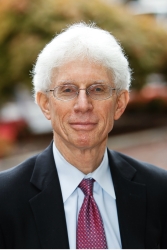
William Galston
American author and academicWikipedia
17
MENTIONS
12
EPISODES
6
PODCASTS
Search complete. 17 mentions across 12 episodes found for "William Galston".
Oct 12, 2026

Tim PoolHOST
Limiting the scope for gains like those in 2018 when they picked up 41.
Tim PoolHOST
Bill Galston, a former White House advisor to Clinton, said even if Democrats gained 25 House seats, they'd have a working majority but not a huge one.
Tim PoolHOST
Such a majority would give Democrats control of the House but little room to maneuver, making it harder to pass contentious legislation or claim the sweeping mandate associated with past wave elections.
Tim PoolHOST
While Democrats are favored to make gains in the 100-member Senate, achieving the net gain of four seats needed to get that 51 majority...

Michael SmerconishHOST
I saw that headline and I said, aha.
Michael SmerconishHOST
That is episode number four of Can We Agree? John Yoo and Bill Galston debating on Can We Agree? on my YouTube channel, Donald Trump's exercise of executive power and addressing the question of whether...
Michael SmerconishHOST
when it's a post-Trump presidency come, you know, 2029, what will the next president do? Will the next president, will President AOC, will President J.D.
Michael SmerconishHOST
Vance, will President Rahm Emanuel continue to utilize an expansive interpretation of presidential powers a la Donald Trump, or will it revert? It's a great debate.
Michael SmerconishHOST
It's civil, it's an hour long, it's substantive, and those who are debating are quality individuals, meaning highly credentialed, they know a little something, street smarts and academic smarts.
Michael SmerconishHOST
So John Yoo from Berkeley and Bill Galston from the Wall Street Journal spoke about, debated, discussed Trump and presidential power? Has he exercised powers that anybody else who preceded him could have? Or has he expanded presidential power? Or as we worded it yesterday in the poll question, after Donald Trump leaves office, Will presidential power go back to what it was before? 60.49% said no.
Michael SmerconishHOST
39.51% said yes.
Michael SmerconishHOST
A lot of votes.
Michael SmerconishHOST
Just sign up for my YouTube page and set yourself up for notifications because today is release day for episode number four.
Michael SmerconishHOST
Now, interestingly, this was actually the first episode that we recorded and I am... forever grateful to John Yoo and Bill Galston.
Michael SmerconishHOST
And I'll tell you why.
Michael SmerconishHOST
I conceived of this show, but I had nothing to show for it.
Michael SmerconishHOST
Here's a sizzle reel.
Michael SmerconishHOST
We didn't have anything.
Michael SmerconishHOST
When I first reached out for John Yoo and Bill Galston, Who are they? Well, they're brilliant.
Michael SmerconishHOST
John Yoo, a name you probably know because John Yoo in the post 9-11 years was the White House attorney who provided the basis for so-called harsh interrogation methods.
Michael SmerconishHOST
It's awesome.
Michael SmerconishHOST
It's John Yoo, who is a conservative, but he's at Berkeley, and Bill Galston, who's a liberal or progressive, but he's at the Wall Street Journal.
Michael SmerconishHOST
So, you know, each of them at a... at a platform where they're the outlier.
Michael SmerconishHOST
I'll tell you what they have in common.
Michael SmerconishHOST
Did he just use powers that all the rest of them had but never utilized? Or has he created new executive power? And what happens when he's no longer in office? The combatants, John Yoo from Berkeley.
Michael SmerconishHOST
probably the only conservative at the Berkeley Law School, and William Galston from the Wall Street Journal, probably the only liberal at the Wall Street Journal.
Michael SmerconishHOST
It's a great pairing.
Michael SmerconishHOST
It's a wonderful conversation.

CorrineHOST
A judge orders Trump to take his name off the place, so he threatens to abolish it.
CorrineHOST
by William A. Galston.
CorrineHOST
Compared with war and inflation, the fate of the Kennedy Center may seem insignificant, but the struggle over its future represents, in microcosm, many of the features that distinguish the Trump administration from most of its predecessors.
CorrineHOST
In 1958, Congress enacted a law authorized in the creation of a National Cultural Center in the District of Columbia with funds raised by voluntary contributions.

CorrineHOST
A judge orders Trump to take his name off the place, so he threatens to abolish it.
CorrineHOST
by William A. Galston.
CorrineHOST
Compared with war and inflation, the fate of the Kennedy Center may seem insignificant, but the struggle over its future represents, in microcosm, many of the features that distinguish the Trump administration from most of its predecessors.
CorrineHOST
In 1958, Congress enacted a law authorized in the creation of a National Cultural Center in the District of Columbia with funds raised by voluntary contributions.

Darrell WestHOST
Tom Wheeler is a visiting fellow at the Brookings Institution and the author of several important books on AI and technology innovation.
Darrell WestHOST
Bill Galston is the Ezra Zilka Chair of Governance Studies at Brookings and a columnist for the Wall Street Journal.
Darrell WestHOST
He recently wrote a piece questioning the safety of AI systems for that paper.
Darrell WestHOST
Tom and Bill, welcome to our Brookings Tech Tank podcast.
34 MINS LATER
Bill GalstonGUEST
Is it not possible to bifurcate regulation based on the sphere of activity? you know, whether it's mainly in the economic sphere or in the military sphere.
Bill GalstonGUEST
There are certain things that go on with with nuclear energy in the military sphere that are subject to forms of regulation that are very different from those in the civilian nuclear sphere and i wonder as a structural matter whether there is some useful analogy here i'm not sure there is but i'm not sure there isn't if i knew more perhaps i'd be a little bit more sure
Darrell WestHOST
Well, I want to thank each of you, Tom Wheeler and Bill Galston, for sharing your thoughts with us today.
Darrell WestHOST
Each of your considerations of human history and the role of technology innovation and how that should condition our current issues with AI I think are very important.

John CooganHOST
"So the technology risks came into focus last week.
John CooganHOST
Is the political system prepared?" says William Galston in The Wall Street Journal.
John CooganHOST
Experts have long worried about economic, social, and social-- and security impact of artificial intelligence.
John CooganHOST
Uh, this year, those risks have moved onto the public agenda.
2 more episodes mention William Galston.
Create an account to see the whole feed, search across every transcript, and follow the entities you care about.