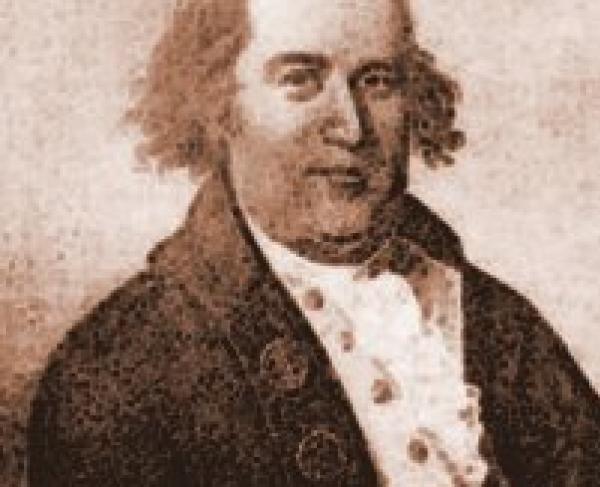
William Dawes
American soldierWikipedia
16
MENTIONS
6
EPISODES
4
PODCASTS
Search complete. 16 mentions across 6 episodes found for "William Dawes".
Oct 11, 2026

Stephen McDowellHOST
But there's a number of riders like him that went out, went that night.
Stephen McDowellHOST
William Dawes, uh, and the African American Wentworth Cheswell, uh, also was one of those who rode out to warn the far- the v- villages and families, "The British are coming.
Stephen McDowellHOST
Uh, t- take heed, take care.
Stephen McDowellHOST
Uh, be prepared." And Wentworth Cheswell himself was a justice of the peace.

John DalyCORRESPONDENT
This place is known as Merriam's Corner because a local farmer by that name has his house here.
John DalyCORRESPONDENT
The thousands of minutemen who were awakened by Paul Revere and William Dawes and all the other messengers who spread the alarm are strung out on both sides of the road all the way to Lexington and possibly beyond.
John DalyCORRESPONDENT
They're unorganized.
John DalyCORRESPONDENT
They have no officers, but they've got plenty of muskets and powder.

William CooperHOST
They pointed their pistols at his heart, seized his bridle, tore his reins from his grasp, and held him firmly in their grasp.
William CooperHOST
In that moment of confusion, William Dawes got away.
William CooperHOST
When the officers went after Revere and Prescott, Dawes turned back into the highway.
William CooperHOST
He tried to confuse his captors by shouting, Hello, my boys, I've got two of them.
William CooperHOST
With empty stirrups banging crazily on the long leathers that were then in use.
William CooperHOST
The dark house that Dawes took to be a place of refuge turned out to be an abandoned building, perhaps inhabited by wild animals that had frightened his horse.
William CooperHOST
Badly shaken, William Dawes decided that enough was enough.
William CooperHOST
He went limping back toward Lexington in the moonlight, keeping in the shadows and out of sight.
William CooperHOST
To be sure that the message got through, he told Revere that he was sending duplicate dispatches by several different routes and several different riders, all carrying the same message, all with the same goal, all with the same mission.
William CooperHOST
One message had been entrusted to William Dawes, a Boston tanner.
William CooperHOST
Dawes was not a leader as prominent as Revere, but he was a loyal Whig whose business often took him through the British checkpoint on Boston Neck.
William CooperHOST
As a consequence, the guard knew him.
William CooperHOST
Dawes and Revere carried written messages which Lexing- which Lexington's congregational minister later copied into his records: "A large body of the king's troops, supposed to be a brigade of about 12 or 15 hundred, were embarked in boats from Boston and gone to land at Lechmere's Point." Warren's estimate exaggerated the strength of the British expedition, but was accurate in every other detail.
William CooperHOST
The messengers took different routes.
William CooperHOST
William Dawes left town across Boston Neck.
William CooperHOST
No small feat.