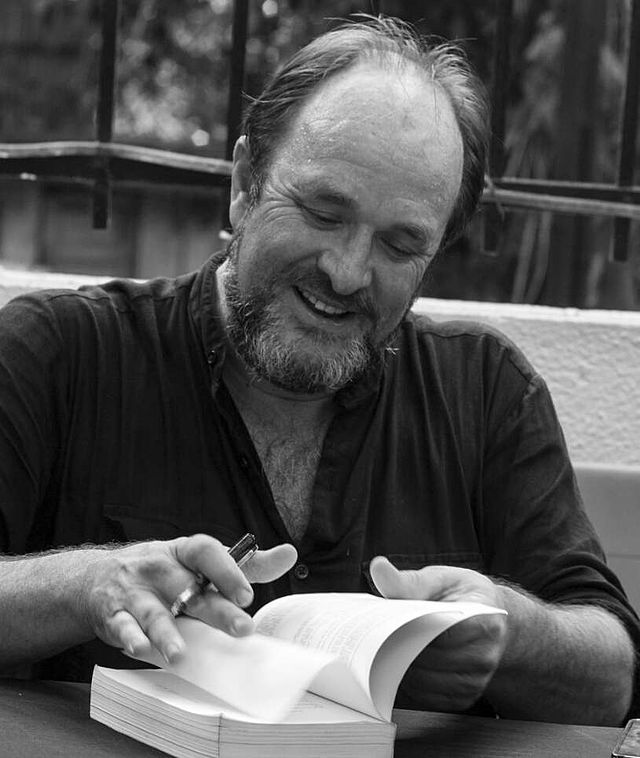
William Dalrymple
Scottish historianWikipedia
14
MENTIONS
12
EPISODES
7
PODCASTS
Search complete. 14 mentions across 12 episodes found for "William Dalrymple".
Sep 18, 2026

Walter Russell MeadHOST
But To be honest, as I really thought about it, I don't think such a category exists because there are so many types of history and different qualities are needed in each.
Walter Russell MeadHOST
So, you know, when I think about Indian history, you know, Ramachandra Guha or William Dalrymple are just amazing.
Walter Russell MeadHOST
very different people.
Walter Russell MeadHOST
They focus on very different eras.
Anita AnandHOST
Till the next time we meet, it's goodbye from me, Anita Anand.
William DalrympleHOST
And goodbye from me, William Dalrymple.
William DalrympleHOST
[outro music]
speaker_6ADVERTISER
[dramatic music] I see you.

Nadine MathesonHOST
Oh.
Ajay ChowdhuryGUEST
They said, they said, "Do you have any other ideas?" And I hadn't, but I'd been listening on the way over to this fantastic podcast called Empire by William Dalrymple-
Nadine MathesonHOST
Mm
Ajay ChowdhuryGUEST
... and Anita Anand, and they'd been talking about the Koh-i-Noor diamond.

Benjamin BosterHOST
Going as far as to call the whole thing a myth of modern academia, Ball argues that there was no coherent overland trade system and no free movement of goods from East Asia to West until the period of the Mongol Empire.
Benjamin BosterHOST
William Dalrymple points out that in pre-modern times, maritime travel cost only a fifth of overland transport and argues for the pre-13th century primacy of an India-dominated Golden Road extending from Rome to Japan.
Benjamin BosterHOST
Two important Silk Road paths from Merv went through Nisa and Sarox.
Benjamin BosterHOST
They joined together in Meshad, a big religious and trade city in Khorasan.

William DalrympleHOST
So from Anita and me, thank you, uh, everybody for listening.
William DalrympleHOST
From me, William Dalrymple, goodbye.
Anita AnandHOST
And from me, Anita Anand.
Anita AnandHOST
Goodbye.
Anita AnandHOST
Till the next time we meet, it's goodbye from me, Anita Anand.
William DalrympleHOST
And goodbye from me, William Dalrymple.
William DalrympleHOST
[upbeat music]
Bill SimmonsADVERTISER
This episode is brought to you by ChatGPT.

Francesca StavrokopoulosSOUNDBITE_SPEAKER
That's British biblical
Kayleigh PayneHOST
scholar Francesca Stavrokopoulos speaking with William Dalrymple on the popular Empire World History podcast earlier this year.
Kayleigh PayneHOST
She's talking about her view of the evolution of the deity Yahweh, that's the personal name of the God of the Israelites of the Hebrew Bible.
Kayleigh PayneHOST
She suggests that the Israelite version of Yahweh is a culmination of traditions that came before.
Kayleigh PayneHOST
And she asks this question, read by Mark.
Mark HadleyHOST
I am a great podcast fan, especially anything to do with history, so of course I love Undeceptions podcast too.
Mark HadleyHOST
I recently listened to this one from the Empire podcast with historian William Dalrymple and Anita Anand, and was a bit concerned with an interview they did with their guest who was very confident about the history of the Abrahamic religions and talked about some things I'd never heard of.
Mark HadleyHOST
For example, that God, Yahweh, originally had a wife, Asherah, and that this is depicted in ancient texts and images.

Elon MuskSOUNDBITE_SPEAKER
The large companies have access to, usually they have access to the leadership of the countries.
Andrea PitzerHOST
William Dalrymple wrote an opinion piece last week about what it took for the UK to dismantle the British East India Company.
William DalrympleSOUNDBITE_SPEAKER
By the time that the Punjab wars are fought in the 1740s, 1750s, Something very, very strange and sinister has happened because the East India Company Army, which is only about 20,000 strong at a time of passive or less, has grown to 200,000 Indian sepoys at a time when the British Army, 1799, before the re-arming, is only 100,000 soldiers.
Andrea PitzerHOST
He wrote about how leadership of that joint stock company faced impeachment with Edmund Burke in the role of prosecutor.
William DalrympleHOST
In this episode, we follow Bin Laden's descent from the Saudi elite to a terrorist financier in Sudan, and his desperate flight back to the mountains of Afghanistan.
William DalrympleHOST
Welcome back to Empire with me, William Dalrymple.
Anita AnandHOST
And me, Anita Anand.
Anita AnandHOST
And, uh, back with us, double Pulitzer Prize-winning author of Ghost Wars: The Secret History of the CIA in Afghanistan and Bin Laden, and The Bin Ladens: An Arabian Family in the American Century.
38 MINS LATER
William DalrympleHOST
And if you want to access all that right now ad-free, then head to empirepoduk.com. That is empirepoduk.com to become a member now.
Anita AnandHOST
Till the next time we meet, it's goodbye from me, Anita Anand.
William DalrympleHOST
And goodbye from me, William Durrnvoll.
William DalrympleHOST
[upbeat music]
Anita AnandHOST
[upbeat music] Welcome back to Empire with me, Anita Anand.
William DalrympleHOST
And me, William Drumple.
William DalrympleHOST
And joining us for the next two episodes, I am very proud to say, we have back one of my oldest friends, and a wonderful, wonderful man, uh, an Empire veteran, the winner of not one but two Pulitzer Prizes.
William DalrympleHOST
Uh, Steve Coll, the author of Ghost Wars: The Secret History of the CIA, Afghanistan, and Bin Laden, and The Bin Ladens: An Arabian Family in the American Century.
2 more episodes mention William Dalrymple.
Create an account to see the whole feed, search across every transcript, and follow the entities you care about.