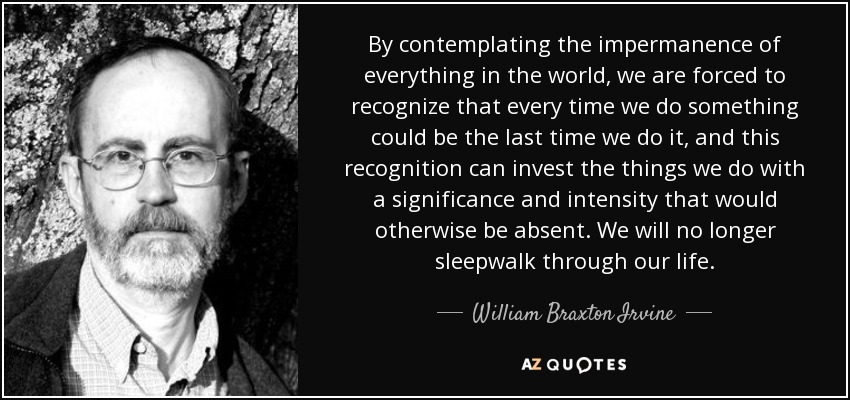
William Braxton Irvine
PhilosopherWikipedia
21
MENTIONS
9
EPISODES
6
PODCASTS
Search complete. 21 mentions across 9 episodes found for "William Braxton Irvine".
Oct 13, 2026
Brian JohnsonHOST
He was known as the Roman Socrates.
Brian JohnsonHOST
William B. Irvine translated one of his works and brought that to life.
Brian JohnsonHOST
We've got a note on it.
Brian JohnsonHOST
He's phenomenal.

Jonathan HaidtGUEST
But s- stoicism I think is the most accessible, so here's the, here's the, here's the tip.
Jonathan HaidtGUEST
Buy this wonderful book called The Stoic Challenge by William Irvine.
Jonathan HaidtGUEST
Super accessible introduction to the stoics, but he shows you a technique.
Jonathan HaidtGUEST
You just say, "Stoic challenge." You, like, when you miss the subway by one second and now you're gonna be late for your interview, okay, that's bad.

speaker_2HOST
It's about being prepared, adaptable and resilient in the face of life's inevitable curveballs.
speaker_2HOST
The Stoics, those ancient philosophers who were all about mastering their minds and navigating life's challenges with grace, understood that things don't always go according to plan.
speaker_2HOST
as Marcus Aurelius wisely observed in his meditations.
speaker_2HOST
Indeed, no one can thwart the purposes of your mind, for they can't be touched by fire, steel, tyranny, slander, or anything.
17 MINS LATER
speaker_2HOST
It throws curveballs, challenges, and sometimes downright hardships our way.
speaker_2HOST
It's easy to feel overwhelmed, discouraged, or even victimized when faced with these difficulties.
speaker_2HOST
But what if I told you that the Stoics, those ancient philosophers who were all about resilience and inner strength, had a different perspective? They believed that we were born for this.
speaker_2HOST
To endure hardship.

Jon BrooksHOST
And you can play around with these frames yourself.
Jon BrooksHOST
So William B. Irvine has this frame, he calls it the stoic God frame.
Jon BrooksHOST
He doesn't believe in a stoic God, but what he does is when something difficult happens, He imagines that there is a stoic God looking down on him, asking him, how are you going to handle this? Handle this in the way that surprises me and that I'm impressed by.
Jon BrooksHOST
So that's an example of a frame that you could play with.
Jon BrooksHOST
Instead, we go step further and we say, I'm so happy that this has happened because we often need to change a frame there.
Jon BrooksHOST
The fifth stoic habit for joy is gratitude and acceptance.
Jon BrooksHOST
William B. Irvine has this theory, he says, it's the gap theory of happiness.
Jon BrooksHOST
A lot of us act like we are here on one side of a chasm and across the gap, there is the thing that we want, okay? So we are here and there's a gap between what we'd like.
speaker_5HOST
It's about being prepared, adaptable, and resilient in the face of life's inevitable curveballs.
speaker_5HOST
The Stoics, those ancient philosophers who were all about mastering their minds and navigating life's challenges with grace, understood that things don't always go according to plan.
speaker_5HOST
As Marcus Aurelius wisely observed in his Meditations, "Indeed, no one can thwart the purposes of your mind, for they can't be touched by fire, steel, tyranny, slander, or anything." In other words, while we can't control external events, we can control our response to them.
speaker_5HOST
And having a backup plan is like having an insurance policy for your peace of mind.
18 MINS LATER
speaker_5HOST
It throws curveballs, challenges, and sometimes downright hardships our way.
speaker_5HOST
It's easy to feel overwhelmed, discouraged, or even victimized when faced with these difficulties.
speaker_5HOST
But what if I told you that the Stoics, those ancient philosophers who were all about resilience and inner strength, had a different perspective? They believed that we were born for this, to endure hardship.
speaker_5HOST
Now, before you start thinking this is some kind of masochistic philosophy, let's unpack what they really meant.

speaker_0HOST
The dichotomy of control, negative visualization, and the daily examination produce their effects through psychological mechanisms that are independent of ancient Greek physics.
speaker_0HOST
William Irvine, a philosopher at Wright State University, published A Guide to the Good Life, The Ancient Art of Stoic Joy in 2008, still the most practically oriented modern introduction to Stoic technique available to you.
speaker_0HOST
Irvine focuses specifically on the psychological mechanisms embedded in stoic practice and the conditions under which they're most effective for you.
speaker_0HOST
His work on negative visualization is the most thorough modern treatment of how deliberate contemplation of loss affects your appreciation and your resilience.

speaker_1HOST
Hey guys, welcome to another episode of Wondering Thoughts.
speaker_1HOST
Today I'm joined by Professor William Irwin.
speaker_1HOST
Professor William, thanks for joining us.
speaker_1HOST
It's a pleasure to be able to talk to you and to learn from you.
speaker_1HOST
I think to begin with, it would be good to tell us a little bit about yourself and your area of expertise before we get into the main topic of discussion today of your recent book, and then we'll take it from there.
1 HR 19 MINS LATER
William B. IrvineGUEST
So give yourself another 40, 50 years and it'll be easier.
speaker_1HOST
Interesting.
speaker_1HOST
Well, Professor William, thanks so much for having a conversation with me.

Brian JohnsonHOST
Only, since that time I fell doing a simple training exercise and shattered my wrist, I've become more attuned to all the times I narrowly avoid a potential catastrophe, and I use those moments to appreciate what didn't happen You know what I'm talking about, the near fall on the hiking trail, the near accident when someone almost hits you while you're driving, and the countless other times when something bad could have happened, but it didn't.
Brian JohnsonHOST
I try not to take those moments for granted anymore, and William B. Irvine talks about a related and similar stoic exercise in his books.
Brian JohnsonHOST
Check out the notes on the Stoic Challenge for more.
Brian JohnsonHOST
He calls it negative visualization.
1 more episode mentions William Braxton Irvine.
Create an account to see the whole feed, search across every transcript, and follow the entities you care about.