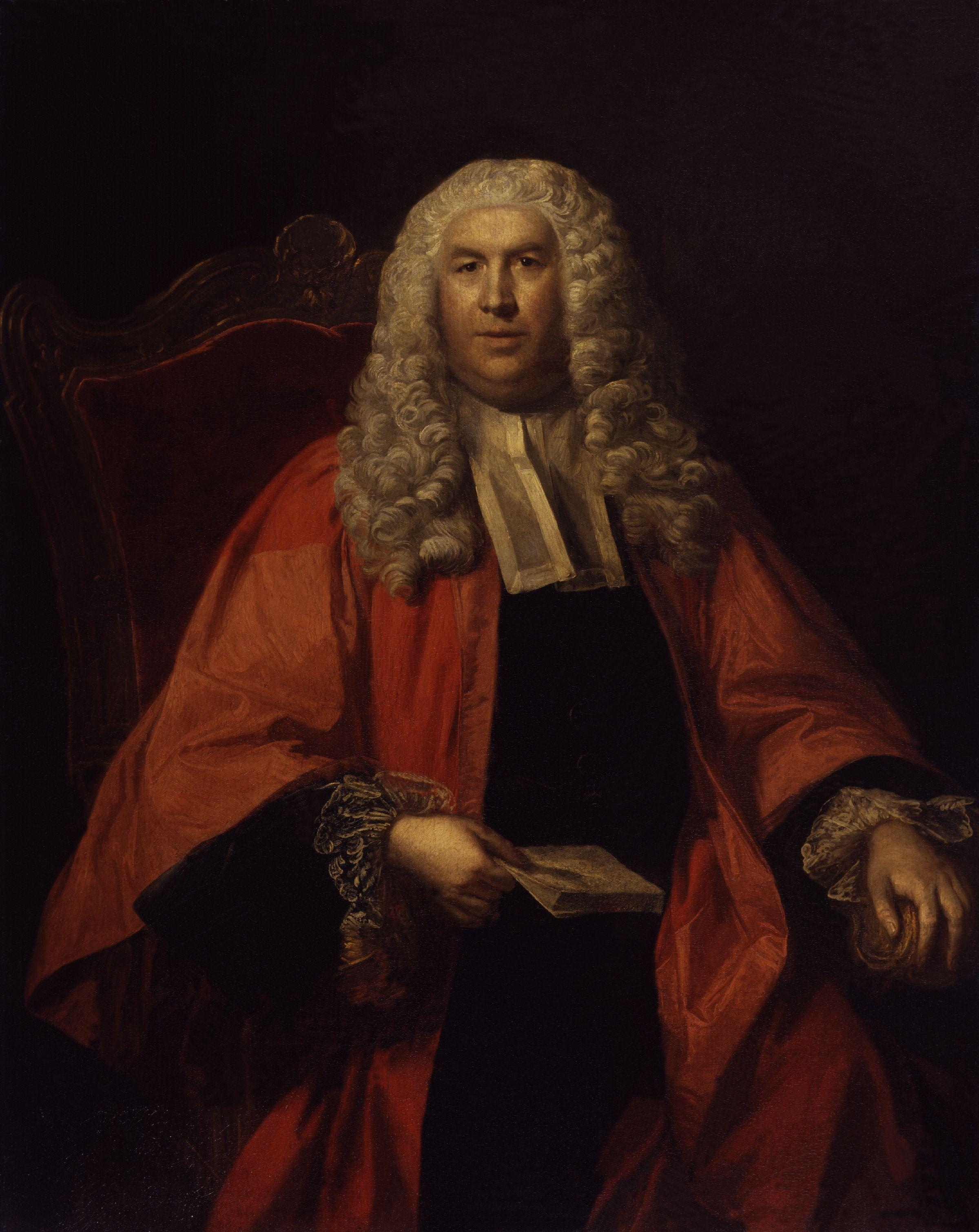
William Blackstone
Jurist and former Member of Parliament of the United KingdomWikipedia
48
MENTIONS
28
EPISODES
21
PODCASTS
Search complete. 48 mentions across 28 episodes found for "William Blackstone".
Oct 25, 2026

Jeff KellickHOST
The settlement of 1688 and 1689 had bound the crown to Parliament and curbed what a king could do on his own.
Jeff KellickHOST
And by 1765, William Blackstone, the English legal writer who could describe Parliament's authority as sovereign and uncontrollable, the Declaratory Act applied that doctrine to the colonies.
Jeff KellickHOST
Otis himself conceded in 1764 that the colonists must obey and that the Loyalists' warning that independence would divide Americans came true.
Jeff KellickHOST
Down to the property seized from the Loyalists under laws passed in the name of liberty.

Alex NewmanGUEST
But the people who were arguing that the law is king in a republic, and even that the law applied it to the monarch, were saying, no, God's laws are supreme over all.
Alex NewmanGUEST
In fact, the most quoted judicial scholar and legal analyst by the founding fathers was a guy by the name of Sir William Blackstone.
Alex NewmanGUEST
He wrote commentaries on the laws of England, which for centuries in this country was considered the bedrock of American jurisprudence.
Alex NewmanGUEST
And what he said is the Bible is the ultimate authority of all law.

Andrew HeatonHOST
And all of these various sorts of old corporations are a practical attempt to solve a surprisingly lofty conundrum, that of immortality.
Andrew HeatonHOST
The British jurist William Blackstone wrote about corporations just before the American Revolution.
Andrew HeatonHOST
We have hitherto considered persons in their natural capacities and have treated of their rights and duties.
Andrew HeatonHOST
But as all personal rights die with the person and as the necessary forms of investing a series of individuals one after another with the same identical rights would be very inconvenient if not impractical, it has been found necessary, when it is for the advantage of the public, to have any particular rights kept on foot and continued to constitute artificial persons.
10 MINS LATER
Andrew HeatonHOST
But a different kind of draft, mind you.
Andrew HeatonHOST
What about criminal prosecution? If I, Andrew Heaton, commit arson again, I can be hauled into court.
Andrew HeatonHOST
If corporations are people, William Blackstone, shouldn't they be criminally liable if they knowingly put poisonous chemicals and products or release dangerous products to the market? Well, if you think corporate personhood ought to mean corporations should be prosecutable, you will be happy to know they can.
Andrew HeatonHOST
You can prosecute corporations in criminal court.

Tim BartonGUEST
Very influential for, like, separation of powers, checks and balances thoughts.
Tim BartonGUEST
Uh, the second most cited was William Blackstone.
Tim BartonGUEST
7.9% of all the quotes came from him, and, and he was significant for legal formation in our nation.
Tim BartonGUEST
Third most cited was John Locke, who did the Two Treatises of Government.

Bradlee DeanHOST
On the way out, when you turn around and you walk out the door, you see a quote by a guy by the name of John Locke.
Bradlee DeanHOST
And John Locke was, uh, also a contributor to English common law in America, along with William Blackstone and Charles de Montesquieu.
Bradlee DeanHOST
This, this quote says, "Where God's law ends, tyranny begins." So who reigns, friends? It's when people become rebels to God's law that kings, they do what? They become tyrants through policy.
Bradlee DeanHOST
And again, that's all we have to do, is open our eyes to see what's going on in this country today.
34 MINS LATER
Bradlee DeanHOST
Exodus 14, 28 comes to my aid.
Bradlee DeanHOST
Read it when you get a moment.
Bradlee DeanHOST
So this now leads us to a guy named William Blackstone, English common law.
Bradlee DeanHOST
I got his books behind me.

Bradlee DeanHOST
On the way out, when you turn around and you walk out the door, you see a quote by a guy by the name of John Locke.
Bradlee DeanHOST
And John Locke was also a contributor to English common law in America, along with William Blackstone and Charles D. Montesquieu.
Bradlee DeanHOST
This quote says, "'Where God's law ends, tyranny begins.'" So who reigns, friends? It's when people become rebels to God's law that kings, they do what? They become tyrants through policy, right? And again, that's all we have to do is open our eyes to see what's going on in this country today.
Bradlee DeanHOST
I also brought up yesterday when you go to the Liberty Bell in Philadelphia, what does it say? It says proclaim liberty throughout all the land unto all the inhabitants thereof.
34 MINS LATER
Bradlee DeanHOST
Exodus 14, 28 comes to my aid.
Bradlee DeanHOST
Read it when you get a moment.
Bradlee DeanHOST
So this now leads us to a guy named William Blackstone.
Bradlee DeanHOST
English common law.
Bradlee DeanHOST
Read it when you get a moment.
Bradlee DeanHOST
So this now leads us to a guy named William Blackstone, English common law.
Bradlee DeanHOST
I got his books behind me.
Bradlee DeanHOST
He was an intellectual giant, is what he was.
Bradlee DeanHOST
Many people got saved reading his law books because there was so much scripture in them.
Bradlee DeanHOST
His name is William Blackstone.
Bradlee DeanHOST
Again, he is the commentator on the laws of England and English common law, which is premised on the Torah, called common law.
Bradlee DeanHOST
That's who we are, Americans.
Bradlee DeanHOST
Read it when you get a moment.
Bradlee DeanHOST
So this now leads us to a guy named William Blackstone, English common law.
Bradlee DeanHOST
I got his books behind me.
Bradlee DeanHOST
He was an intellectual giant, is what he was.
Bradlee DeanHOST
Many people got saved reading his law books because there was so much scripture in them.
Bradlee DeanHOST
His name is William Blackstone.
Bradlee DeanHOST
Again, he is the commentator on the laws of England and English common law, which is premised on the Torah called common law.
Bradlee DeanHOST
That's who we are, Americans.
Bradlee DeanHOST
In the state of Minnesota, we have a huge picture above the heads of the Supreme Court, and what it is, it's a huge picture of Moses awaiting the divine law.
Bradlee DeanHOST
On the way out, when you turn around and you walk out the door, you see a quote by a guy by the name of John Locke, and John Locke was, uh, also a contributor to English common law in America, along with William Blackstone and Charles de Montesquieu.
Bradlee DeanHOST
This, this quote says, "Where God's law ends, tyranny begins." So who reigns, friends? It's when people become rebels to God's law that kings, they do what? They become tyrants through policy.
Bradlee DeanHOST
And again, that's all we have to do, is open our eyes to see what's going on in this country today.

Marcus PeterHOST
We've come a long way historically in the West.
Marcus PeterHOST
You go as far back as English constitutionalism and, uh, William Blackstone's, uh, commentaries on laws of England, uh, it's very clear that suicide, the act of suicide in general, was a wrongful act.
Marcus PeterHOST
And, you know, you can take into account, uh, mental health situations, but that's not the discussion we're having today, which, which is physician-assisted suicide and the legalization thereof.
Marcus PeterHOST
So just share with us how far we've come as a culture.
18 more episodes mention William Blackstone.
Create an account to see the whole feed, search across every transcript, and follow the entities you care about.