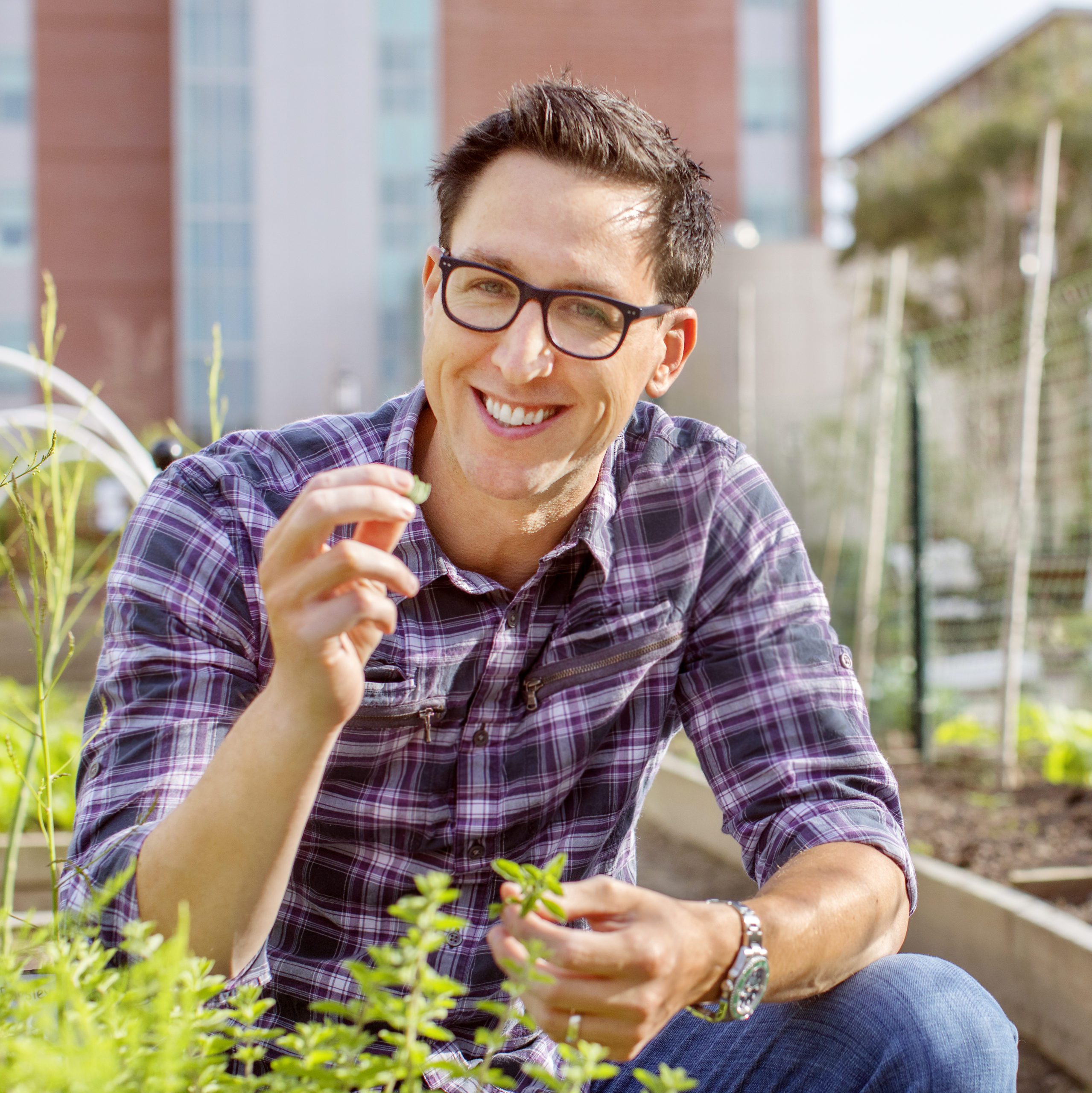
Will Bulsiewicz
American gastroenterologist and author
29
APPEARANCES
17
PODCASTS
Sep 8, 2026


Will BulsiewiczGUEST
To answer your question, t- we're talking about, again, the three short-chain fatty acids that come from fiber: acetate, propionate, and butyrate.
Will BulsiewiczGUEST
All right? Now, let's name the two main ketones that the body will produce when it is deprived of carbohydrate, and therefore s- flips into this metabolic mode of ketosis.
25 MINS LATER


Chef AJHOST
They'll come in feeling unwell for other things when the problem is really coming from the gut.
Will BulsiewiczGUEST
Yeah, and I think there's reasons for that, and it has to do quite a bit with the system that we exist in.
Will BulsiewiczGUEST
which is that whether you are an academic who's conducting research or whether you are a medical doctor or other healthcare provider, you tend to become focused on some niche that becomes your expertise.
Will BulsiewiczGUEST
And the reason why is because the amount of information and knowledge that we would need to be effective in our jobs is overwhelming.
Will BulsiewiczGUEST
And so, but the problem is that your body doesn't care that you want to separate this into different compartments.
9 MINS LATER
Chef AJHOST
we're seeing a lot at least in the plant-based community and i'm no exception and our good friend chuck carroll is that there's a lot of people that seem to be doing everything right and still are not a hundred percent well


Joe GraedonHOST
I'm assuming that they're not good for those, um, junctions, but what else besides drugs can mess up the barrier?
Will BulsiewiczGUEST
barrier?Well, we could, we could walk through a number of different things that exist that are problematic, but I think I also would turn our attention to the absence of the good stuff.
Will BulsiewiczGUEST
And there's an opportunity that we have to replace the bad stuff with the good stuff, and that's really how you transform a person's health.
Will BulsiewiczGUEST
So to answer your question in terms of some of the things that I see as problematic, I see issues with sugar, but I see issues with unhealthy fat, specifically the, the dominance of saturated fat in the American diet and the absence of balance in terms of the quality of the fat in our diet.
Will BulsiewiczGUEST
Fat, fat is not to be avoided, but with fat and protein and carbohydrates, we should be opting for the healthiest sources.
7 MINS LATER


Chuck CarrollHOST
B, as you said, you know, a lot of people just say constipation is simply not going every day." But medically speaking, what is the definition of constipation?
Will BulsiewiczGUEST
Right, so basically the definition includes, like there's, there's frequency, but frequency is not the whole story.
Will BulsiewiczGUEST
Frequency is anywhere between-- Like normal is considered anywhere between three times a day and three times per week.
Will BulsiewiczGUEST
So if you go less than three times per week, then you meet criteria for constipation.
Will BulsiewiczGUEST
But beyond, but beyond the three times per week sort of, like, frequency, um, there are other ways in which constipation can manifest, which by themselves can be indicative.
16 MINS LATER
Chuck CarrollHOST
Uh, w- which constipation treatments do you consider to be generally safe for long-term use, and which are the ones that maybe we should be looking at with a little more caution?"

Annie FennHOST
So for s-someone who may not be aware of the importance of fiber, what does fiber do for the gut microbiome, for gut health in general?
Will BulsiewiczGUEST
Well, I think if you go back to the '80s when I was a kid, there was this prevailing story around fiber that was so boring of, you know, fiber is the orange drink that your grandma has so that she can poop, and it just sweeps through, and that's it, and then it comes out.
Will BulsiewiczGUEST
And what has actually been happening in the medical literature is this story that's very sexy Which is that this is, this is the food for our gut microbiome, and we have a symbiotic relationship with these microbes.
Will BulsiewiczGUEST
They live inside of us, mostly inside of our colon, that's our large intestine.
9 MINS LATER

Trisha PashrichaGUEST
So can you give us sort of just a, a lay of the land of, of what this looks like?

The Melanie Avalon Biohacking Podcast
Jul 24 · 1h 26m
Will BulsiewiczGUEST
So, so first of all, like, uh, what is LPS? Well, many, many, many years ago, before...
Will BulsiewiczGUEST
like w-w-long before humans existed, when the only things that we had on this planet were single-cellular organisms, organisms, there were these bacteria that were sort of under attack.
Will BulsiewiczGUEST
And so they, what they developed was this coat of armor that surrounds their body, and it protects them from the other bacteria that are trying to kill them.
11 MINS LATER

Melanie AvalonHOST
So [chuckles] the Mediterranean diet, olive oil, how much is politics and funding playing a role there in these studies showing like the benefits and, you know, add four tablespoons of olive oil and all the things?


Will BulsiewiczGUEST
We want the intestines in a rhythm because when they're in a rhythm, just like your heart, that's when they perform their best.
Will BulsiewiczGUEST
So, and a rhythm basically means predictable, consistent daily bowel movements.
Will BulsiewiczGUEST
That's ultimately where we would love to be, right? And that, in a way, taps into, like, an entire circadian conversation that we can have later.

Will BulsiewiczGUEST
It's only one hour, right? And just think, like, Cynthia, what the heck was I doing in college when I was, like, staying out till 2:00 in the morning on the weekends, right? That's like a five-hour shift.
Will BulsiewiczGUEST
Or maybe not five, but, like, that's a multi-hour shift from my normal bedtime.
Will BulsiewiczGUEST
So these are all examples of the manifestations of circadian disruption, and that's because our body was designed to have a daily itinerary and to know what is happening when, and to be prepared for that so that you're not constantly reactive, but in fact, you are proactive.
Will BulsiewiczGUEST
The body is anticipating certain events that are gonna happen during the course of a 24-hour calendar, and it's able to build around that for optimal function.
Will BulsiewiczGUEST
That's why we have a circadian rhythm, so that we can basically have optimal function during the course of our day.
Will BulsiewiczGUEST
And when you totally disrupt that, the body is just, like, totally disoriented and only reacting to what's happening, and it's just trying to catch up.
5 MINS LATER

39:37

So if someone is in a season of high stress, whether that is, like you said, relationships, finances, health, whatever it is, Besides some of the things that I mentioned for my nervous system, some of the things that you do, what else can we do to really start to decrease that stress bucket?
Will BulsiewiczGUEST
Okay, so it's a bit of a personal question, right? Because ultimately, it's the unique individual and their story.
Will BulsiewiczGUEST
That said, to me, number one is understanding this connection between stress or trauma, your gut, and then inflammation.
Will BulsiewiczGUEST
But the nerdy scientist in me is like, okay, we didn't give enough credit to this idea of mind-body.
9 MINS LATER
49:43
Where did that birth from? What is it? How long has it been available? Share everything with us.
Will BulsiewiczGUEST
I think that the future for these tests is very exciting, but in terms of clinical use, right, a medical doctor answering a question and then making a choice based upon a, a stool microbiome test, there's very few scenarios where that actually is, um, sufficiently supported.
Will BulsiewiczGUEST
So I will say, like for example, the question that you, the, the way that you framed that was probiotics.
Will BulsiewiczGUEST
So you have to show me the clinical trial for me to become convinced that that actually makes sense, because it feels like a very great idea, but there's way too many examples through the years where something feels like a great idea, so we start using it, and then we discover that actually no, that was not a great idea.
Will BulsiewiczGUEST
So, but, uh, in kids, Chuck, there is one example, which is that there's a gut microbiome test in, um, infants that suggests th- the, the child's microbiome is far less complex than the adult's microbiome.

Will BulsiewiczGUEST
So anyway, the, the issue with this, and I, just to be clear, I'm actually a big believer in epidemiology studies.
Will BulsiewiczGUEST
I, I studied at the University of North Carolina, which is the number two school of public health in America on this particular topic.

Will BulsiewiczGUEST
But the, uh, the, the key here is that this, this estrogen that's in the bile, it comes into contact with the gut microbiome before it exits the body, and the estrobolome will actually take it and put it back into the blood.
Will BulsiewiczGUEST
And so this is a way, if you think about it, I would use an analogy that imagine for a moment that we have a sink, all right, and the ovaries are the faucet.
Will BulsiewiczGUEST
So the faucet allows us to turn on how much water we add to that sink, but there's also the drain, and the drain can be manipulated too.
Will BulsiewiczGUEST
So if you want to adjust the level of water in the sink, yeah, you could turn up the water that goes in from the faucet, but you also could adjust how much drains out the bottom.
11 MINS LATER

Steph GreunkeHOST
Yeah.
Will BulsiewiczGUEST
And that's how you end up with the gut being connected to our immune system, our metabolism, our hormones, our mood, our brain health, our skin.
Will BulsiewiczGUEST
There's these firmly established examples like the gut-brain axis, where we have 15 years of research studies.
Will BulsiewiczGUEST
There's less firmly established examples that we're learning more and more about, like s- the gut-kidney axis or the gut-liver axis.
Will BulsiewiczGUEST
But the evidence is overwhelmingly clear that the food that you put into your body, your gut microbiome, is connected through to all of these different things, and the reason why is because it's like a chemical factory.
Steph GreunkeHOST
Mm.
Will BulsiewiczGUEST
And those things are bioactive, and they impact locally right there within your gut.
Will BulsiewiczGUEST
Yeah, and the blood-brain barrier, I'm glad that you brought that up because the blood-brain barrier-- So in my mind, I have this vision of the way that the body is working, where we imagine that we have this castle, right? And the castle, the walls of the castle are meant to defend and protect us.
Will BulsiewiczGUEST
That's our gut barrier, right? And you need to maintain the bricks and connect the bricks to each other so that wall is strong and resilient.
Will BulsiewiczGUEST
And so the connections between those bricks, the cement that holds it together, are proteins called tight junctions.
Will BulsiewiczGUEST
So you take those cells that come in every three to five days, and then you basically snap them together using these tight j- using these tight junction proteins.
Will BulsiewiczGUEST
It turns out that we, our brain, of course, is the most important part of our body to protect, right? So we have an extra layer of protection.
21 MINS LATER
Chuck CarrollHOST
How does intestinal permeability, AKA leaky gut, so somebody's in class, allow bacterial fragments like endotoxins to enter circulation and potentially trigger systemic inflammation? Leaky gut, what's the connection, sir?
Will BulsiewiczGUEST
When it comes to the gut, they are the most densely packed gut health food that exists.
Will BulsiewiczGUEST
But because they're so densely packed with fiber and resistant starches, which these resistant starches, just to define this, it's a starch, it's not fiber, it's not the same, but much like fiber, it is not, uh, something that your body is capable of digesting.
Will BulsiewiczGUEST
So it also will come into contact with your microbes, and it also will be the precursor to short-chain fatty acids.
Will BulsiewiczGUEST
And so what happens is if you haven't been eating these types of foods, you go about, you have your low-fiber diet on a day-to-day basis.
22 MINS LATER
Annie FennHOST
What is LPS, and how do, how do we get it? How do we get rid of it? How do we prevent ourselves from absorbing it? [chuckles]

Will BulsiewiczGUEST
As you and I sit here and speak to one another, your gut is talking to its bra-- to your brain.
Will BulsiewiczGUEST
And some of the ways are with the production of chemicals, which are what we call bioactive, so that means they can actually impact the physiology in your body.
Will BulsiewiczGUEST
Seventy percent of your immune system exists in your gut, and the immune system is able to activate things that can affect the entirety of your body and create inflammation.
Will BulsiewiczGUEST
Also, your hormones and your neurotransmitters that are produced in your gut.
speaker_2UNKNOWN
How does that play into all this complexity of the nerves and the two-way gut-brain axis you were talking about?
Chuck CarrollHOST
Uh, I wanna ask, is there a difference between GERD reflux and just good old-fashioned heartburn?
Will BulsiewiczGUEST
Um, so it, it starts to be a little bit of semantics because we might use these terms interchangeably, and I actually think it's kinda okay that we use these terms, you know, GERD, reflux, heartburn interchangeably.
Will BulsiewiczGUEST
But if we're getting a little bit more specific, um, gastroesophageal reflux disease is...
Will BulsiewiczGUEST
We-- F-First of all, let me say, we all have some reflux, so it's very normal to have some reflux, and there's a threshold that exists where we would define that as being pathologic.
Will BulsiewiczGUEST
It's, it's actually becoming harmful to your health, and when it crosses that line, that's when we start to qualify that as gastroesophageal reflux disease.
Will BulsiewiczGUEST
It's the process of things that are supposed to be remaining in the stomach, but they're actually going retrograde in the wrong direction up into the esophagus and then causing harm.
32 MINS LATER
Chuck CarrollHOST
B? Generally speaking, obviously, 'cause as you said earlier, we're not familiar with this particular case.
Chuck CarrollHOST
But to your point, in terms of pre- eating pre-digested food-I, I will never forget somebody who's very close to me also had weight loss surgery a few years before I did and then it was within, it seemed to me like a two-month window where they were back at Taco Bell, and I was like, "What are you doing, man?" And this was before I even had weight loss surgery, right? I was still going to Taco Bell myself but I was like, "What are, what are you doing? Like, you worked so hard, like you went to the extreme step of having weight loss surgery and you're already back at Taco Bell." And this person said to me, "It's pre-digested, and it's just easier for my body to handle it." And I got so angry at the time, but based off of what you're saying, it kind of makes sense, that logic that the person was using, even if they are graduating toward foods that I necessarily w- don't agree with, just the fact that it's broken down already a little bit helped them out.
Will BulsiewiczGUEST
Yeah, and I think the way that I would think about this too, Chuck, is that ultimately you do have nutritional needs that need to be fulfilled.
29 MINS LATER


Will BulsiewiczGUEST
Now, that is a totally different thing than basically an immune system that is being triggered twenty-four hours a day and it's not actually fighting anything real.
Will BulsiewiczGUEST
So the way that our biology was designed, which is like, you know, to me, like awe inspiring, beautiful, is that when we're asleep, during that time where we're not really moving around, that's when the immune system steps up to basically like take care of its maintenance work, which includes like if you exercise, it's helping to basically build the muscle mass and restore those muscles because exercise is actually like a form of micro injury.
Jonathan WolfHOST
How does the gut microbiome fit into this story about sort of inflammation being switched on all the time, and the immune system, you know, being switched on with it?
Will BulsiewiczGUEST
Again, I, I discovered that all of these health conditions are associated with dysbiosis, which means damage to the gut microbiome.
Will BulsiewiczGUEST
And as I dove deeper into understanding what was going on there, I began to realize that the gut microbiome plays an essential role in the health of your immune system and the ability for your immune system to do its job properly.
Will BulsiewiczGUEST
So to unpack this for a moment, first of all, seventy percent of our immune system is in the lining of our gut.
Will BulsiewiczGUEST
If you were to ask the question: Where does your immune system live? With total clarity, the answer is your gut.
38 MINS LATER

Will BulsiewiczGUEST
[chime] There's nothing like kicking off the new year feeling good, and honestly, hydration is the easiest win.
Will BulsiewiczGUEST
I don't know about you, but I can feel a huge difference in myself when I'm staying properly hydrated versus when I'm not.
Will BulsiewiczGUEST
When the day gets busy, sometimes we don't even remember to stay on top of our hydration game until we're already dehydrated, and that's why I've been loving DripDrop.
Will BulsiewiczGUEST
Trusted by over 90% of top college and pro teams, DripDrop is doctor-developed, proven fast hydration that helps your body and mind work better.
31 MINS LATER

speaker_7ADVERTISER
If you had a twin...
Will BulsiewiczGUEST
you would only share about 35% of the same microbes, even though you literally have the exact same genetic code, even though you were born from the same mother, that you grew up in the same house.
Will BulsiewiczGUEST
So you shared a lot of the same characteristics, but you'd only share about a third of the same microbes.
Will BulsiewiczGUEST
And that story, it is... rigorously truthful to the point that like it or not the truth is told in your gut and that includes the food that you eat but it's not just the food that you eat so you mentioned sugar sure that's a problem unhealthy fats a problem to me excessive salt is a problem we have pretty clear data on this dog And, um, and so is ultra processed foods for the most part in terms of the additives that exist on the, in the ultra processed foods.
15 MINS LATER
Doug BopstHOST
overall well-being and how can people begin to like think about that for themselves


Will BulsiewiczGUEST
And there's, this was, like, an amplified effect because of the c- circumstances with my dad.
Will BulsiewiczGUEST
And this snowballed to a point where when I, after I graduated college, stupid reasons, sil- so silly and stupid, but I made a decision that I'm not talking to that guy anymore.
Will BulsiewiczGUEST
We'd rather the first two parts take care of it for us, right? So the beauty of this is that you eat, you consume these high-fiber foods, they come into contact with your microbes right here in the large intestine, specifically the right colon is the classic spot, and they, they unpack them and they release the acetate, propionate, and butyrate.
Will BulsiewiczGUEST
And those three things impact your microbes, impact your gut barrier, impact your immune system.
Will BulsiewiczGUEST
Now of the three, my favorite is butyrate because it's the butyrate that has the biggest effect on the microbes, on the gut barrier.
Will BulsiewiczGUEST
Like you literally need butyrate in order to produce the proteins that hold your, uh, your gut lining together.
1 HR 4 MINS LATER
Scroll for more appearances