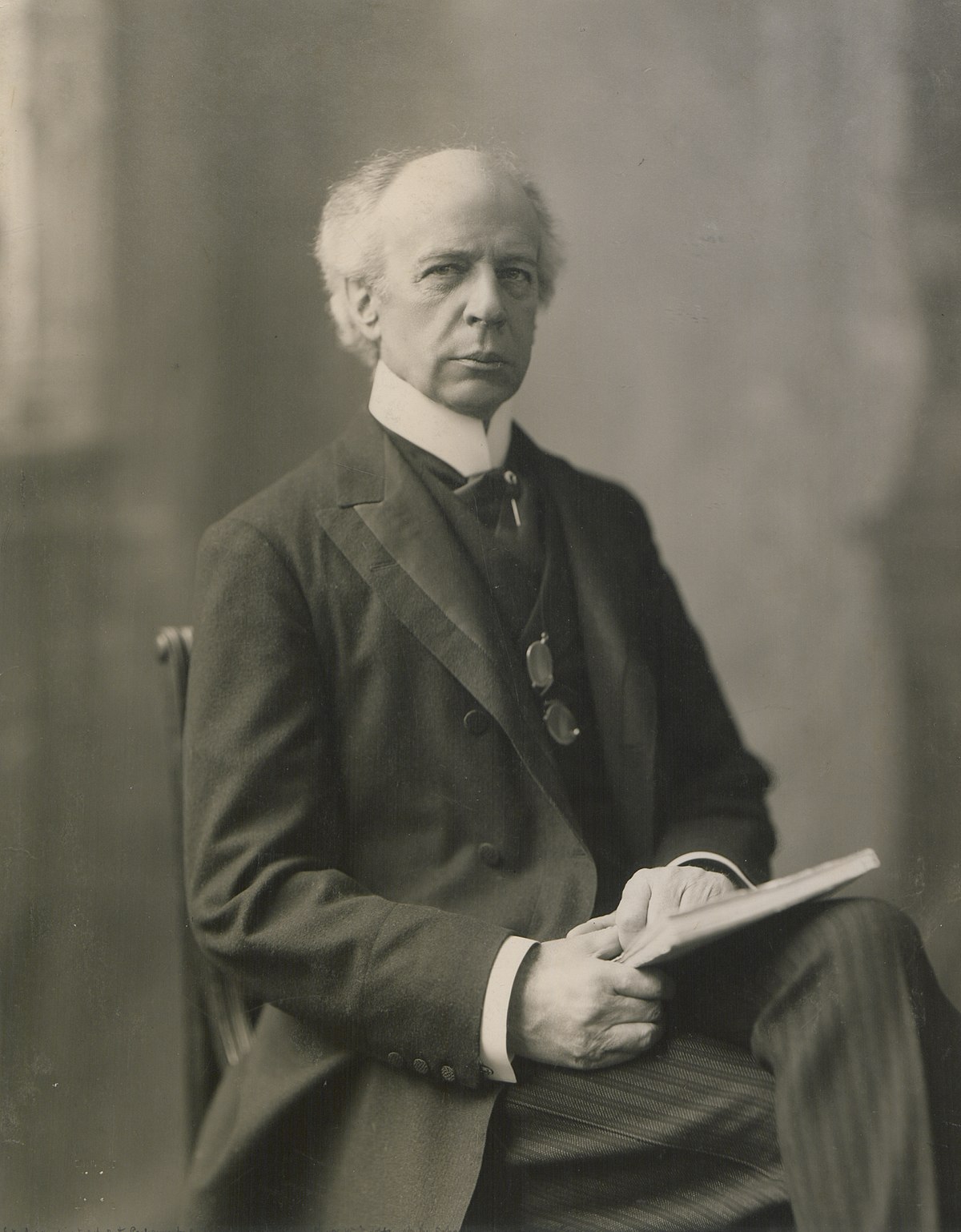
Wilfrid Laurier
Former Prime Minister of CanadaWikipedia
77
MENTIONS
17
EPISODES
14
PODCASTS
Search complete. 77 mentions across 17 episodes found for "Wilfrid Laurier".
Oct 20, 2026
John Michael McGrathHOST
And that really became sort of the cause of his later life.
John Michael McGrathHOST
Even as then Prime Minister Wilfrid Laurier was trying to get him back to Canada to serve in important roles.
John Michael McGrathHOST
He was like, no, no, I'm good here in Ireland.
John Michael McGrathHOST
Yeah.

Alex LovelessHOST
The Sherbrooke Stadium.
Alex LovelessHOST
Parc de Wilfrid Laurier or the Saint-Michel Arena? Which one of those did not host an Olympic?
Colin HildingGUEST
So that's the only Canadian host city I have not been to and have not seen locations of.
Colin HildingGUEST
Wilfrid Laurier is a prime minister that is, we're talking decades prior to this.
Colin HildingGUEST
So there's a good chance that's one of them.
Alex LovelessHOST
Was he a good prime minister?
Alex LovelessHOST
But the fake one, or not necessarily a fake one because it's a real place, but it did not host anything at the 1976 Summer Olympics.
Alex LovelessHOST
Unfortunately, Patrick and Colin have got that question wrong, and so we will pass it over to give you a bonus point.

Bryan DaviesGUEST
It was all about New Ontario.
Bryan DaviesGUEST
It was all about the vision that the governments of this country, led by Sir Wilfrid Laurier, the Prime Minister, who was Clerk's close friend and very, very strong advocate, It was the new Ontario that Clerk described as one where governments, through good laws and special grants of wild land, will tempt the capitalist and the manufacturer to establish works for the utilization of these Canadian raw materials, like iron ore and pulp paper.
Bryan DaviesGUEST
And then they will have established an agency for immigration more efficacious than a legion of lecturers and a million maps.
Bryan DaviesGUEST
Clerg saw New Ontario in the biggest and boldest of colours.

John Michael McGrathHOST
Um, uh, so he served in, uh, the British Parliament as an Irish MP, an Irish nationalist MP, and that really became sort of the cause of his, uh, later life.
John Michael McGrathHOST
Uh, even as, uh, then Prime Minister, uh, Wilfrid Laurier was, uh, trying to get him back to Canada to serve in important roles, he was like, "No, no, I'm, I'm good here in Ireland." [laughs]
Steve PaikinHOST
We are gonna finish our tour with, if I'm allowed an opinion on this, I think one of my favorite premiers in Ontario history.
Steve PaikinHOST
Let's go visit him.

Falice ChinHOST
And I imagine a lot of the wealth and prosperity will continue to be generated in the West.
Falice ChinHOST
If the 2030s shall belong to Western Canada or Western Canadian development, not to bastardize Wilfrid Laurier's saying about 20th century belonging to Canada, what needs to happen to ensure we're not marching toward an even greater national chasm?
Ted MortonGUEST
Well, one of the important achievements of the School of Public Policy study that was done for the government of Alberta on the economic and fiscal impacts of separation on Alberta, if you look, I think it's pages six and seven, there's about a page and a half there that shows that not only would leaving Canada be bad for Alberta, it would be even worse for Canada.
Ted MortonGUEST
that Canada, even after the Trudeau decade, the Justin Trudeau decade and all the damage that was done, the rest of Canada, our dollar, our economy, what we have to pay to borrow money, all of Canada benefits from Western Canada's strength.

Greg KoabelHOST
The formation of Robert Borden's Union government was the catalyst.
Greg KoabelHOST
The Liberal Party was split in two between Union Liberals, who supported Borden's call for a total mobilization for war, and those in the party who remained loyal to Wilfrid Laurier and opposed conscription.
Greg KoabelHOST
Meanwhile, the Conservative Party was literally erased and replaced with Union government, an uneasy alliance of convenience between Liberal defectors and Conservatives.
Greg KoabelHOST
And while the pressures of war were responsible for the scrambling of Canada's traditional partisan politics, peace was unlikely to usher in a return to normalcy.
Greg KoabelHOST
The sense of betrayal ran deep within Liberal ranks, especially since the split ran along ethnic and geographic lines.
Greg KoabelHOST
More than at any other time in the history of Canada to that point, the Liberal Party was the party of Quebec.
Greg KoabelHOST
Those who had stayed loyal to Laurier viewed the Union defectors as beyond forgiveness.
Greg KoabelHOST
Union Liberals, meanwhile, may have had regrets about joining Robert Borden's government, but none of them questioned the principles that led them to support Canada's war effort to the fullest and by extension, the moral bankruptcy of those who shirked their duty to the country.

Jason KenneyGUEST
Uh, most of the people there wanted one big prairie province that eventually could grow in population, in weight, politically and economically, to be a bit of a counterweight to the big central Canadian provinces.
Jason KenneyGUEST
But, uh, Wilfrid Laurier followed the advice of his local organizer, a guy from Edmonton, Frank Oliver, to split the two provinces, uh, to quote Donald Trump, "with an arbitrary line," an arbitrary border right down the middle, two smaller provinces, with, uh, without the ownership of their mineral resources, with small Senate allocations.
Jason KenneyGUEST
In fact, Alberta has six senators for five million people, and Seamus, your, our friends in Atlantic Canada have 30 senators for two and a half million people.
Jason KenneyGUEST
So these are the kind of structural issues that caused, uh, that were partly the cause of historical Western alienation, together with McDonald's national policy, much of which was carried on by the Laurier government, uh, well into the last century with protectionism, meaning that Western Canadian grain farmers had to buy overpriced manufactured implements, their Massey Ferguson tractors from Ontario producers rather than getting cheaper products from the United States because of tariffs.

Brian BalmagesHOST
Before she was, well, I'm a Miami guy, so go Canes too, but everybody can go together.
Brian BalmagesHOST
And then she was appointed Dean of Faculty of Music at Wilfrid Laurier University in Waterloo, Ontario, just outside of Toronto.
Brian BalmagesHOST
She is, this is new, she is president elect of WASB, which is the World Association for Symphonic Bands and Ensembles.
Brian BalmagesHOST
And she is artistic director of the Wellington Wind Symphony and an active member of numerous organizations, including CBD&A, the Conductors Guild, College Music Society, Humanities Education and Research Association, NAFME, ABA, and more.
27 MINS LATER
Cynthia Johnston TurnerGUEST
things that a leader must have, as well as a lot of people skills and relationship building and all that sort of stuff.
Brian BalmagesHOST
But
Cynthia Johnston TurnerGUEST
yeah, I had done a lot of research on Laurier, and congratulations for pronouncing it right, by the way, because usually I have to tell a lot of people in the United States, just think Laurie, the name, and then Canada A, Laurier, and that's how you say it.
Cynthia Johnston TurnerGUEST
Because we get lawyer-er a lot.
Greg KoabelHOST
I just referred to him as the Conservative Prime Minister, but that's not strictly accurate.
Greg KoabelHOST
In 1917, Borden formed a new Union government, which consisted of Conservatives and dissident Liberals who disagreed with Wilfrid Laurier's stance on conscription.
Greg KoabelHOST
Although the so-called Laurier Liberals contested the federal election of December 1917, the Union government effectively blurred the lines of the long-standing two-party system in Canada.
Greg KoabelHOST
But if Borden's Union experiment opened the door to a new kind of politics, the Prime Minister quickly lost control over what lay on the other side of that threshold.
Greg KoabelHOST
The Liberals, meanwhile, at least paid lip service to free trade.
Greg KoabelHOST
Wartime conditions, however, brought other priorities to the fore.
Greg KoabelHOST
Like many other Anglophones, the farmers of the West, and Ontario too, backed Borden's policy of conscription and couldn't understand how Wilfrid Laurier's Liberals could justify obstructing Canada's war effort with their opposition.
Greg KoabelHOST
The farmers' man in the Union cabinet was Thomas Carar, the leader of the Manitoba Grain Growers Association and the most influential figure in Canada's farmers' movement.

Joe BurimaHOST
He was the first leader of a Canadian political party to be forcefully ejected.
Joe BurimaHOST
And Wilfrid Laurier resigned as prime minister on this day back in 1911.
Joe BurimaHOST
And as always, on this day, we aired this episode of Today in Canadian History.
speaker_2NARRATOR
Today in Canadian History is produced by CJSW 90.9 FM in Calgary.
7 more episodes mention Wilfrid Laurier.
Create an account to see the whole feed, search across every transcript, and follow the entities you care about.