Wildland–urban interface
31
MENTIONS
14
EPISODES
14
PODCASTS
Search complete. 31 mentions across 14 episodes found for "Wildland–urban interface".
Oct 1, 2026

Aaron KendallGUEST
I'd say there's a few peculiar things about that.
Aaron KendallGUEST
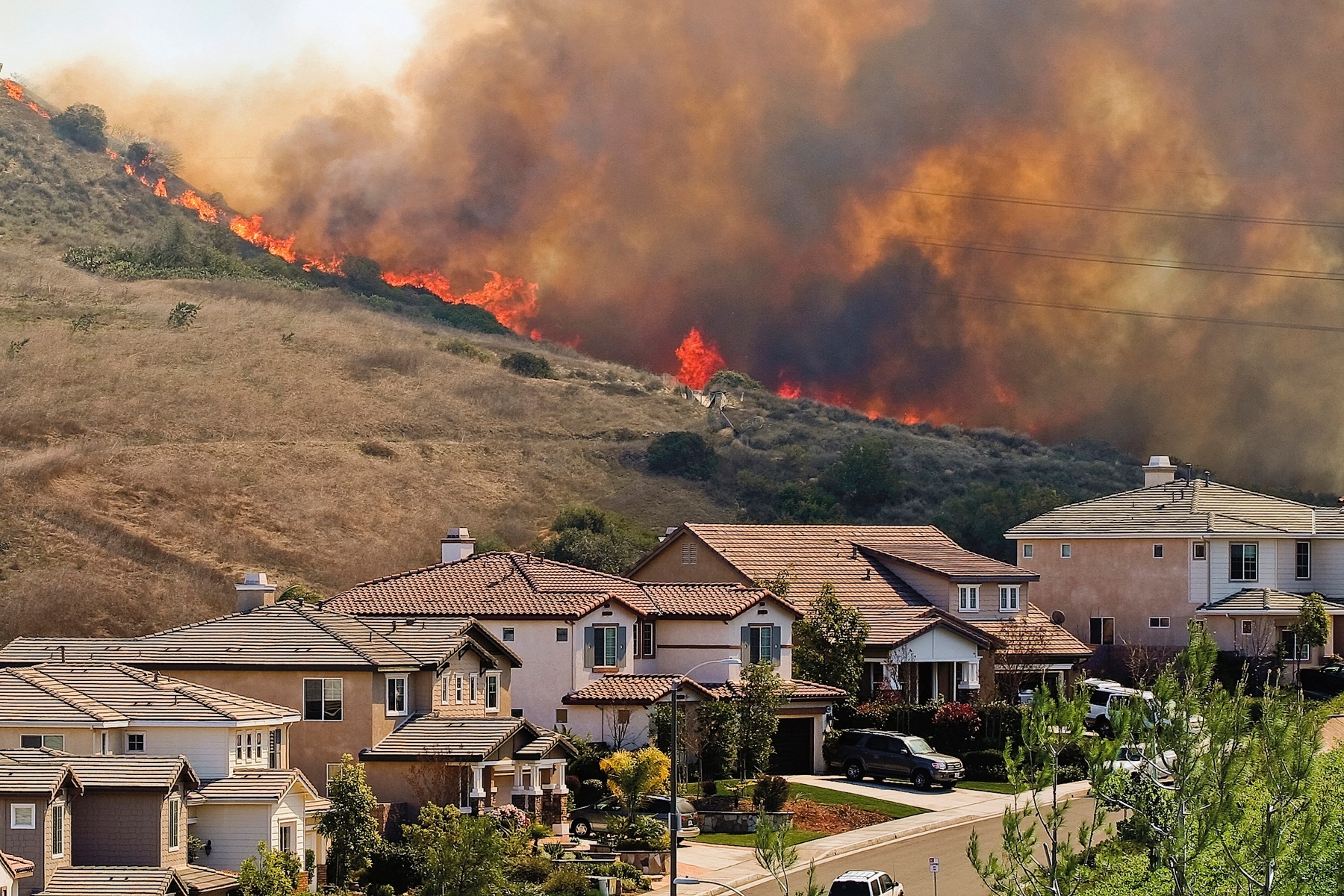
I think anybody who is a reasonable person and, and a reasonable organization like we are could say, "Okay, let's take a look around infrastructure or perhaps in the WUI," as we call it, the wildland-urban interface, you know, where there's houses right up-
TJ TroutHOST
Yeah
Aaron KendallGUEST
... against these forests.

Fred HoffmanHOST
And this wildfire-urban interface areas are particularly widespread in the eastern United States, reaching a maximum of 72% of land area in Connecticut, for example.
Fred HoffmanHOST
Now, here in California, we have the highest number of housing units in what's called the WUI area, 5.1 million homes.
Fred HoffmanHOST
And that translates to more than 11 million Californians who are living in a wild urban interface, a wildfire urban interface.
Fred HoffmanHOST
That means more than a quarter of the state's population is living in a high fire hazard zone.

Land TawneyGUEST
You know, he's the CEO for Child Unlimited.
Land TawneyGUEST
But, like, I think, you know, some of that flexibility around the WUI, which is the Wildland Urban Interface, I, the WUI, I remember being in meetings for a long time, like, what the hell is the WUI? And then finally, somebody's like, oh, it's the wildland urban interface.
Land TawneyGUEST
But you know, these places where you have infrastructure, whether, you know, these are power lines, or these are houses or whatever, then the edge of these roadless areas, I think that flexibility to do some more mechanical treatment in there, I think that's, that's, that's what I think that I think Chris would say you can already do that.
Land TawneyGUEST
But I think really having that conversation about what that looks like.

Iko RikoHOST
This is also a story about aggressive residential development into this wildland interface.
Iko RikoHOST
Today, more than a third of American homes are in the WUI, as are half of the Canadian ones.
Iko RikoHOST
It's a beautiful place to live until it goes feral.
Iko RikoHOST
When a WUI burns, it does not burn like a forest fire or a house fire.
Iko RikoHOST
It burns like hell.
Iko RikoHOST
If a fire reaches a home, what lies inside matters too.

Austin WomackHOST
The amount of time spent by wildland firefighters working in the wildland urban interface and specific health concerns associated with working in that environment.
Austin WomackHOST
As we all know, The time spent in the WUI and those kind of incidents is probably not going down anytime soon.
Austin WomackHOST
It's just going up.
Austin WomackHOST
So that's just increased in health concerns.

Abby RossGUEST
Those are, I think, important macro drivers.
Abby RossGUEST
And then when you think about the insurance landscape, about what does insurability look like in California, in the WUI across the board, increasing rates, commercial insurance, you more state plans, those things all rolled together, I think is a really important wake-up call for individuals, communities, but also state and local governments about the importance of not just having a plan for how to handle fire, but putting sustainable vehicles and programs and policy together that will make sure that this work is funded.
Abby RossGUEST
And Los Angeles is that place where I think a lot of the innovation is starting to happen to demonstrate this is what it looks like when a community takes this into their own hands to make sure that resilience is infused into how we build.
Abby RossGUEST
The marker of success for us is that we We believe about a third of the homes are going to be built to this IBHS standard.

Lonnie ArmstrongHOST
And this is the In the House Podcast.
Lonnie ArmstrongHOST
So what we're gonna talk about today, Michael and I, we're gonna talk about WUI codes here in the city of Austin and what are they and when did they implement these codes.
Lonnie ArmstrongHOST
And then we're also gonna talk about using online images as design inspiration, right? And maybe helping to set some expectations with your client using those images.
Lonnie ArmstrongHOST
So, also, don't forget to subscribe, like the podcast, share with a friend, and leave a comment because we definitely want to hear what you have to say.
20 MINS LATER
Lonnie ArmstrongHOST
We understand what you're going for, but it's probably not going to look exactly like this.
Lonnie ArmstrongHOST
100%.
Lonnie ArmstrongHOST
Yeah, well, let's get into WUI code.
Michael StolleHOST
So

David TangipaaGUEST
That is actually what happened.
David TangipaaGUEST
We have reports that go all the way back that show us that proper vegetative management areas, what we refer to as WUI land, wild urban interface, needed to be heavily managed, didn't have 40...
David TangipaaGUEST
They- it had 40 years of vegetation and brush, and what used to be nature's management was fire.
David TangipaaGUEST
So you will either have fire or you can mechanically thin and process or even use goats.

speaker_0HOST
Right.
speaker_0HOST
I was reading about the new 2026 California Wildland Urban Interface Code, which is consolidated under Title 24, Part 7.
LivHOST
Yep.
LivHOST
Title 24.

David TangipaGUEST
now has banned any type of vegetation material underneath the roofline of a home in any high-risk, high-fire areas.
David TangipaGUEST
You know, instead of the state focusing on its own forest management and creating protection lands around high-dense, what we refer to as WUI land, wildland-urban interface, the state is now saying well we must go after the individual because they're not doing what we want when it comes to general protection and really where this is that it it it comes with your ideology of what government can and can't do and the original foundations and principles of the constitution were actually constraints what could we constrain the government because the government cannot solve everything and what we have here in california is an unconstrained view the government can do everything the government should do everything they should be the ones who dictate whether you have flowers next year home or not they should be able to dictate what tires you put on your car not and the issue again that we have it in California is that if they can go and govern your tires and govern your flowers, there is nothing that they won't go after to govern.
David TangipaGUEST
And Zoran Mamdani and other political members have this same mindset.
David TangipaGUEST
When Zoran Mamdani says that we will reject the cold frigidity of individualism and we will embrace the warmth of collectivism, That is anti-original foundations of our Constitution.
4 more episodes mention Wildland–urban interface.
Create an account to see the whole feed, search across every transcript, and follow the entities you care about.