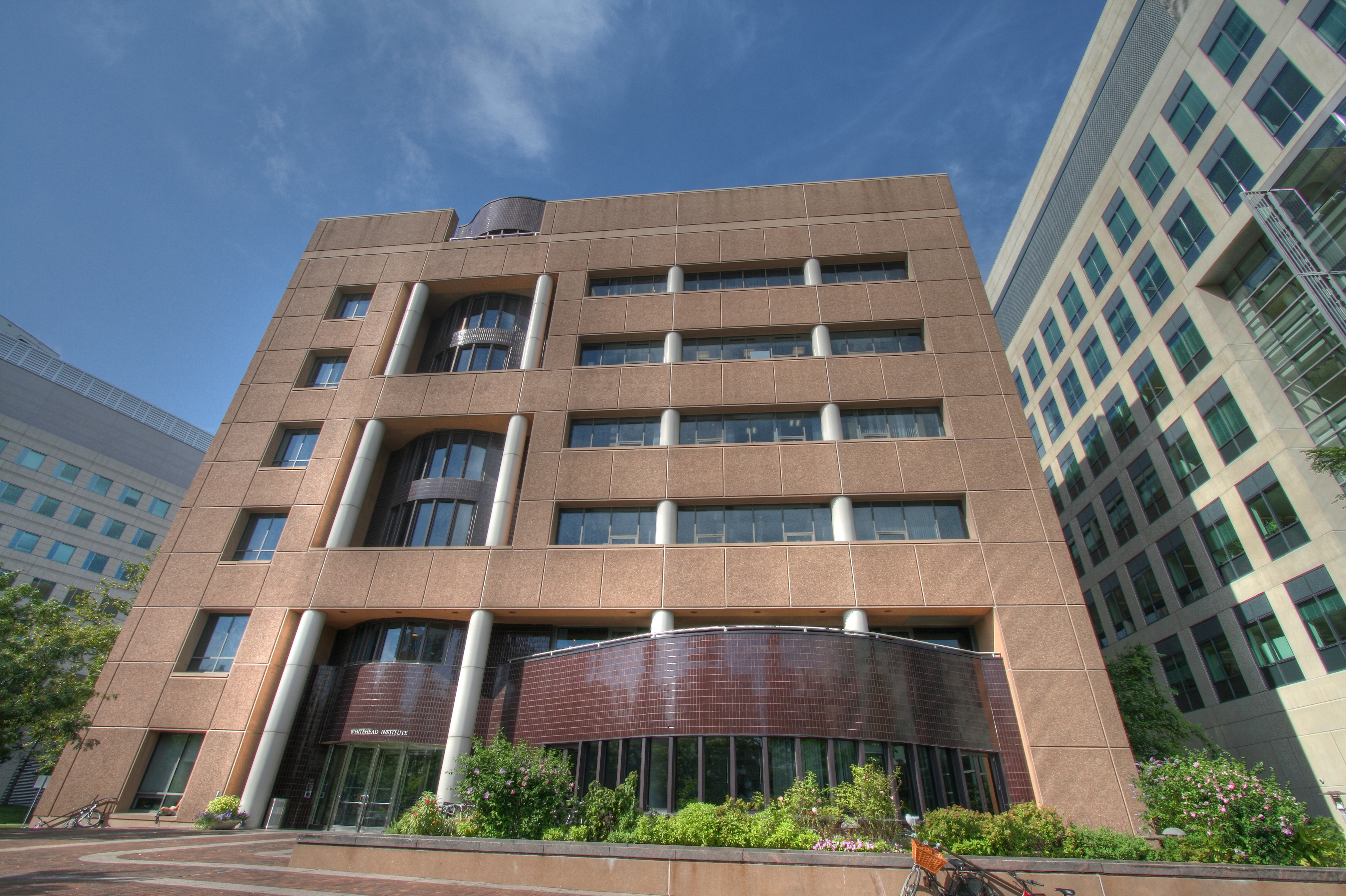
Whitehead Institute
Research institute in Cambridge, MassachusettsWikipedia
4
MENTIONS
4
EPISODES
4
PODCASTS
Search complete. 4 mentions across 4 episodes found for "Whitehead Institute".
Sep 14, 2026

Daniel WallsHOST
Hahn's ties to Dana-Farber date back to 1985 when he started as an undergraduate in a research lab.
Daniel WallsHOST
He later trained under the legendary Robert Weinberg at the Whitehead Institute for Biomedical Research, where he learned to think deeply about problems.
Daniel WallsHOST
Dr. Hahn is a leader in oncogenomics.
Daniel WallsHOST
He was part of a team that proved a normal human cell could be transformed into a cancer cell by manipulating a small set of genes.

Alexandra NguyenGUEST
The lab has really evolved, um, since its, its, its start.
Alexandra NguyenGUEST
So this is the Cheeseman lab at the Whitehead Institute.
Alexandra NguyenGUEST
And so when I was there, I was kind of the last person doing true like mitosis type stuff.
Grace RodenbergHOST
Mm-hmm.

Andrew JohnstonCORRESPONDENT
And evolutionary biologist Jenny Graves has calculated that if that deterioration continues at the same rate, the Y could disappear entirely in a relatively quick five to 6 million years, which might seem like a while, but time flies, people.
Andrew JohnstonCORRESPONDENT
Another evolutionary biologist, Jen Hughes of MIT's Whitehead Institute, argues that the Y lost genes rapidly early in its evolution, but then essentially stabilized with very few of its remaining core genes disappearing over the past 25 million years.
Andrew JohnstonCORRESPONDENT
Those genes still perform important functions throughout the body.
Andrew JohnstonCORRESPONDENT
Among them, for instance, managing proteins.

DanGUEST
But before that, I was at a company called Humanity Therapeutics, and this was a small molecule company focused on neurodegenerative diseases such as Parkinson's and ALS.
DanGUEST
And this was actually work that was stemming from work that myself and others had done at the Whitehead Institute, MIT, during my postdoc.
DanGUEST
So Susan Lindquist was our founding scientist, and I was the second employee, and we really sort of built this company.
DanGUEST
and brought some small molecules forward for neurodegenerative disease.