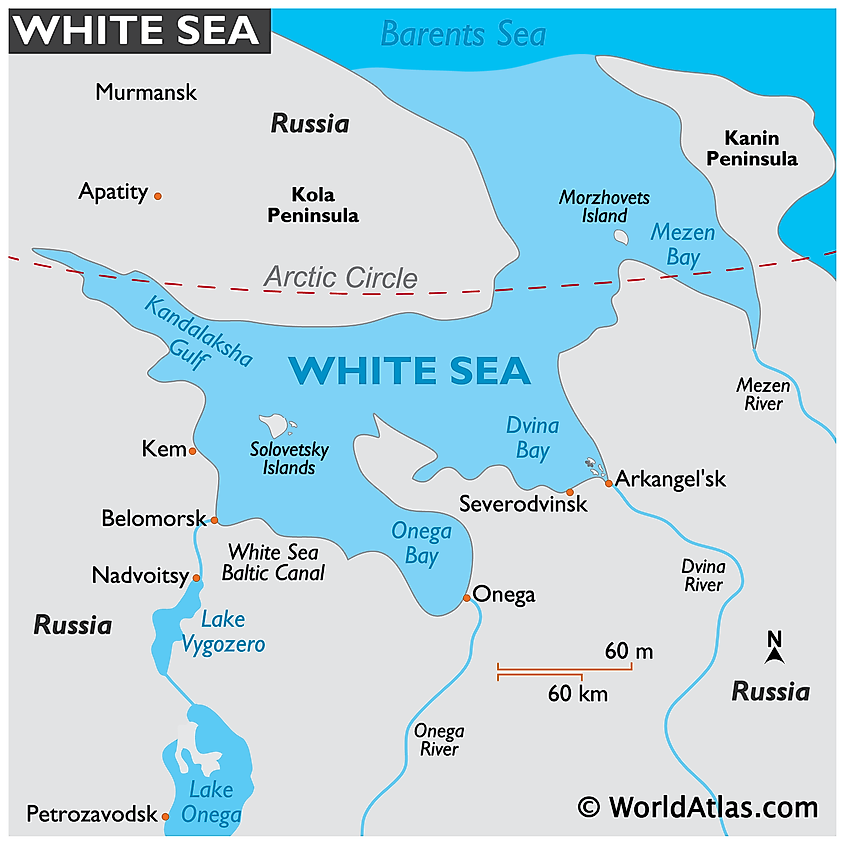
White Sea
SeaWikipedia
66
MENTIONS
42
EPISODES
42
PODCASTS
Search complete. 66 mentions across 42 episodes found for "White Sea".
Sep 17, 2026

AlistairNARRATOR
The late M. de Catrofagia's Debray, in his Race Prussienne, discovers marked Finnish traces in East Prussia, whilst the so-called Baltic provinces are largely inhabited by Finns who were first Teutonized and are now in the process of Russification.
AlistairNARRATOR
On the White Sea there is a tribe of Finnish origin whom the Finns of Finland speak of as Tartars.
AlistairNARRATOR
In the south-east of Europe there are Turkish-speaking peoples whom the Russians call Turks, but who present traces of Finnish origin.
AlistairNARRATOR
It was only on the harsh soil of the country today known as Finland, and under the mild rule of Sweden, that the Suomi, as they call themselves—Finns they were called by their neighbours—found a resting-place where their race and their language could strike firm root.
8 HRS 14 MINS LATER
AlistairNARRATOR
The new governor has produced a unification such as the pan-Slavists had not dreamt of.
AlistairNARRATOR
One of the governor's inspirations for dividing the Finns and creating discord in their camp was the cause of a good deal of indignation, and finally of some amusement, in the spring of 1899.
AlistairNARRATOR
Lying along the shores of the White Sea in the province of Archangelsk are tribes largely of Finnish origin, and speaking a dialect of Finnish.
AlistairNARRATOR
Some of them are still semi-nomadic, and every spring they have, like their Tartar neighbours, been in the habit of starting for Finland, where they spend some months, much as our gypsies do, tinkering, peddling, horse-doctoring, and, if they are not belied, doing a little picking and stealing when occasion serves.

Marcel D. WardNARRATOR
For instance, I was upon the very point one day of discovering perpetual motion when the gracious baroness suddenly opened the door and asked me whether I had pared the nails on my great toes lately, as she had observed that I had worn holes in several pairs of my best stockings.
Marcel D. WardNARRATOR
It was about the middle of February when I set out from the Castle Trump, and I journeyed night and day in order to reach Petersburg by the first of March, for I knew that the government trains would leave that city for the White Sea during the first week of that month.
Marcel D. WardNARRATOR
Bulger and I were both in the best of health and spirits, and the fatigue of the journey didn't tell upon us in the least.
Marcel D. WardNARRATOR
The moment I arrived at the Russian capital, I applied to the emperor for permission to join one of the government trains, which was most graciously accorded.
Marcel D. WardNARRATOR
This we crossed on the ice with our sledges, as a few days later we did Lake Onega.
Marcel D. WardNARRATOR
Thence, by land again, we kept on our way until Onega Bay had been reached, crossing it, too, on the ice, and so reaching the station of the same name, where we halted for a day to give our horses a well-deserved rest.
Marcel D. WardNARRATOR
From this point, we proceeded in a straight line over the snowfields to Archangel, an important trading post on the White Sea.
Marcel D. WardNARRATOR
As this was the destination of the government train, I parted with its commandant after a few days' pleasant sojourn at the government house, and set out, attended only by my faithful Bulger and two servants, who had been assigned to me by the imperial commissioner.

John LederNARRATOR
Once, and once only, he sang a song at our concerts, standing forth without embarrassment, his great stature somewhat humped, his long arms frequently extended, his Kalmuk head thrown backward.
John LederNARRATOR
It was a suitable piece of music, as deep as a cow's bellow and wild like the White Sea.
John LederNARRATOR
He was struck and charmed by the freedom and sociality of our manners.
John LederNARRATOR
At home, he said, no one on a journey would speak to him, but those with whom he would not care to speak, thus unconsciously involving himself in the condemnation of his countrymen.
3 HRS 3 MINS LATER
John LederNARRATOR
The snow lay on the beach to the tide mark.
John LederNARRATOR
It was daubed onto the sills of the ruin.
John LederNARRATOR
It roosted in the crannies of the rock like white seabirds.
John LederNARRATOR
Even on outlying reefs there would be a little cock of snow like a toy lighthouse.

Giles MiltonGUEST
And so he sent this chemical weapon, which was a t- a, a very powerful toxic gas, to be used against Trotsky and his Red Army.
Giles MiltonGUEST
It didn't work very well in the atmosphere in Northern Russia, and in fact, the whole stockpile ended up being, being dumped in the White Sea.
Giles MiltonGUEST
But it gives some idea of the lengths to which Churchill was prepared to go to to try and destroy this regime, and this will account when we wind forwards to the Second World War to 1941, where Churchill goes into an alliance with Stalin.
Giles MiltonGUEST
It shows just how fraught and difficult it was to construct this alliance because Churchill had been one of the people back in 1919 who tried to get rid of Stalin, Trotsky, Lenin, and the rest of them in the Red A- in the Red movement.

AlistairNARRATOR
The late M. de Catrefages de Bray, in his Race Prussienne, discovers marked Finnish traces in East Prussia, whilst the so-called Baltic provinces are largely inhabited by Finns who were first Teutonized and are now in the process of Russification.
AlistairNARRATOR
On the White Sea there is a tribe of Finnish origin whom the Finns of Finland speak of as Tartars.
AlistairNARRATOR
In the south-east of Europe there are Turkish-speaking peoples whom the Russians call Turks, but who present traces of Finnish origin.
AlistairNARRATOR
It was only on the harsh soil of the country today known as Finland, and under the mild rule of Sweden, that the Suomi, as they called themselves—Finns they were called by their neighbours—found a resting-place where their race and their language could strike firm root.
7 HRS 55 MINS LATER
AlistairNARRATOR
The new governor has produced a unification such as the Pan-Slavists had not dreamt of.
AlistairNARRATOR
One of the governor's inspirations for dividing the Finns and creating discord in their camp was the cause of a good deal of indignation, and finally of some amusement, in the spring of 1899.
AlistairNARRATOR
Lying along the shores of the White Sea in the province of Arkhangelsk are tribes largely of Finnish origin, and speaking a dialect of Finnish.
AlistairNARRATOR
Some of them are still semi-nomadic, and every spring they have, like their Tartar neighbours, been in the habit of starting for Finland, where they spend some months, much as our gypsies do, tinkering, peddling, horse-doctoring, and, if they are not belied, doing a little picking and stealing when occasion serves.

YelinNARRATOR
A Siberian merchant and gold miner, Sidorov, made the most persevering efforts to awaken that interest.
YelinNARRATOR
He foresaw that with a little aid in the shape of naval schools, the exploration of the Norman coast and the White Sea, and so on, the Russian fisheries and Russian navigation could be largely developed.
YelinNARRATOR
But unfortunately that little had to be done all through St. Petersburg, and the ruling portion of that courtly, bureaucratic, red-tapist, literary, artistic, and cosmopolitan city could not be moved to take an interest in anything provincial.
YelinNARRATOR
Poor Sidorov was simply ridiculed for his efforts.

speaker_2NARRATOR
Sophie was born four years after the death of Peter the Great, Tsar or Emperor of Russia.
speaker_2NARRATOR
When he had come to the Russian throne in the late 17th century, Russia had still been an emerging power in Eastern Europe, one which had developed from the Duchy of Muscovy in the 16th century to dominate the lands from the White Sea south along the course of the Volga River to the Caspian Sea.
speaker_2NARRATOR
It was, though, still something of a backwards power, rooted in the medieval past, with little by way of proto-industry and an archaic system of landholding and agriculture.
speaker_2NARRATOR
It also had no access to the Baltic Sea, as Sweden still controlled the lands around what is now St. Petersburg, while it also had no access to the Black Sea in the south.

AlistairNARRATOR
The late M. de Catrafesas d'Abbeville, in his Race Prussienne, discovers marked Finnish traces in East Prussia, whilst the so-called Baltic provinces are largely inhabited by Finns who were first Teutonized and are now in the process of Russification.
AlistairNARRATOR
On the White Sea there is a tribe of Finnish origin whom the Finns of Finland speak of as Tartars.
AlistairNARRATOR
In the south-east of Europe there are Turkish-speaking peoples whom the Russians call Turks, but who present traces of Finnish origin.
AlistairNARRATOR
It was only on the harsh soil of the country to-day known as Finland, and under the mild rule of Sweden, that the Suomi, as they called themselves—Finns they were called by their neighbours—found a resting-place where their race and their language could strike firm root.
7 HRS 45 MINS LATER
AlistairNARRATOR
The new governor has produced a unification such as the pan-Slavists had not dreamt of.
AlistairNARRATOR
One of the governor's inspirations for dividing the Finns and creating discord in their camp was the cause of a good deal of indignation, and finally of some amusement, in the spring of 1899.
AlistairNARRATOR
Lying along the shores of the White Sea in the province of Arkhangelsk are tribes largely of Finnish origin, and speaking a dialect of Finnish.
AlistairNARRATOR
Some of them are still semi-nomadic, and every spring they have, like their Tartar neighbours, been in the habit of starting for Finland, where they spend some months, much as our gypsies do, tinkering, peddling, horse-doctoring, and, if they are not belied, doing a little picking and stealing when occasion serves.

Violet BlueNARRATOR
CHAPTER I.
Violet BlueNARRATOR
THE SLAVES What is now European Russia, the great plain of Eastern Europe, bounded on the north by the White Sea, and on the east by the Ural Mountains, on the south by the Black Sea, and on the west by the Baltic, was about the 9th century A.D. inhabited in its central portion by the various tribes of the Eastern Slavs, who had originally migrated there from the banks of the Danube.
Violet BlueNARRATOR
these slavs dwelt together in independent tribes in towns and villages surrounded by wooden stockades and ditches as a protection from wild beasts and other enemies their houses were rude wooden huts and in every family the father as head of the house held absolute sway and exacted implicit obedience matters of public importance such as the carrying on of war or the defence of the towns were decided upon in council by the members of each community and this council was called the veche and was more or less the equivalent of the saxon the slavs hunted in the vast forests and bogs that covered the country fished in the rivers tilled the ground in a rude and primitive manner and even carried on a certain amount of trade in natural products with their neighbours the women performed all household duties brought up the children and on the death of their husband were burned on his funeral pyre together with his weapons his horse and any other cherished possessions he might require in the after
speaker_1ADVERTISER
life
17 MINS LATER
Violet BlueNARRATOR
He then hit upon the plan of forbidding his subjects to sell grain to the people of Novgorod, and this prohibition put the people of Novgorod to such inconvenience that they sent an envoy to him, suing for peace and accepting one of his sons to be their prince.
Violet BlueNARRATOR
Andrei ruled Suzdal as absolute monarch.
Violet BlueNARRATOR
gave no lands either to his brothers or his sons brooked no interference and would not as was customary ask the advice of the boyars he treated them very harshly and even put some of them to death this so incensed the boyars that about twenty of them formed a conspiracy to kill him and he was murdered in his palace in eleven seventy four his brother the second who succeeded him avenged his death by having his murderer sewn up in socks and thrown into a lake at the beginning of the thirteenth century russia was composed of seven independent princedoms kiev susdal smolensk chernigov volnya galich and novgorod of these novgorod extending from the gulf of finland the upper volga and lake pipus to the white sea and almost to the ural mountains was the largest the country was covered with dense forests and had a barren sandy soil so the people naturally turned more to trade than to agriculture novgorod the chief town was a flourishing trading centre and was in every way the most remarkable of russian towns it was in constant communication with the free towns of the hanseatic league and carried on a brisk trade in fur tallow hides and hemp and imported arms cloth wines and other foreign products the power of the princes of novgorod was very limited and their reign depended entirely on the will of the people the supreme power was vested in the veche which was a public meeting or council summoned by a bell and held in the big square it was attended by all the inhabitants of novgorod both boyars and commoners and decided all matters of importance the veche had the power to elect or depose the prince declare war judge criminals elect all municipal officers the chief of whom was called the posadnik and even to designate three candidates for the archbishopric the names of these three candidates were written down and the scrolls placed on the high altar of the church of st sophia and a blind man or a small boy was sent to take two away the candidate whose name remained on the altar then became archbishop novgorod became a most rich and powerful town and was usually spoken of as the lord great novgorod next in size was susdal which lay rather to the south-east of novgorod along the valleys of the volga cliasma oka and their tributaries it was a land of forest and bog interspersed with tracts of open country and cut by many winding rivers which in the absence of roads formed natural channels of communication between the chief towns the soil was poor and badly tilled but in the fields rye buckwheat flax and hemp could be cultivated and the forest supplied quantities of timber bark and bast the people were intelligent and pushing and carried on many industries which supplied not only their own but also their neighbors needs and made the towns of susdal into flourishing trading centers while their korobainiki peddlers or packmen carried their goods all over russia smolensk situated to the southwest of susdal was smaller and far less important than its more powerful neighbors although its climate and natural features were almost identical it was the half-way house on the way from susdal to lithuania and the other lands of what is now west russia and as it formed the watershed between the dnieper and the western dvina it had a large carrying trade along these rivers chernigof lying along the desna with its valuable forests and kiev in the valley of the dnieper were the most fertile princedoms of russia the soil was rich and agriculture and cattle breeding formed the principal occupation of the people besides this the town of kiev carried on a brisk trade with constantinople and was not only the mother of russian cities but the intellectual centre of the whole country this continued until it was sacked by andrei bogolyubsky prince of susdal when the prestige of kiev gradually waned and two powerful rivals volnya and galich arose on its western border volnya was a fertile corn-growing land lying between the upper reaches of the pripyat and the western of the southern bug it had strong cities such as vladimir volinsk drogobuzh and a warlike population and for years it was the bulwark of russia against the poles and lithuanians galich lying to the south-west of volhynia between it and the carpathians was gradually absorbed by its warlike neighbour and became a province of volhynia it was mostly a level plain fertile and well watered except in the part occupied by the foot-hills of the carpathians where it was densely covered with forests and the country was wild and broken Its ancient capital, Galich, was situated on the Dniester, and another town, Peremyshel, was important even in the eleventh century.
Violet BlueNARRATOR
the tartar invasion during the first half of the thirteenth century the tartars invaded russia they came from the banks of the amur in eastern asia and were a nation of fierce nomads living together in hordes timuchin or chinghis khan as he is generally called united all these hordes under his rule swept victoriously across asia and appeared on the banks of the don where he defeated the polovtsi the polovtsi sent messengers to matislov the dashing prince of galich warning him that if the russian princes did not help him they would in their turn be overrun by the tartars mstislav persuaded the other russian princes to combine with himself and the polovtsi and attack the tartars on the banks of the kalka but just before the battle quarrels arose between the princes and they would not attack the enemy together the tartars taking advantage of this defeated each prince separately and after a stubborn fight forced the last of them mstislav of kiev to surrender mstislav did so on condition that he was allowed to return unharmed to his own country but the tartars seized him and his officers and killed them by crushing them under boards the tartars then returned to asia but thirteen years later they came again under bati chinghis khan's grandson and overrun nearly the whole of russia they crossed the volga in the winter of twelve thirty seven attacked riazan and then swept over the whole of susdal burnt moscow and kolomna and besieged the town of vladimir on the the prince yuri and his followers had determined to make a stand but the tartars put a fence round the town attacked it with battering-rams and after four days of hard fighting took it by storm and reduced it to ashes yuri rallied the remains of his army and attacked the tatars on the river sit but he was defeated and killed in battle the tatars then turned towards novgorod but the vast bogs and forests of the country hampered their movements and they thought it wiser to attack the more southerly parts of russia in twelve forty they sacked kiev and then overran poland and hungary about this time bati built a town on the lower volga which he called sarai and which became the capital of the tartars of the golden horde he made all the russian princes appear before him and swear fealty to him and appointed the prince of susdal overlord over the others thus the tartar rule was firmly established and for two and a half centuries the people paid a heavy poll tax and the princes did homage to the ruling khan and received his permission to rule in their princedoms the tartar rule did not have very much effect on the habits and customs of the russians as their daily life and their religious beliefs were not interfered with but the continual raids the tartars made on them kept up a feeling of unrest and insecurity in the country and very seriously delayed the peaceful development of the nation The dominion of the Tartars over Russia was a direct consequence of the Udali system of the government, for the princes of the various principalities were individually too weak to resist, and would not forget their private quarrels to combine against the national enemy.

AlistairNARRATOR
The late M. de Catrofagia's Debray, in his Race Prussienne, discovers marked Finnish traces in East Prussia, whilst the so-called Baltic provinces are largely inhabited by Finns who were first Teutonized and are now in the process of Russification.
AlistairNARRATOR
On the White Sea there is a tribe of Finnish origin whom the Finns of Finland speak of as Tartars.
AlistairNARRATOR
In the south-east of Europe there are Turkish-speaking peoples whom the Russians call Turks, but who present traces of Finnish origin.
AlistairNARRATOR
It was only on the harsh soil of the country today known as Finland, and under the mild rule of Sweden, that the Suomi, as they called themselves, Finns they were called by their neighbours, found a resting-place where their race and their language could strike firm root.
8 HRS 13 MINS LATER
AlistairNARRATOR
The new governor has produced a unification such as the Pan-Slavists had not dreamt of.
AlistairNARRATOR
One of the governor's inspirations for dividing the Finns and creating discord in their camp was the cause of a good deal of indignation, and finally of some amusement, in the spring of 1899.
AlistairNARRATOR
Lying along the shores of the White Sea in the province of Arkhangelsk are tribes largely of Finnish origin, and speaking a dialect of Finnish.
AlistairNARRATOR
Some of them are still semi-nomadic, and every spring they have, like their Tartar neighbours, been in the habit of starting for Finland, where they spend some months, much as our gypsies do, tinkering, peddling, horse-doctoring, and, if they are not belied, doing a little picking and stealing when occasion serves.
32 more episodes mention White Sea.
Create an account to see the whole feed, search across every transcript, and follow the entities you care about.