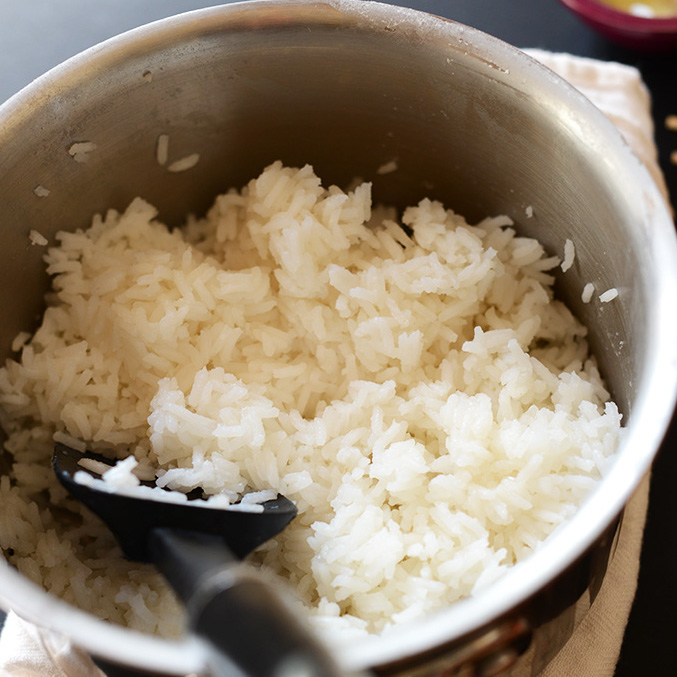
White rice
RiceWikipedia
31
MENTIONS
3
EPISODES
3
PODCASTS
Search complete. 31 mentions across 3 episodes found for "White rice".
Nov 2, 2026

JohnHOST
That's right.
JohnHOST
So next up we have white rice.
JohnHOST
All right.
JohnHOST
So we're getting into something that's probably a staple in just about every fasting household.
JohnHOST
That's right.
Michael ChristianHOST
And for good reason.
Michael ChristianHOST
White rice is one of the most practical carbohydrate sources available.
Michael ChristianHOST
It is absolutely inexpensive, easy to store, easy to prepare, relatively low in fiber, and generally very well tolerated.

LiuHOST
So this is 11 cubes of sugar.
LiuHOST
Did you know that when you eat white rice, that starch gets directly converted into sugar and it's a cup of cooked white rice, it's about 11 cubes of sugar that goes straight to your liver.
LiuHOST
Now,
speaker_2SOUNDBITE_SPEAKER
if
LiuHOST
I remove one of these cubes, 10 cubes of sugar, that's actually the amount of sugar that's in a can of soda, right? This is why white rice it's not that much better than soda because it gets converted into direct sugar.
LiuHOST
But of course, sugar just surges your system even faster when you're drinking your sugar water.
LiuHOST
And this is true if you're eating sugar water or if you're drinking sugary teas, right? Just be very careful when you eat starches, refined starches, as well as sugar water.
LiuHOST
So if you're going to go for potatoes, go for a potato with a lower to medium glycemic index, such as fingerling potatoes or red and purple potatoes.

Sten EkbergSOUNDBITE_SPEAKER
For thousands of years diet was a staple and people were doing extremely well on it.
Sten EkbergSOUNDBITE_SPEAKER
then a few hundred years ago 16 1700 somewhere they learned to polish the rice they refined it they turned brown rice into white rice but it was only the rich that could afford it and the rich probably ate some other things too so it wasn't that big a deal but then in 1850 in the second half of the 19th century they learned to polish it very inexpensively and what promoted this trend was trade that when they traded the rice they had to transport it on ships and if the rice had a bunch of nutrients then it would spoil so when you polish the rice you remove the nutrients when you take brown rice and turn it into white you take away most of the nutrients so there's less stuff that can spoil that can interact with the oxygen but then you're also taking away the stuff that your body really wants let's look at the difference here between brown rice and white rice because Rice is often promoted as a complex carb.
Sten EkbergSOUNDBITE_SPEAKER
They say that oh sugar is bad but rice is good because it's a complex carb.
Sten EkbergSOUNDBITE_SPEAKER
Well when we look at the glycemic index how quickly it affects blood sugar then Rice is in the 60s somewhere.
Sten EkbergSOUNDBITE_SPEAKER
They're still mostly starch.
Sten EkbergSOUNDBITE_SPEAKER
So yes, you're much better off eating brown than white, but they're still going to trigger a tremendous amount of blood sugar.
Sten EkbergSOUNDBITE_SPEAKER
brown rice has starch protein fiber vitamins and minerals it's the complete package the way it grew in nature but when we turn it into white rice we keep all the starch that's basically the starchy portion of the brown rice but we polish away about half or so of the protein and we polish away virtually all the fiber all the vitamins and all the minerals so now it is arguably about the same as white sugar it is basically an empty calorie and what happened in asia at the time because this was the main staple is that people started developing something called berry berry And we don't have the exact numbers because they didn't keep statistics back then.
Sten EkbergSOUNDBITE_SPEAKER
But there were probably tens of millions, maybe hundreds of millions that had varying degrees of beriberi.