White Nile
River in AfricaWikipedia
35
MENTIONS
19
EPISODES
15
PODCASTS
Search complete. 35 mentions across 19 episodes found for "White Nile".
Nov 24, 2026

Steve BoyesGUEST
And we had just started working up there.
Steve BoyesGUEST
We do aerial surveys across the great floodplains of the White Nile.
Steve BoyesGUEST
And 15 years ago, we had seen a lot of animals down there.
Steve BoyesGUEST
There's something going on here.

ShirvanHOST
Its landscape poses a diverse mixture of habitats ranging from the dry desert flats of the north to the lush rainforest highlands of the south.
ShirvanHOST
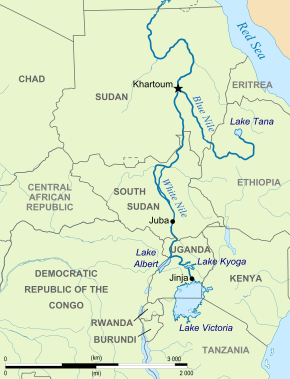
From these southern territories, the Blue Nile flows north, connecting at the capital Khartoum in a junction with the White Nile.
ShirvanHOST
Sitting on this point on convergence, Khartoum is blessed with an abundance of fresh water and consistent sunlight throughout the year.
ShirvanHOST
It's no surprise then that agriculture is the second largest sector after hydrocarbons, accounting for more than 30% of Sudan's total GDP.
ShirvanHOST
It is estimated that the country is home to over 200 million acres of arable land that stretches along its southeast, which is unparalleled in the wider periphery.
ShirvanHOST
Freshwater supply from the White Nile and Blue Nile rivers replenishes the soil, making it ideal for year-round agriculture.
ShirvanHOST
To put matters into context, Sudan accounts for 45% of all the arable land in the entire Arab world.
ShirvanHOST
That right there is strategic value.
ShirvanHOST
It's a different side to geopolitics and their videos are well researched while their footage is outstanding.
ShirvanHOST
I particularly enjoyed the video on the Nile conflict or how container ships kill thousands of whales.
ShirvanHOST
Have a look on their channel for more.
ShirvanHOST
When we think of geopolitical competition in East Africa, the usual candidates are China, Russia, Turkey, Iran, various European powers, a few Arab states and the United States.
ShirvanHOST
A dozen major rivers snake through its territory, with the largest delivering into the Mediterranean Sea and the Indian Ocean.
ShirvanHOST
Meanwhile, the smaller rivers and lakes feed into the lowlands and coalesce into three critical hydrological basin systems.
ShirvanHOST
The first and largest is the Nile Basin, which includes the Blue Nile, Akobo, and Tekeze rivers.
ShirvanHOST
Together, they cover roughly a third of Ethiopia and then flow west to the White Nile in Sudan and South Sudan.

Daniel JohnsonCORRESPONDENT
Civilians in Kordofan region have accounted for more than two-thirds of documented casualties among non-combatants, followed by the Darfur region in western Sudan, where most of the remaining casualties occurred.
Daniel JohnsonCORRESPONDENT
Eastern and central areas of Sudan were also affected by drone attacks, particularly White Nile, where at least 41 civilians were killed during the reporting period.
Festus TarawaliHOST
The Republic of Benin has formally asked France to return 35 more cultural artefacts five years after Paris repatriated 26 objects looted during the colonial era.
Festus TarawaliHOST
The artefacts are held at the Quai Branly Museum in Paris.
ShirvanHOST
These conflicts need resolution if the Egyptian corridor is to be viable.
ShirvanHOST
That said, it's also possible that Egypt avoids Ethiopia entirely by steering the commercial corridor towards the White Nile countries with whom it has better relations.
ShirvanHOST
This is very much a process in the making.
ShirvanHOST
All in all, Africa is changing.

Daniel JohnsonHOST
Civilians in Kordofan region have accounted for more than two-thirds of documented casualties among non-combatants, followed by the Darfur region in western Sudan, where most of the remaining casualties occurred.
Daniel JohnsonHOST
Eastern and central areas of Sudan were also affected by drone attacks, particularly White Nile, where at least 41 civilians were killed during the reporting period.
Daniel JohnsonHOST
Daniel Johnson, UN News.
speaker_3SOUNDBITE_SPEAKER
Only immediate and drastic action will pull us back from the abyss.

Michael YonGUEST
you then you can release all the water and flood people downstream and then you can put them in a drought at the an opportune moment to uh as you refill the reservoir so you release the water when they don't need it and flood them out and then you hold it when they do need it and drought them out right so that's one way if you capture a dam intact say mosul dam or something right um in iraq and um but but with the gerb dam over in egypt That's a massive dam.
Michael YonGUEST
And that is, I'm sorry, it's up in Ethiopia, but it's a direct threat to Egypt and Sudan, right? And so because the Blue Nile, the Gerd Dam is on the Blue Nile, which is roughly 85% of the water of the Nile, the White Nile and the Blue Nile converge at Khartoum, right, in Sudan.
Michael YonGUEST
But if you want to take out Egypt, you would build those dams up in Ethiopia would be one way to really do it.
Michael YonGUEST
Fill up those reservoirs, release them, flood and cascade and take out like the other dams in sudan and uh and and in egypt uh aswan dam and and i mean just flood out because remember 95 of egypt is right around the nile river that's where they get their water and they've already got food issues now and that food is coming through you know black sea
ShirvanHOST
But it's not just Ethiopia that denies old treaties.
ShirvanHOST
At the present, even White Nile riparian states, who are bound by the past agreements, refute Egypt's share of the water.
ShirvanHOST
In the 1950s, the demographics of the upstream White Nile nations surged and the African states regained their independences.
ShirvanHOST
many of the new governments took out loans to construct dams as a means to harvest the resources of the Nile.
ShirvanHOST
Egyptian officials insisted that such projects could not be undertaken without prior approval from them since the Nile agreements granted Egypt the power to veto.
ShirvanHOST
More specifically, nearly 85% of the water that flows into the Nile River in Egypt comes from the highlands of Ethiopia through the Blue Nile.
ShirvanHOST
The remainder comes from the White Nile, whose source originates in Lake Victoria.
ShirvanHOST
Without the Blue Nile, Egypt for all its glory and history could not exist.
ShirvanHOST
So it's not surprising that the country reacts with great hostility to infrastructure projects in the upstream territories.

Nick SandersGUEST
I cycled across the Sahara Desert from Manchester to Timbuktu, yeah.
Nick SandersGUEST
And I was the first person to cycle to the source of the White Nile, which was from Cairo, all the way down to Central Africa through...
Nick SandersGUEST
Egypt
George TalbotGUEST
and Sudan and Uganda, Rwanda, Burundi, all that kind of thing, and then I cycled.
Nick SandersGUEST
Oh, my God, so, yeah.
Nick SandersGUEST
So they built a pyramid at the source of the map.
Nick SandersGUEST
But the thing is, there are three sources of the White Nile.
Nick SandersGUEST
We're going down a rabbit hole now, I know that.
9 more episodes mention White Nile.
Create an account to see the whole feed, search across every transcript, and follow the entities you care about.