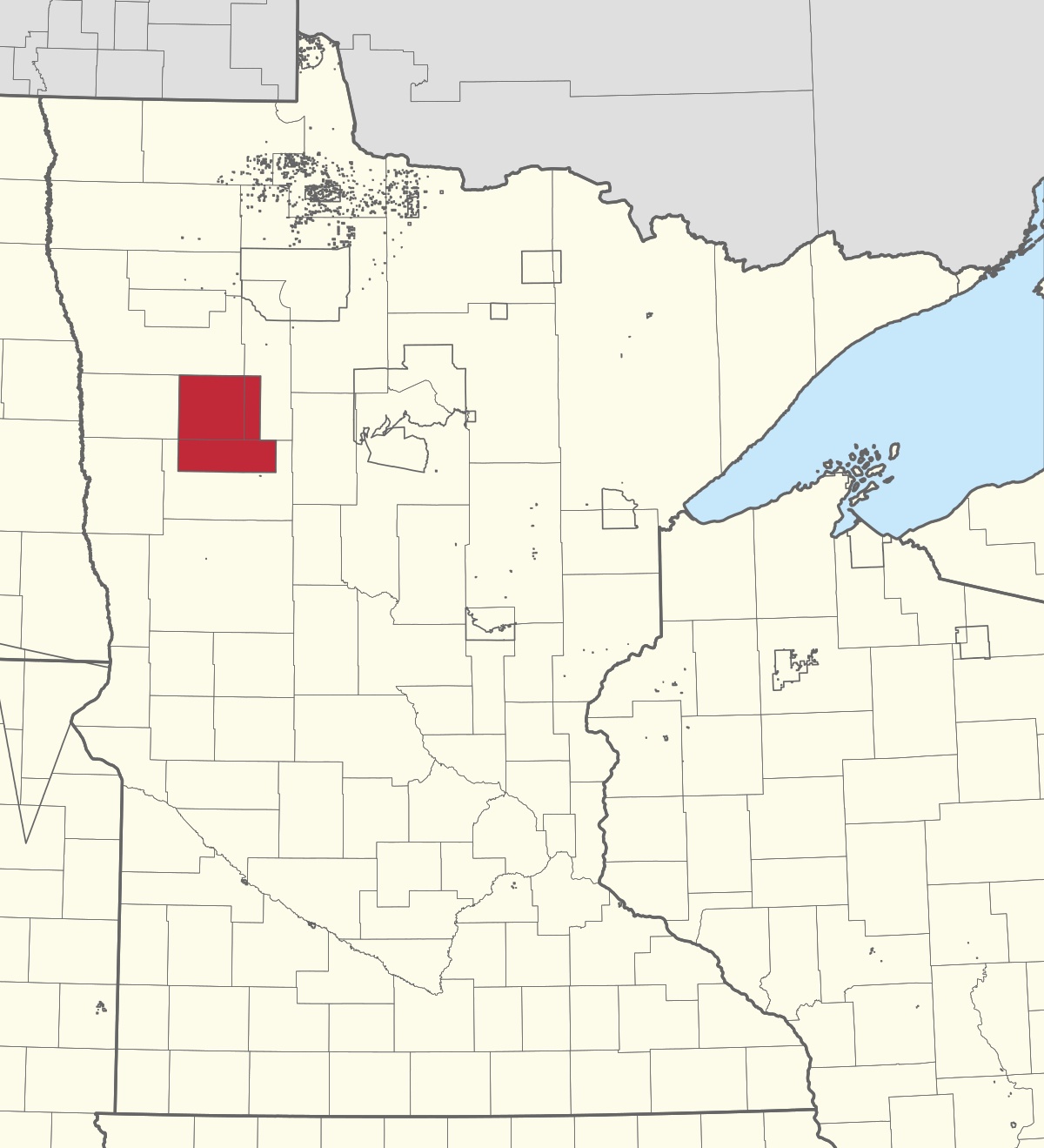
White Earth Indian Reservation
US Indian ReservationWikipedia
43
MENTIONS
20
EPISODES
16
PODCASTS
Search complete. 43 mentions across 20 episodes found for "White Earth Indian Reservation".
Oct 17, 2026

Zak PaineHOST
These were payments made through the Minnesota Department of Human Services.
Zak PaineHOST
This additional two point four million dollars in Medicaid overpayments were made to the White Earth Nation.
Zak PaineHOST
I've never heard of them, but Lieutenant Peggy Flanagan is a member.
Zak PaineHOST
Now, this payment was made during the Walz-Flanagan administration in twenty nineteen, and a state audit found that those millions in additional payments to White Earth and Leech Lake that year were made after the DHS determined the payment practice did not comply with state and federal legal rep- requirements.
Zak PaineHOST
Now, the payments were part of more than twenty-nine million dollars in overpayments made over a decade to the White Earth Nation and the Leak Lake Band-- the Leech Lake Band of Ojibwe for medication-assisted treatment programs, which are designed to treat opioid addiction.
Zak PaineHOST
In c- in terms of that state audit, the programs combined counseling with medication intended to reduce cravings and withdrawal symptoms.
Zak PaineHOST
And Minnesota's Department of Human Services classified the expenditures as overpayments because the department paid White Earth and Leech Lake the U.S. Indian Health Service encounter rate when patients took treatment drugs at home.
Zak PaineHOST
The initial overpayment calculation initially included approximately twenty-five million dollars in payments made through December of twenty eighteen, and the total later increased by another three point eight million during the Walz-Flanagan administration in twenty nineteen, which included that two point four million dollars for White Earth and then another one point four million for Leech Lake.

WillHOST
Multitask.
MatildaHOST
And then White Earth.
WillHOST
White Earth is the one I think is historically wild.
MatildaHOST
Explain.
WillHOST
Their compact with the state uniquely allows their enterprise, Wabi Gwan Mashkiki, to operate dispensaries off reservation.

Peggy FlanaganSOUNDBITE_SPEAKER
My Ojibwe name is Speaks in a Loud and Clear Voice Woman.
Peggy FlanaganSOUNDBITE_SPEAKER
I'm Ojibwe and a member of White Earth, and my family's the Wolf Clan.
Peggy FlanaganSOUNDBITE_SPEAKER
The, uh, beautiful Somali community, they are part of the fabric of our state.
Peggy FlanaganSOUNDBITE_SPEAKER
My daughter is already growing up with fewer rights than I had, fewer rights than my mom had, fewer rights than my grandmother had, and I am not okay with that.

Sasha Maria SuarezGUEST
Yeah, absolutely.
Sasha Maria SuarezGUEST
I encountered the term survivance when I was in graduate school, and Vizenor, as a White Earth Ojibwe scholar himself, really interrogates the idea that survival and resistance are two things that are mutually opposed.
Sasha Maria SuarezGUEST
So for Indigenous peoples generally, you'll hear things like survival is resistance, and in some ways, that's what survivance is g- getting at.
Sasha Maria SuarezGUEST
But in other ways, it's very much about the continuity of cultural practice of identity and belonging, regardless of the impositions of colonization.
Sasha Maria SuarezGUEST
And for me, survivance has really demonstrated how urban Ojibwe identity has really flourished in the 20th century in Minneapolis because of the ways that we were able to transport Ojibwe ways of knowing and being in the world into the city and to Maintain our tribal affiliations, our tribal belongings, our relationships, both to other community members in Minneapolis, but also back home on home reservations throughout Minnesota.
Sasha Maria SuarezGUEST
So that continuity, I think, is really evident within urban Ojibwe history in the Twin Cities because of the ways that it's not just about surviving, it's about the ongoing maintenance of who we are as a people.
Denzel BelinPANELIST
And your book draws on the stories and organizing work of White Earth Ojibwe women from the 1930s through 1970s.
Denzel BelinPANELIST
So let's start big and broad.

speaker_1HOST
Uh, tonight, we're expecting to learn more about a potential casino just outside of Moorhead.
speaker_1HOST
Uh, the White Earth Nation is set to provide an update during this morning's Clay County Commission meeting.
speaker_1HOST
White Earth bought the land just west of State Highway 336 last year.
speaker_1HOST
Uh, the tribe does estimate that the project would cost $177 million to build and would create about 700 jobs.
speaker_1HOST
The Clay County Commission meets at 8:30 this morning at the Clay County Courthouse.

Bonnie AmistadiHOST
Make sure you have a jacket as you head out.
Bonnie AmistadiHOST
White Earth Nation officials are expected to provide an update today on the proposed $176 million casino and hotel project near Moorhead.
Bonnie AmistadiHOST
Tribal leaders will discuss, uh, will address the Clay County Commission about the federal approval process, project timelines, and ongoing work.
Bonnie AmistadiHOST
That project has been on hold since August while tribal leadership reviews its financial risks and long-term sustainability.

Janae WhiteHOST
Ronnie, I know you might like to hear this update.
Janae WhiteHOST
White Earth Nation, now they are the...
Janae WhiteHOST
Ones who did the, they're doing the casino over in Clay County, Moorhead?
Ronnie LeeHOST
Well, it might be past tense.

JanaeGUEST
I know you might like to hear this update.
JanaeGUEST
White Earth Nation, now they are the d- um, ones who did the ...
JanaeGUEST
They're doing the casino over in Clay County, Moorhead.
RonnieGUEST
Well, it might be past tense.

Amber AnnisGUEST
They're seeing themselves in a way that provides hope and possibility.
Amber AnnisGUEST
Um, and I also wanna say that young people, too, I mean, just, like, I think about my own girls, they are so far better [laughs] than all of us, right? But just this deep desire to care for one another, to be kind, to care for the Earth, to think about what's in the future for them.
Angela DavisHOST
And, and not be concerned about, um, what, so much about what people think of them.
Angela DavisHOST
It's like, who do, what do I wanna be? Who am I?
7 MINS LATER
Angela DavisHOST
What, what's happening there?
Amber AnnisGUEST
there?Buffalo rest, uh, restoration initiatives have done so much more, right? Because I- the idea, right, of buffalo restoration, the idea of reclaiming that, is about centering, um, land and centering, um, sovereignty and centering indigenous people.
Amber AnnisGUEST
So you know, Prairie Island Indian community, Shakopee, White Earth.
Amber AnnisGUEST
Absolutely, um, these buffalo restorations is about so much more because it is, again, that reminder, as Nikki said earlier, of coming back to ourselves, of coming back to the things that, um, are really going to ground us in who we are as indigenous folks.

Rob KupecGUEST
And that was a bill that was up.
Rob KupecGUEST
There was a bill to turn the white earth state forest over to the white earth tribe.
Rob KupecGUEST
The bill was not it was really ill conceived and just, you know, came out of nowhere.
Rob KupecGUEST
And so myself, Senator Hochschild, who was on that committee, the two of us worked together to to squash that bill.
10 more episodes mention White Earth Indian Reservation.
Create an account to see the whole feed, search across every transcript, and follow the entities you care about.