Western Zhou
DynastyWikipedia
69
MENTIONS
7
EPISODES
6
PODCASTS
Search complete. 69 mentions across 7 episodes found for "Western Zhou".
Oct 9, 2026

Scott PruittHOST
With our podcast, we aim to provide insight into the current trends of modern China, allowing you to clearly see what's happening today through a historical lens.
Scott PruittHOST
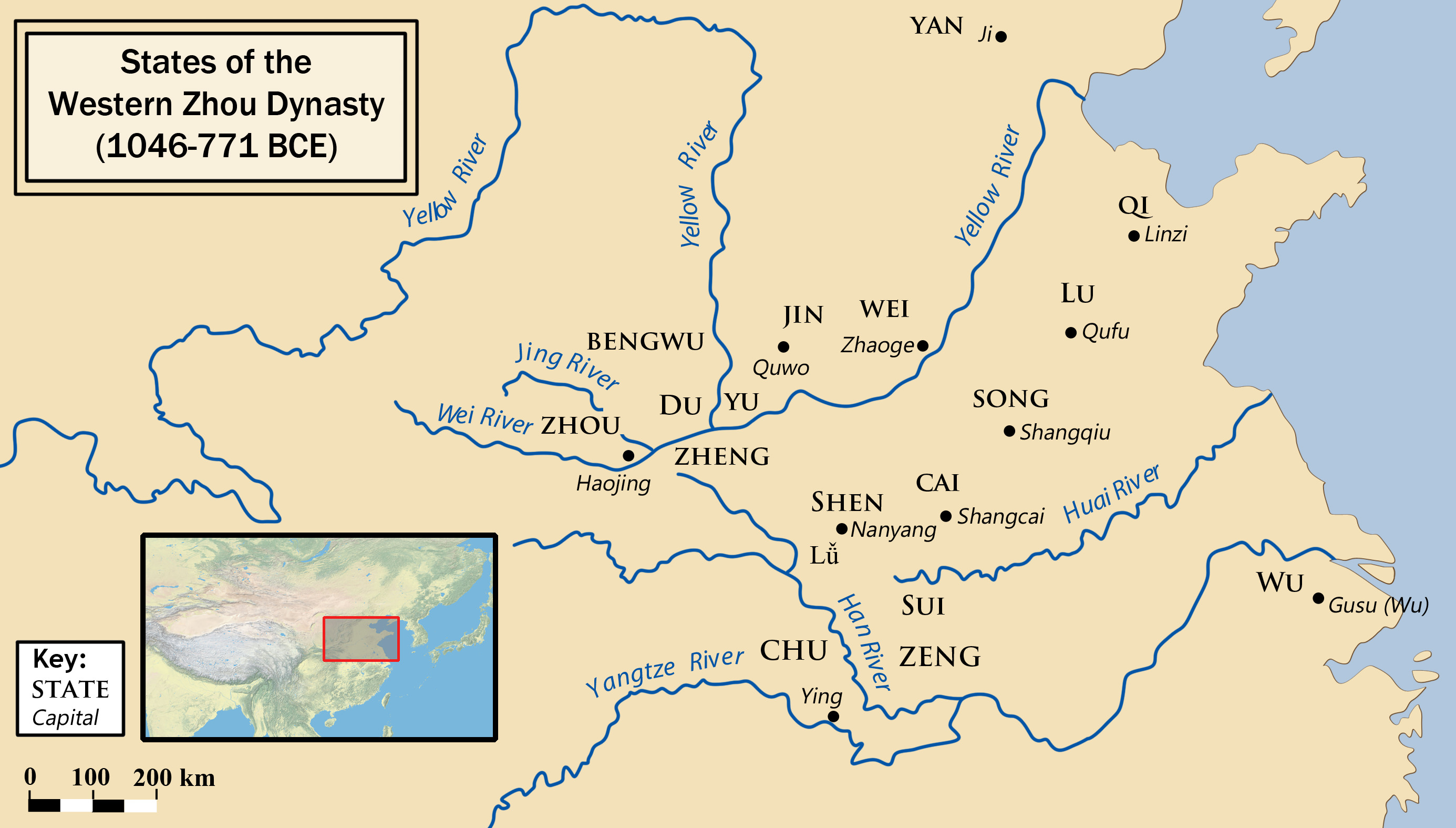
Today we'll talk about the Taibao Ding, a remarkable bronze vessel from the early Zhou dynasty, whose story reveals the origins of the ancient state of Yan, the struggles of a frontier kingdom that survived for more than eight centuries, and the early historical roots of the city that would eventually become modern Beijing.
Scott PruittHOST
Among the famous seven warring states of ancient China: Qi, Chu, Yan, Han, Zhao, Wei, and Qin, most people easily recall the powerful states.
Scott PruittHOST
Qin eventually unified China.
Scott PruittHOST
Without its brief resurgence under King Zhao of Yan or the famous but desperate assassination attempt by Crown Prince Dan through the swordsman Jing Ke, Yan might have faded quietly into obscurity.
Scott PruittHOST
Yet in one respect, Yan stands out among all of them.
Scott PruittHOST
If we measure endurance rather than power, Yan was one of the most resilient states of the Zhou world.
Scott PruittHOST
From its founding in the early Western Zhou dynasty to its destruction by Qin in two twenty-two BCE, Yan survived for more than eight centuries.

Theo WrenfieldNARRATOR
Each one connected back to the center through bonds of kinship, ritual obligation, and occasional marriage alliances that wove the elite families of ancient China together like threads in a loom.
Theo WrenfieldNARRATOR
This arrangement allowed the early Zhou, during what historians now call the Western Zhou period, to maintain a surprising degree of stability across an enormous landscape.
Theo WrenfieldNARRATOR
The capital, established near modern-day Xi'an, became a center of ritual and administration, where bronze vessels continued to be cast.
Theo WrenfieldNARRATOR
now often inscribed with lengthy inscriptions celebrating military victories, land grants, or the virtues of the ruling family.
Theo WrenfieldNARRATOR
The idea that the natural world and the human world are intimately connected.
Theo WrenfieldNARRATOR
These threads first appear clearly in Joe thought, long before Confucius or Laozi would ever walk the earth.
Theo WrenfieldNARRATOR
But as peaceful and ordered as the Western Zhou period might sound in these gentle retellings, it could not last forever.
Theo WrenfieldNARRATOR
No dynasty, no matter how virtuous its founding ideals, remains untouched by the slow erosion of time.

speaker_5HOST
Yeah, exactly.
speaker_5HOST
The earliest layers date back to the Western Zhou period, so over three thousand years ago.
speaker_5HOST
And the trigrams, the three-line components that stack to make the hexagrams, were traditionally attributed to the mythical culture hero Fu Xi.
speaker_5HOST
But what's truly vital about the I Ching is its evolution.

Steve HatherlyHOST
I should have said thousands and thousands of years.
YushanHOST
Yes, this festival has a history of over 3,000 years, tracing back to the Western Zhou Dynasty, which is an ancient Chinese imperial era from 1045 to 770 BC.
YushanHOST
When emperors worshipped the harvest moon to pray for abundant crops the following year, So it has always been that time that people will be thankful for the harvest.
YushanHOST
And also it is a transition to a fixed national festival.
Steve HatherlyHOST
I should have said thousands and thousands of years.
YushanHOST
Yes, this festival has a history of over 3,000 years, tracing back to the Western Zhou Dynasty, which is an ancient Chinese imperial era from 1045 to 770 BC, when emperors worshipped the harvest moon to pray for abundant crops the following year.
YushanHOST
So it has always been that time that people will be thankful for the harvest.
YushanHOST
And also it is a transition to a fixed national festival.

Nicholas GordonHOST
The Warring States period is one of the most important times in China's history.
Nicholas GordonHOST
It marked the end of one dynasty, the Zhou, and the beginning of a new imperial era under the Qin.
Nicholas GordonHOST
It's a time that historian Andrew Seth Meyer describes as one of the most important revolutions in world history.
Nicholas GordonHOST
The fall of the old aristocratic order, with the Confucianism, Taoism, and Legalism, and the creation of the imperial system that would shape China for over 2,000 years.
Andrew Seth MeyerGUEST
It had created a great deal of material prosperity.
Andrew Seth MeyerGUEST
It had led to a great deal of population growth.
Andrew Seth MeyerGUEST
The royal house, the royal dynasty that sort of presided loosely over this confederation of aristocratic clans, the Zhou, they had a very profound cultural mystique.
Andrew Seth MeyerGUEST
They were revered and they had a great deal of spiritual authority.

Nicholas GordonHOST
The Warring States period is one of the most important times in China's history.
Nicholas GordonHOST
It marked the end of one dynasty, the Zhou, and the beginning of a new imperial era under the Qin.
Nicholas GordonHOST
It's a time that historian Andrew Seth Meyer describes as one of the most important revolutions in world history.
Nicholas GordonHOST
The fall of the old aristocratic order, with the Confucianism, Taoism, and legalism, and the creation of the imperial system that would shape China for over 2,000 years.
Andrew Seth MeyerGUEST
It had created a great deal of material prosperity.
Andrew Seth MeyerGUEST
It had led to a great deal of population growth.
Andrew Seth MeyerGUEST
the royal house, the royal dynasty that sort of presided loosely over this confederation of aristocratic clans, the Zhou.
Andrew Seth MeyerGUEST
They had a very profound cultural mystique.