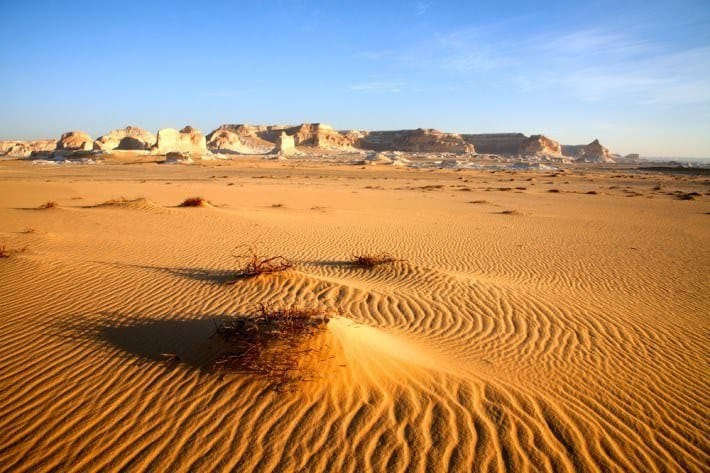
Western Desert
13
MENTIONS
7
EPISODES
7
PODCASTS
Search complete. 13 mentions across 7 episodes found for "Western Desert".
Sep 23, 2026

Alain de BottonNARRATOR
Most eras before our own knew that solitude did not per se have to be a sign of wretchedness.
Alain de BottonNARRATOR
In the fourth century, the greatest saint of early Christianity, St. Anthony, was said to have spent more than 40 years by himself in Egypt's Western Desert, not saying a word, eating only bread and salt, and communing with God.
Alain de BottonNARRATOR
So impressed were some with Anthony's life, they came to join him in the desert and became collectively known as the Desert Fathers.
Alain de BottonNARRATOR
Their philosophy of solitary piety would go on to have a decisive influence on the founding of monasteries.

Kyle AllenHOST
I don't know if I talked about this last time.
Kyle AllenHOST
I can't recall the paper right off the top of my head, but it's a study of the whole area of the Western Desert.
Kyle AllenHOST
I think I did talk about this, the inverted rivers.
Kyle AllenHOST
In the Western Desert.
Kyle AllenHOST
Yeah.
Kyle AllenHOST
Can I talk about this?
45 MINS LATER
Kyle AllenHOST
This is the late Holocene marginalization.
Kyle AllenHOST
So after 3500 BCE, rain ceased, even in ecological niches, and permanent occupation was restricted to southern areas such as Lakia and Wadi Hawar in northern Sudan for the Pharaonic Empire.

Malcolm NanceHOST
Y'all want to go? This is now the Hejaz.
Malcolm NanceHOST
versus the Jabab, right? The Western desert versus the Houthi mountaineers.
Malcolm NanceHOST
And if you set it on those terms, people in your own country and other parts of the Muslim world will say, oh my God, you've woken up.
Malcolm NanceHOST
You know, you're not, you're not, You're not just going down there.

speaker_4NARRATOR
If al-Masih did find the lost army, he took the secret of its location to his grave.
speaker_4NARRATOR
Half a century on, a Cairo newspaper reported a sensational discovery in the western desert.
speaker_4NARRATOR
The paper said that the army of King Cambyses had been found at last by a geologist, Dr. Ali Barakat.
speaker_4NARRATOR
To archaeologists, the claim was highly controversial.
6 MINS LATER
speaker_4NARRATOR
It was from here that Cambyses launched his desert campaign after his conquest of Egypt in 525 BC.
speaker_4NARRATOR
Unfortunately, Dr. Barakat is unable to join the expedition.
speaker_4NARRATOR
Much of the western desert of Egypt is a restricted military zone, and he's not been granted a permit to revisit the site of his discoveries.
speaker_4NARRATOR
But he has provided Tom and Gail with his photographs and told them exactly where to look.

Ayla BrownHOST
The method could make the high-performance alloy, known as GRCOP42, faster and less expensive to produce.
Ayla BrownHOST
[whooshing] And fossilized shark teeth discovered in Egypt's Western Desert are offering a look at an ecosystem from about 80 million years ago.
Ayla BrownHOST
Researchers identified five additional extinct shark species, bringing the total known from the area to at least seven.
Ayla BrownHOST
At the time, the desert was covered by a warm, shallow sea connected to the ancient Tethys Ocean.

Tail DraggerHOST
The Shark Mouth paint scheme that would make these aircraft recognizable to anyone who has ever looked at a picture of the Second World War came from, of all places, a magazine.
Tail DraggerHOST
Someone in the group had seen a photograph of Royal Air Force P-40s in the Western Desert, flown by the Royal Air Force's 112 Squadron, painted with identical shark teeth running from the prop spinner back to the cockpit.
Tail DraggerHOST
The Americans liked what they saw, the Shark Mouth became their signature.
Tail DraggerHOST
The name Flying Tigers came later and its exact origin is disputed.

speaker_0NARRATOR
For decades, some of Australia's most extraordinary indigenous artists have been telling their stories of country, culture and connection through their work, and helping those stories reach the rest of the world is the work of people like our next guest.
speaker_0NARRATOR
Sarita Quinlivan has spent years working alongside some of the great names of Western desert art, and more recently, as art coordinator with Wala Kalangu artists at Yuendumu.
speaker_0NARRATOR
A passionate advocate for the artists, their stories and their culture, please welcome Sarita Quinlivan.
Mick MolloyHOST
Ah, pleasure to have you on the show, Sarita, and to talk to you again.