West Antarctica
Region in AntarcticaWikipedia
15
MENTIONS
9
EPISODES
7
PODCASTS
Search complete. 15 mentions across 9 episodes found for "West Antarctica".
Sep 18, 2026

speaker_1NARRATOR
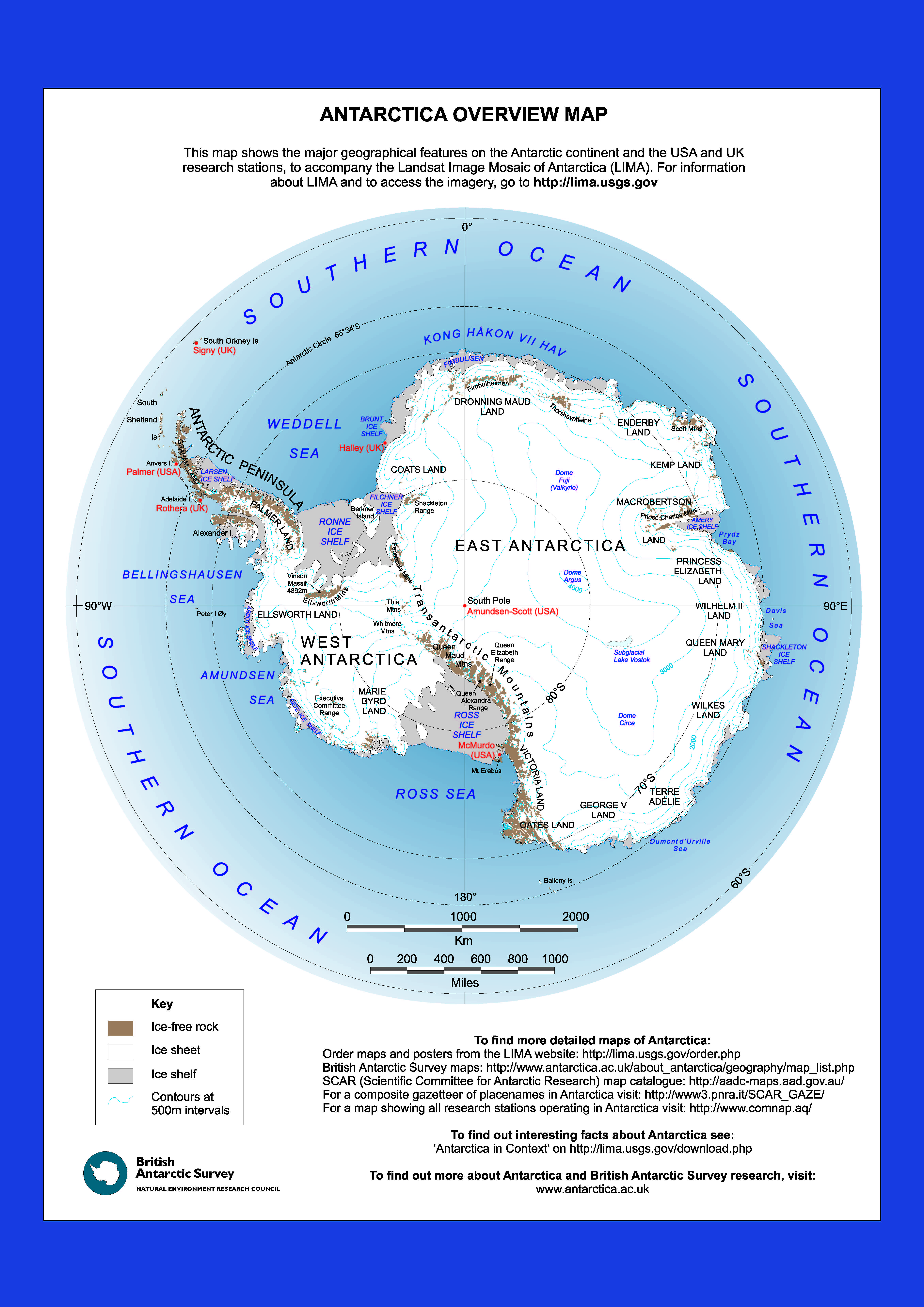
The fossil evidence comes from exposed rock formations on the Antarctic Peninsula and in the Transantarctic Mountains.
speaker_1NARRATOR
The mountain range that divides East Antarctica from West Antarctica Some of whose peaks protrude above the ice sheet as nunataks, rocky islands in a sea of ice.
speaker_1NARRATOR
In these exposed rocks, paleontologists have found fossils of Nothofagus, southern beech trees, a genus that still exists today in South America, New Zealand, Australia, and New Guinea.
speaker_1NARRATOR
They have found ferns.
speaker_1NARRATOR
The diversity of plant fossils indicates a complex, multi-layered forest ecosystem with large trees forming a canopy, smaller trees and shrubs forming an understory, and a rich ground cover of ferns and mosses.
speaker_1NARRATOR
Recent drilling of sediment cores from beneath the Antarctic continental shelf has provided even more vivid evidence.
speaker_1NARRATOR
In twenty twenty, researchers announced the discovery of a sediment core from the Amundsen Sea off the coast of West Antarctica that contained fossil roots, pollen, spores, and the cellular structures of plants preserved in extraordinary detail.
speaker_1NARRATOR
The sediment dated to the mid-Cretaceous period, roughly ninety million years ago, when atmospheric CO2 levels were several times higher than today and global temperatures were dramatically warmer.

Patrick McAfeeNARRATOR
Future rates of change are currently unpredictable without better observations to improve the development of ice prediction models.
Patrick McAfeeNARRATOR
Sea level rise could increase with the rapid melt of either the Greenland ice sheet or the West Antarctica ice shelf.
Patrick McAfeeNARRATOR
With this melting, scientists now estimate that sea level rise will be one meter or more by the end of the century, and the rate will increase, making effective adaptation more difficult to achieve.
Patrick McAfeeNARRATOR
Even modest sea level rises, when coupled with potential storm surges from more intense storms and subsidence of delta lands Will have a significant adverse impact on coastal regions and Pacific Small Island States.

Patrick McAfeeNARRATOR
Future rates of change are currently unpredictable without better observations to improve the development of ice prediction models.
Patrick McAfeeNARRATOR
Sea level rise could increase with the rapid melt of either the Greenland ice sheet or the West Antarctica ice shelf.
Patrick McAfeeNARRATOR
With this melting, scientists now estimate that sea level rise will be one meter or more by the end of the century and the rate will increase, making effective adaptation more difficult to achieve.
Patrick McAfeeNARRATOR
Even modest sea level rises, when coupled with potential storm surges from more intense storms and subsidence of delta lands, will have a significant adverse impact on coastal regions and Pacific small island states.
speaker_2NARRATOR
Forest, temperate to subtropical forest, dense and tall with a canopy that blocked the sky and a forest floor that was thick with Ferns and fallen leaves.
speaker_2NARRATOR
The fossil evidence comes from exposed rock formations on the Antarctic Peninsula and in the Transantarctic Mountains, the mountain range that divides East Antarctica from West Antarctica, some of whose peaks protrude above the ice sheet as nunataks, rocky islands in a sea of ice.
speaker_2NARRATOR
In these exposed rocks, paleontologists have found fossils of nothophagus, southern beech trees, a genus that still exists today in South America, New Zealand, Australia and New Guinea.
speaker_2NARRATOR
They have found ferns, they have found conifers, they have found flowering plants.
speaker_2NARRATOR
The diversity of plant fossils indicates a complex multi-layered forest ecosystem, with large trees forming a canopy, smaller trees and shrubs forming an understory, and a rich ground cover of ferns and mosses.
speaker_2NARRATOR
Recent drilling of sediment cores from beneath the Antarctic continental shelf has provided even more vivid evidence.
speaker_2NARRATOR
In 2020, researchers announced the discovery of a sediment core from the Amundsen Sea off the coast of West Antarctica.
speaker_2NARRATOR
that contained fossil roots, pollen, spores and the cellular structures of plants preserved in extraordinary detail.

speaker_0HOST
Why the Finding Matters for Sea-Level Models The Antarctic ice sheet remains a major source of uncertainty in long-term sea-level projections because its mass balance reflects several competing processes.
speaker_0HOST
West Antarctica has experienced sustained losses driven largely by ocean-related ice melt and glacier discharge, a dynamic already showing up in separate research on hidden channels beneath the ice that can accelerate West Antarctic melt.
speaker_0HOST
East Antarctica, by contrast, is more sensitive to variations in snowfall, meaning temporary precipitation increases can offset losses elsewhere without changing the underlying long-term picture.
speaker_0HOST
The new research gives modelers another recurring source of natural variability to account for.

Matthieu TordeurGUEST
It's the point that is the furthest away from each coast in Antarctica.
Matthieu TordeurGUEST
We went there and we crossed the eastern plateau all the way to Western Antarctica, to the geographic South Pole, and then to a place called Union Glacier in Western Antarctica.
Matthieu TordeurGUEST
And we did this under the auspices of UNESCO to try to better understand how the Antarctic is reacting to climate change and how it is impacting sea level rise everywhere on the planet.
Matthieu TordeurGUEST
Because I'm sure...
Matthieu TordeurGUEST
I carried with me a lot of food, and I was really persistent and trying to stay positive, and I managed to complete my trip.
Matthieu TordeurGUEST
But why were there so little people who managed to complete their expedition? It's because there was a massive heat wave.
Matthieu TordeurGUEST
There was a massive heat wave in western Antarctica at the start that lasted maybe three weeks, nearly a month.
Matthieu TordeurGUEST
And it came with like very high temperatures, temperatures around zero degrees Celsius.

John GibbonsGUEST
So, for example, we know that the West Antarctic ice shelf is fundamentally unstable.
John GibbonsGUEST
And scientists through the IPCC have calculated that anywhere above 1.5 degrees, West Antarctica comes into play.
John GibbonsGUEST
Now, West Antarctica has locked up seven metres of sea ice.
John GibbonsGUEST
Now, we do not want that seven metres of ice that is capable of changing global sea levels.
John GibbonsGUEST
That is land-based ice in Antarctica that is at risk of ending up in the sea.
John GibbonsGUEST
So just be very clear about the difference between sea ice and land ice.
John GibbonsGUEST
So West Antarctica at 1.5 degrees comes into play.
John GibbonsGUEST
In other words, we could wake up someday to the news bulletin to say that gigantic glaciers like the Thwaites Glacier in West Antarctica is on the move and we're seeing rapid sea level rise and evacuation of cities.

speaker_2NARRATOR
Seríamos capaces de retroceder el tiempo.
speaker_2NARRATOR
Para el 2090, con las temperaturas globales aún en aumento, la Antártida occidental será tan cálida como lo son hoy Alaska o Islandia y con el paso de los años la topografía nos resultará completamente irreconocible.
speaker_2NARRATOR
La mayor parte de los casquetes polares se habrá derretido y habrá cada vez más asentamientos humanos.
speaker_2NARRATOR
El suelo antártico será la cuna de nuevas poblaciones e infraestructuras urbanas.
ChaseVOICE_ACTOR
Seríamos capaces de retroceder el tiempo.
ChaseVOICE_ACTOR
Para el 2090, con las temperaturas globales aún en aumento, la Antártida occidental será tan cálida como lo son hoy Alaska o Islandia, y con el paso de los años la topografía nos resultará completamente irreconocible.
ChaseVOICE_ACTOR
La mayor parte de los casquetes polares se habrá derretido y habrá cada vez más asentamientos humanos.
ChaseVOICE_ACTOR
El suelo antártico será la cuna de nuevas poblaciones e infraestructuras urbanas.